Introducing New Teamspace! Share quotes, track production milestones, level-up team benefits together. Learn more Learn more
Standard tolerances can reach ±0.01 mm to ±0.02 mm, while for critical precision components, a tolerance of ±0.005 mm can be consistently achieved.
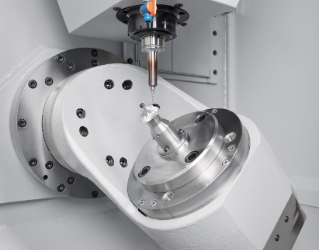
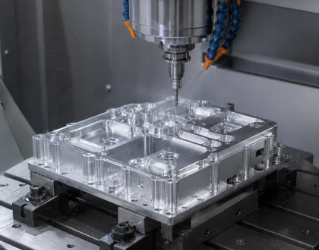
The manufacturing of semiconductor components demands exceptionally high standards for precision, surface roughness, and material cleanliness. 5-axis CNC machining is widely employed in the production of semiconductor equipment, with standard 5-axis machining processes capable of achieving tolerances in the range of ± 0.01 to 0.02 mm.
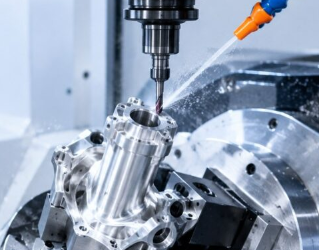
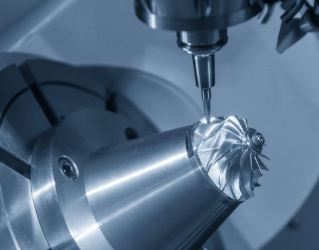
We specialize in turbine blades and impellers, valves and fluid control components, as well as connectors for nuclear energy and oil & gas equipment. Our technical strengths include minimizing the number of setups, reducing tool overhang, and enhancing machining efficiency.
Standard precision typically falls within the range of ±0.01–0.02 mm, while for critical aerospace and missile components, precision can reach ±0.005 mm.
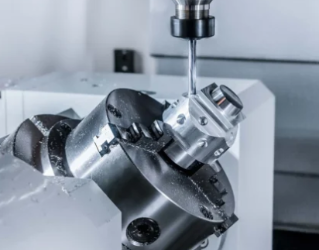
Particularly suitable for components with complex curved surfaces and high-precision requirements, such as artificial joints, bone plates, spinal implants, and instruments for minimally invasive surgery.
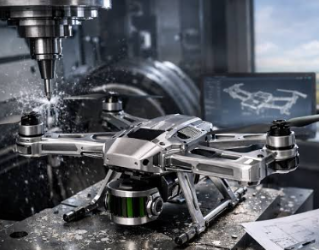
Structural optimization: Achieves a lightweight design while maintaining exceptional rigidity, meeting the requirements for carrying heavy sensors (such as LiDAR) and multispectral equipment on drones.
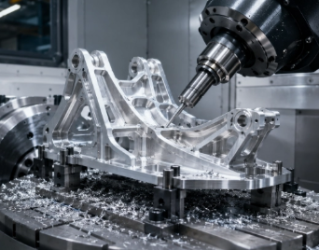
Standard tolerances: Typically achievable within the range of ± 0.01 to 0.02 mm. Critical/precision aerospace components: Tolerances can be tightened to ± 0.005 mm (e.g., turbine blades, bearing housings, and complex structural parts).
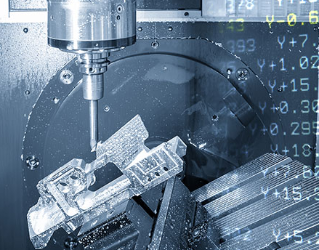
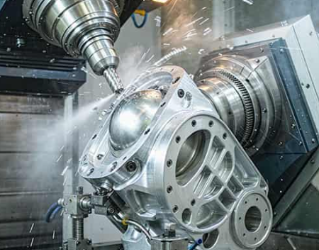
Machining tolerances: Standard precision typically ranges from ±0.01 mm to ±0.02 mm, while critical, high-precision structural components can reach tolerances as fine as ±0.005 mm. The process enables the fabrication of complex curved surfaces, polyhedral shapes, and high-precision structural parts in a single setup.
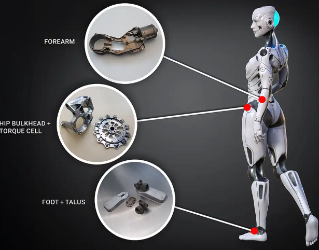
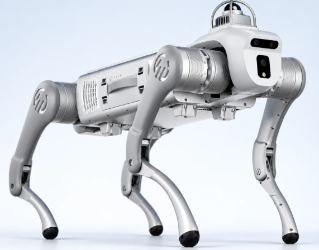
High-precision 5-axis machining tolerances can typically reach ±0.005 mm (or higher) to ensure the coaxiality and smooth operation of multi-joint bearings. Specialized machining of quadruped robot leg joints, chassis frames, and transmission components often involves complex spatial surfaces and lightweight structures.
Flatness and coaxiality requirements: The flatness of joint mating surfaces and sensor mounting surfaces typically needs to be within 0.005 mm – 0.010 mm to ensure there is no minute wobbling during high-frequency dynamic motion.
High-precision robotic joints and structural components can typically achieve micron-level tolerances ranging from ±0.005 mm to ±0.01 mm.
High-precision 5-axis CNC machining of complex robot head components. Huazheng provides custom robotic parts with tight tolerances, intricate geometries, and superior surface finishes for humanoid robots, automation systems, and advanced robotics applications.
Support formats: PDF, Word, Excel, Txt, JPG, PNG, BMP, GIF, RAR, ZIP, It is recommended to upload up to 5, and the single size must not exceed 20M.