



What Is Titanium Alloy Deburring?
Titanium alloy deburring is a surface finishing process used to remove burrs, sharp edges, and unwanted material generated during Titanium Alloy Machining, CNC machining, milling, turning, drilling, grinding, and casting processes.
During the manufacturing of custom titanium parts, machining operations can create small metal residues along edges, holes, and surfaces. These burrs may affect dimensional accuracy, assembly performance, surface quality, and the overall reliability of titanium components.
Professional titanium alloy deburring services help manufacturers achieve smoother edges, improved surface finishes, and higher-quality precision components. This process is widely used in industries that require high-performance materials, including aerospace, medical, automotive, and precision engineering applications.
Common titanium alloy parts requiring deburring include:
CNC machined titanium parts
Aerospace titanium components
Medical titanium implants
Precision mechanical parts
Titanium fasteners
High-performance industrial components
Why Is Deburring Important for Titanium Alloy Parts?
Improve Dimensional Accuracy and Assembly Performance
Titanium alloy components are often used in applications with strict tolerance requirements. Remaining burrs can affect the dimensions of parts and cause problems during assembly.
Through professional Titanium CNC Machining deburring, manufacturers can remove unwanted edges and maintain precise dimensions, ensuring better fitting performance between components.
This is especially important for industries such as aerospace and medical manufacturing, where precision and reliability are critical.
Enhance Surface Quality and Appearance
Titanium alloys provide excellent strength-to-weight ratio, corrosion resistance, and high-temperature performance. However, machining processes may leave rough edges and surface imperfections.
A proper titanium alloy surface finishing process improves the final appearance and prepares parts for additional treatments, including:
Anodizing
Polishing
Sand blasting
Coating
High-quality surface finishing helps improve both product appearance and functional performance.
Improve Safety and Product Reliability
Sharp edges and burrs on titanium components may cause safety issues during handling, installation, or operation.
Professional titanium alloy deburring services help eliminate sharp edges, reduce potential assembly problems, and improve the durability and reliability of finished parts.For precision components, effective burr removal also helps reduce stress concentration areas that may affect long-term performance.
Common Titanium Alloy Deburring Methods
Manual Deburring
Manual deburring is a traditional method that uses hand tools to remove burrs from titanium alloy parts.
Common tools include:
Deburring knives
Files
Abrasive paper
Precision grinding tools
Advantages:
Suitable for complex-shaped titanium parts
Flexible processing method
Ideal for small-batch production
Disadvantages:
Lower production efficiency
Quality depends on operator experience
Difficult to maintain consistency in mass production
CNC Deburring for Titanium Alloy Parts
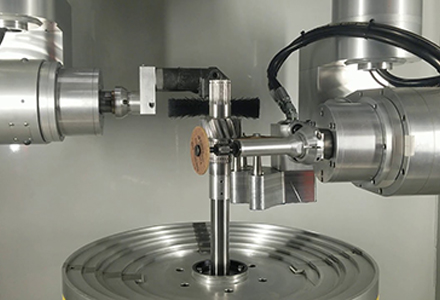
CNC deburring is an efficient method that combines machining and edge finishing processes. Specialized cutting tools are used to remove burrs, sharp edges, and excess material during CNC processing.
Common CNC deburring operations include:
Edge breaking
Chamfering
Precision milling
Contour finishing
This method is widely used for:
Custom titanium CNC Machined Parts
Aerospace titanium components
High-precision mechanical parts
Benefits include:
High processing accuracy
Excellent consistency
Reduced manual labor
Improved production efficiency
For large-volume manufacturing, CNC Titanium Machining and deburring services provide reliable and repeatable results.
Vibratory Deburring
Vibratory deburring uses vibration and abrasive media to remove burrs from titanium alloy components.
During the process, titanium parts are placed in a vibrating machine with abrasive materials. The friction between the parts and media removes small burrs and improves surface smoothness.
This method is suitable for:
Small titanium components
Batch production
Parts with multiple edges
Advantages include:
Uniform finishing results
High processing efficiency
Lower labor costs
Sand Blasting Deburring
Sand blasting uses high-speed abrasive particles to clean and smooth titanium alloy surfaces.
Common blasting materials include:
Glass beads
Ceramic particles
Aluminum oxide abrasives
Besides removing burrs, sand blasting titanium parts can also:
Improve surface texture
Remove machining residues
Enhance coating adhesion
It is commonly used before surface treatments such as painting, coating, or anodizing.
Electrochemical Deburring
Electrochemical deburring uses controlled electrochemical reactions to remove burrs from titanium alloy parts.
This method is suitable for:
Precision titanium components
Small and difficult-to-reach burrs
Complex internal structures
Advantages include:
No mechanical stress on the material
High precision
Suitable for delicate components
Challenges of Titanium Alloy Deburring
Poor Thermal Conductivity During Processing
Titanium alloy has relatively poor thermal conductivity, which makes heat difficult to dissipate during machining.
This can result in:
Increased tool wear
Higher processing temperatures
Reduced surface quality
Therefore, proper cutting parameters and professional deburring techniques are necessary when processing titanium alloys.
High Strength and Machining Difficulty
Titanium alloys have excellent mechanical strength but can be challenging to machine.
Common machining challenges include:
Work hardening
Tool wear
Difficult burr removal
Professional titanium alloy CNC machining and deburring requires suitable tools, optimized machining parameters, and experienced technicians.
Prevent Surface Damage
Titanium components are often used in high-performance applications where surface quality is critical.
Improper deburring methods may cause:
Surface scratches
Dimensional changes
Reduced precision
Choosing the right titanium alloy deburring process ensures that parts maintain their original specifications and performance.
FAQ
Q1: What is titanium alloy deburring?
Titanium alloy deburring is the process of removing burrs, sharp edges, and excess material from titanium alloy parts after machining or manufacturing processes to improve surface quality and performance.
Q2: Why do titanium alloy parts need deburring?
Deburring improves dimensional accuracy, assembly performance, surface finish, and product safety, especially for precision titanium components.
Q3: What are the common titanium alloy deburring methods?
Common methods include manual deburring, CNC deburring, vibratory finishing, sand blasting, and electrochemical deburring.
Q4: Is titanium alloy difficult to deburr?
Yes. Titanium alloy has high strength and poor thermal conductivity, requiring professional machining techniques and suitable deburring methods.
Q5: Can titanium alloy deburring be combined with CNC machining?
Yes. Many manufacturers provide integrated CNC titanium machining and deburring services to improve efficiency, consistency, and product quality.


