



gold plating is a decorative technique and a commonly used term. It refers to the process of applying a thin layer of gold to the surface of an object.
Name | Gold Plating (Gilt) |
Chemical Properties | Dissolves only in aqua regia and is resistant to most other acids. |
Process Types | electroless gold plating (ENIG) and Electrolytic Gold Plating |
Comparison | Electroless Gold Plating vs. electroplated gold Plating |
Classification | Gold Plating on Similar Metal Substrates and Dissimilar Metal Substrates |
Electroless Gold Plating vs. Electroplated Gold Plating
Advantages and Disadvantages of Chemical Gold Plating
The advantages of chemical gold plating are that the part to be plated does not require electrical connection, the coating is uniform, and it is more suitable for surface mounting. The disadvantages are that the solution is difficult to maintain, and the chemical nickel used as the base needs to be washed out of the tank regularly to remove the nickel deposited on the tank surface, which causes discontinuity in production. The operating cost is also higher. The hardness and wear resistance of the chemical gold plating layer are worse than those of electroplated hard gold, and the achievable thickness is limited, and it is not suitable for certain surface mounting welding methods. To make up for this disadvantage, chemical nickel palladium gold is used instead of chemical nickel gold to be suitable for various welding methods of surface mounting.
Advantages and Disadvantages of Electroplated Gold Plating
The advantages and disadvantages of electroplated gold plating are the opposite. The hardness and wear resistance of electroplated gold (hard gold) are better than those of chemical gold plating, the solution is easy to maintain, no washing of the tank is required, and it can be suitable for various welding methods of surface mounting. Its main disadvantage is that the thickness is not uniform, and the part to be plated requires electrical connection. Chemical gold and electroplated gold each have their own uses, and mainly depend on which customers are served.
Types of Gold Plating:
Gold plating falls into two categories: plating on a homogeneous material and plating on a heterogeneous material.
Gold Plating on a Homogeneous Material
Plating on a homogeneous material refers to the process of applying a gold layer to the surface of gold jewelry. The primary purpose is to enhance the jewelry's luster and color.
Gold Plating on a Heterogeneous Material
Plating on a heterogeneous material refers to the process of applying a gold layer to the surface of non-gold materials, such as silver or copper. The objective is to replace the color of the base material with the luster of gold, thereby improving the jewelry's visual appeal.
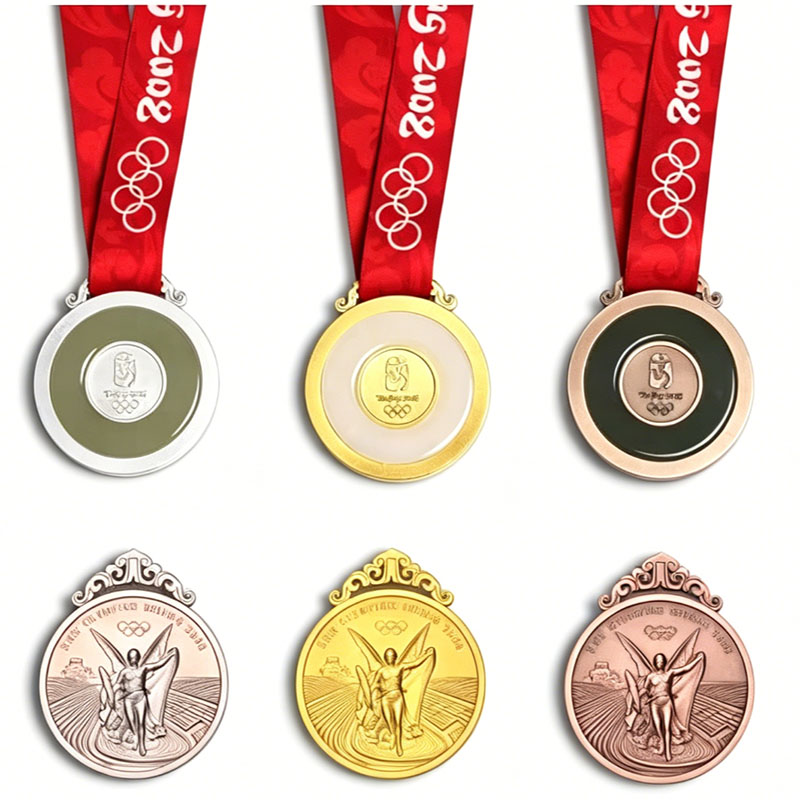
Gold Plating Classification by Substrate
1. Gold plating on metal parts
2. Gold plating on non-metal parts
Consequently, gold-plated scrap falls into two corresponding categories:
1. Scrap from gold-plated metal parts
2. Scrap from gold-plated non-metal parts (including gold plating on glass or plastic, gold detailing on ceramics, etc.). Since the gold on non-metal scrap is easily recovered, the technical challenges of recovery are primarily associated with scrap from gold-plated metal parts.
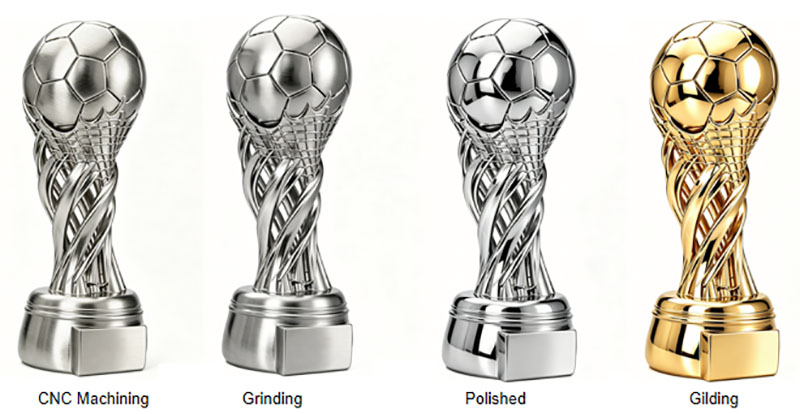 Gold Purity and K-Gold Standards
What Is 24K Gold?
The purity (or "karatage") of gold alloy plating is determined by its gold content, with pure gold designated as 24K.
For example, the gold content of 18K gold is calculated as: 100g × 18/24 = 75g.
How Do You Identify K-Gold?
The simplest way to identify K-gold jewelry is to check the hallmark on the back of the piece. Manufacturers in Europe and the US typically mark the back with a numerical stamp indicating the gold content (e.g., 750, 585, 375) alongside the brand name, whereas manufacturers in China and Hong Kong usually mark it with the karat rating (e.g., 22K, 18K, 14K) and the brand name.
The gold content for K-gold grades is as follows:
14K: 54.2–62.5% gold
16K: 62.6–70.8%
18K: 70.9–79.2%
20K: 79.3–87.5%
22K: 87.6–95.9%
24K: Above 95.9%
Gold Plating Technology
What Is Electroplating?
Electroplating is a process that utilizes the principles of electrolysis to deposit a layer of another metal or alloy onto the surface of a specific metal.
Applications of Electroplating in Jewelry and Watches
Many jewelry pieces from well-known "affordable luxury" brands—such as Swarovski and Pandora—are actually made by applying a layer of gold or rose gold plating over an alloy base. Additionally, when consumers have their "K-gold" jewelry (particularly white gold pieces) re-plated after the finish has faded, this same plating technology is typically employed. Experience also shows that some lower-end watch brands utilize this plating process for their watch cases.
Environmental and Safety Considerations
It is worth noting that the plating solutions used in this process contain highly toxic cyanide, which poses a significant health risk to operators. Furthermore, the resulting waste liquid can contaminate both surface water and groundwater; this environmental impact represents a hidden cost of the technology.
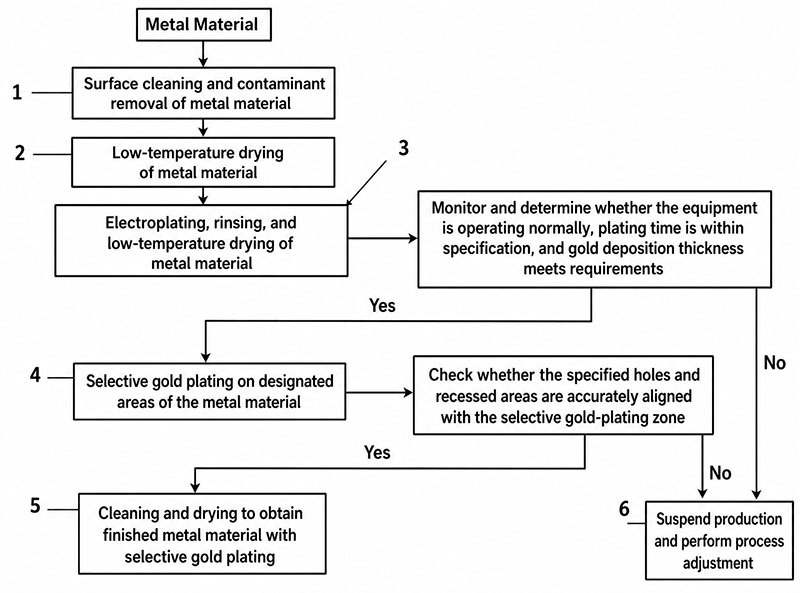
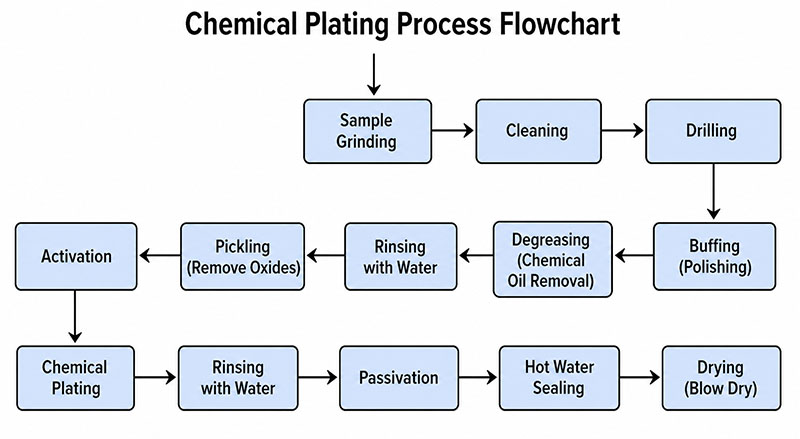
Electroless Plating
What Is Electroless Plating?
Following the widespread adoption of electroplating technology, another coating method emerged: electroless plating.
Advantages of Electroless Plating
Electroless plating is a process in which metal is deposited through a controlled redox reaction, catalyzed by the metal surface itself. Compared to electroplating, electroless plating offers several distinct advantages: highly uniform coatings, minimal surface porosity, no need for a DC power supply, the ability to coat non-conductive materials, and the capacity to impart specific functional properties. Furthermore, it generates significantly less waste liquid than electroplating, resulting in lower overall costs. In the context of appraising consumer goods—such as watches—we encounter components like "blue steel" screws and hands; while many are indeed heat-treated to achieve that blue finish, others are produced using electroless blue plating techniques. Similarly, the counterfeit gold bars, jewelry, and various gold-colored ornaments frequently sold online are often manufactured using electroless gold plating.
Applications of Electroless Gold Plating
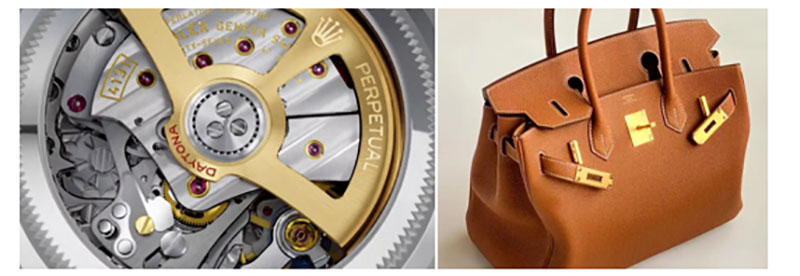
One should not dismiss coating technology as merely ordinary; in the watchmaking industry, it is applied across high-end, mid-range, and entry-level timepieces alike. For instance, prestigious brands like Audemars Piguet and Rolex have introduced movements featuring rhodium plating on components such as bridges and rotors; historically, some vintage models even featured movements plated with red gold.
High-end brands also apply rhodium plating to 18K white gold watch cases, and the hardware on luxury handbags is frequently finished using electroless gold plating. You may have noticed that the gold-colored hardware on luxury bags tends to fade after a period of use; if you have the item refurbished, the process typically involves reapplying an electroless gold plating finish. Even the Hermès Birkin bag—prized as the ultimate "social currency" within elite social circles—features hardware on certain special editions that utilizes rhodium-plated silver, demonstrating a highly sophisticated application of this technology.
Physical Vapor Deposition (PVD) Gold Coating
What Is PVD Gold Coating?
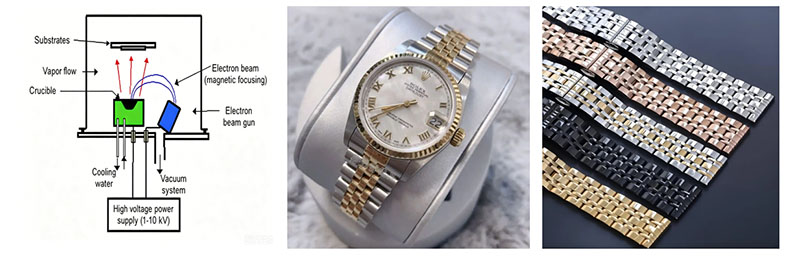
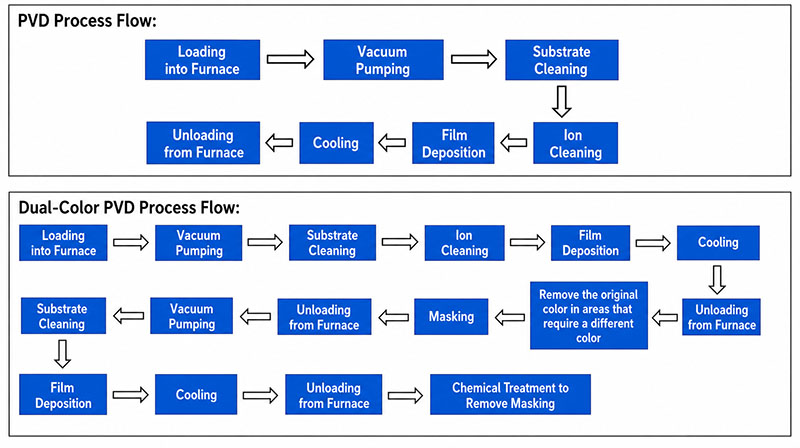
It is also essential to mention a coating technology that is more technologically advanced than the previously discussed methods—such as gold amalgamation, electroplating, and electroless plating—namely PVD (Physical Vapor Deposition) gold coating. In the watchmaking industry, this is commonly referred to simply as "PVD gold." This scientific process involves using low-voltage, high-current arc discharge technology within a vacuum environment to sputter metal ions from a target material and deposit them onto the item being coated.
PVD gold coating technology emerged in the late 1970s. As the technology has evolved and advanced, its application has expanded far beyond simply applying a layer of gold to a watch case.
Advantages of PVD Gold Coating
PVD gold coatings are known to be more stable, uniform, aesthetically pleasing, and refined than those produced by electroplating or electroless plating.
Applications of PVD Technology in Luxury Products
Rolex, for instance, has introduced mother-of-pearl PVD-coated dials—a technology derived from PVD processes—and utilized them in select special editions of the Lady-Datejust, demonstrating the widespread adoption of PVD gold coating technology among high-end brands.
How Do You Evaluate the Quality of Gold Plating?
Gold Plating Thickness Standards
The basic criteria for assessing the quality of gold plating are the thickness of the gold layer and its luster. Regarding thickness, the prevailing international standards for gold-plated jewelry are as follows:
10 to 25 microns: Excellent
2 to 3 microns: Average
Below 0.18 microns: Not true "gold plating" but rather "gold coating"—a low-cost process.

Gold Plating Solutions
Based on process characteristics, gold plating is categorized into cyanide-based and cyanide-free methods. Cyanide-based solutions are further subdivided into high-cyanide and low-cyanide types. Among cyanide-free solutions, sulfite-based baths are the most widely used.
Regarding concentration, "water-gold" plating solutions are typically acidic with low gold content (ranging from 0.4 to 0.5 g/L). These solutions are cost-effective, minimizing losses due to solution drag-out. They produce a greenish-gold finish, making them ideal for mass-producing small hardware items—such as buttons and belt buckles—where processing costs are low but a gold appearance is required.
Categorized by function, "pre-gold plating" involves an initial plating step in a specific solution before the main plating process. This pre-treatment offers several advantages:
1) Ensures strong adhesion of the gold layer.
2) Reduces the risk of contaminating the main gold plating bath.
3) Offers economic and practical benefits by lowering costs. 4) Improves the density of the gold layer.
Categorized by the nature of the deposit, "pure gold plating" requires the coating to be free of other metallic elements; thus, metal salts are not used as functional additives. However, pure gold coatings are soft and ductile, though they lack wear resistance. "Wear-resistant gold plating" is designed to increase coating hardness, meeting the functional requirements of specific electronic components. To achieve superior wear resistance, cobalt or nickel salts—along with other additives—are typically added to an acidic gold plating bath to deposit a gold alloy containing cobalt or nickel.
Categorized by color, "rose gold" is a common choice; it is a gold-copper alloy containing 85% gold, offering high wear resistance and chemical stability, and is resistant to discoloration. These plating solutions are primarily composed of complexing agents, gold salts, and copper salts.
Decorative gold alloys are predominantly used in jewelry applications to achieve a vibrant, bright, and aesthetically pleasing color. Examples include gold-nickel, gold-indium, gold-copper, and gold-silver alloys. Most gold alloys fall within the golden-yellow color spectrum—such as golden yellow, pale golden yellow, and rose gold—while others lean toward reddish hues, such as peach, pink, and rose red. Gold-silver alloys can also yield coatings with a greenish cast, and both gold-nickel and gold-silver alloys can produce whitish tones. Given the high cost of gold, experimental color selection is impractical; instead, one can refer to formulas in manuals or choose from commercially available plating solutions.
Currently, cyanide-based (potassium) gold plating offers superior quality, excelling over cyanide-free processes in terms of color, adhesion, and wear resistance. Recent advancements in electroplating technology have led to breakthroughs in gold plating processes; whereas gold-plated jewelry was once limited to a single standard gold color, products from France, the United States, and Japan now feature three or even more colors. Known as "tri-color gold" plating, these multi-colored finishes include rose, silvery-white, gold, black, and blue. Generally, homogeneous gold plating (where the base metal is also gold) does not require a thick coating; a thickness of 2 microns is sufficient. In contrast, heterogeneous gold plating (where the base metal differs from the plating) requires a thicker coating. Some countries mandate a minimum thickness of 10 microns for such products; for instance, the renowned British firm Johnson Matthey requires a coating thickness of 12.5 microns to meet its quality standards.
Gold Plating Solution Composition
1. Potassium gold cyanide: Supplies gold ions for plating.
2. Potassium cyanide: Generates free cyanide ions to decompose gold-cyanide complexes, enhances electrical conductivity, and prevents the deposition of copper and nickel.
3. Potassium carbonate: Increases conductivity and acts as a buffer.
4. Dipotassium hydrogen carbonate: Functions similarly to potassium carbonate.
Gold Plating Characteristics
The gold plating layer has a golden-yellow appearance and exhibits high chemical stability; it dissolves only in aqua regia and other superacids, remaining insoluble in other acids. Gold exists in monovalent and trivalent states. The standard electrode potential for monovalent gold (φ° Au+/Au) is +1.68 V, while that for trivalent gold (φ° Au3+/Au) is +1.50 V. When applied to substrates such as steel, copper, silver, or their alloys, gold acts as a cathodic coating; the porosity of the coating affects its protective performance. Gold plating offers good ductility, ease of polishing, high-temperature resistance, and excellent tarnish resistance. Gold plating over a silver layer prevents silver from tarnishing. Gold alloy coatings can produce various hues and are frequently used for decorative purposes, such as on jewelry, watch components, and artworks. Gold plating features low contact resistance, good electrical conductivity, ease of soldering, strong corrosion resistance, and—in the case of "hard gold"—good wear resistance; consequently, it is widely used in precision instruments, printed circuit boards, integrated circuits, component housings, and electrical contacts.
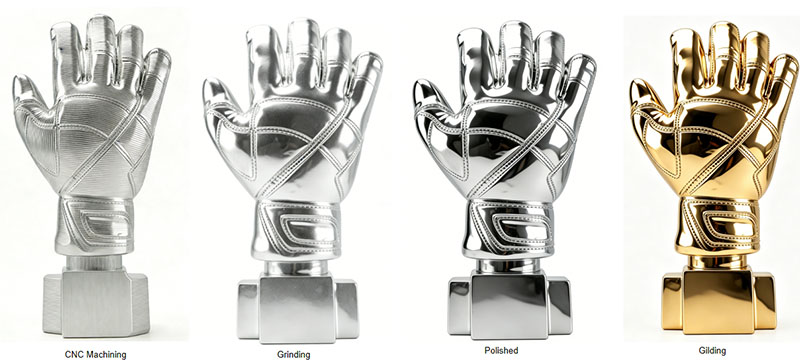
How is gold plating quality assessed?
The quality of gold-plated products—whether the substrate is metal or another gold-plated material—significantly impacts the product's overall quality and sales performance.
The nine common inspection criteria for gold plating are:
Coating Thickness: Measured using an X-ray fluorescence (XRF) thickness gauge; generally, a thickness greater than 0.02 mm is considered acceptable.
Coating Adhesion: Apply 3M adhesive tape over a cross-hatched area (scored into 1mm x 1mm squares) on the plated surface. Ensure full contact, then rapidly peel the tape off at a 45-degree angle. Under 10x magnification, the coating must show no signs of detachment, loose metal powder, or material lifting; there must be no peeling or blistering of the metal coating.
Abrasion Resistance Test: Rub the product back and forth 100 times against coarse cloth using 500g of force; the coating must not discolor, detach, or expose the substrate or base color.
Alcohol Resistance Test: Rub the plated surface 100 times with a white cotton cloth dampened with 95% ethanol (damp enough to be wet but not dripping); the coating must show no adverse reaction.
High-Temperature/High-Humidity Test: Test for 6 hours at 90%–95% humidity (60°C for ABS substrates, 90°C for PC substrates); the coating must show no bulging, blistering, or detachment.
Thermal Shock Test: Cycle through -1°C (30 min), room temperature (2 min), and 70°C (30 min); the coating must show no bulging, blistering, or detachment.
Salt Spray Test: Spray with 5% saline solution at 35°C for 8 hours per cycle (3 cycles total); the coating must show no adverse reaction.
Perspiration Resistance Test: Immerse in a solution of 5% NaCl, 10% lactic acid, and 85% distilled water at room temperature for 24 hours; the coating must show no adverse reaction.
Surface Appearance Requirements: The coating must be smooth, flat, uniform, and glossy, with no color variation within the same batch; the surface must be free from blistering, peeling, burning, pitting, roughness, water marks, or discoloration spots.
Gold and Hard Gold Platings
1.Thickness Ranges and Applications
See the table for the thickness ranges and applications of gold and hard gold platings.
Base Material | Environmental Condition | Thickness (μm) | Designation | Application |
Copper & Copper Alloys | T | 1~3 | Ep·Au1 | Electrical components used to reduce contact resistance |
Copper & Copper Alloys | T | 1~3 | Ep·Au1hd | Electrical components used to reduce contact resistance |
Copper & Copper Alloys | T | 3~5 | Ep·Au3 | Contacts of waveguides and multi-waveguide connectors |
Copper & Copper Alloys | T | 3~5 | Ep·Au3hd | Contacts of waveguides and multi-waveguide connectors |
Copper & Copper Alloys | T | 5~8 | Ep·Au5 | Conductive and wear-resistant parts, such as relay contact strips |
Copper & Copper Alloys | T | 5~8 | Ep·Au5hd | Conductive and wear-resistant parts, such as relay contact strips |
Copper & Copper Alloys | T | 8~12 | Ep·Au8 | Parts requiring both conductivity and wear resistance under anti-corrosion conditions |
Copper & Copper Alloys | T | 8~12 | Ep·Au8hd | Parts requiring both conductivity and wear resistance under anti-corrosion conditions |
Aluminum & Aluminum Alloys | T | 1~3 | Ep·Au1 | High-frequency components |
2. Characteristics of Gold and Hard Gold Platings
(1) Standard gold plating is semi-glossy and golden-yellow; hard gold plating is glossy and pale yellow with a slight reddish (or brownish) tint. The electrical resistivity (at 25°C) is 2.21 μΩ·cm.
(2) It acts as a cathodic coating relative to copper. Standard gold plating is soft (hardness HV40–HV100), capable of withstanding bending and stretching, but has poor wear resistance. Hard gold plating offers superior wear resistance and hardness, with microhardness reaching HV130–HV250.
(3) It exhibits excellent electrical conductivity and oxidation resistance; it is highly stable in the atmosphere and retains its luster and infrared reflectivity over long periods.
(4) Gold coatings thinner than 3 μm are porous, so silver should not be used as an underlayer; for coatings thicker than 3 μm, the underlayer thickness can be determined as required.
(5) Gold plating forms brittle intermetallic compounds with tin-lead solder, thereby reducing the strength of the solder joint.
(6) When depositing gold onto brass, a nickel underlayer is recommended to prevent zinc from the substrate from diffusing to the surface of the gold coating.
3. Usage Requirements
(1) Parts intended for decorative purposes or for enhancing reflectivity should be gold-plated rather than hard-gold plated.
(2) For blind holes, slots, or gaps with a diameter or width of 3 mm or less: if the depth is at least twice the diameter or width, the absence of a coating is permitted; if the depth is less than twice the diameter or width, there is no requirement regarding coating thickness.
(3) For through-holes with a diameter or width of 3 mm or less: if the depth is at least three times the diameter or width, the absence of a coating is permitted; if the depth is less than three times the diameter or width, there is no requirement regarding coating thickness.
How Can the Gold Content of a Surface Plating Be Determined?
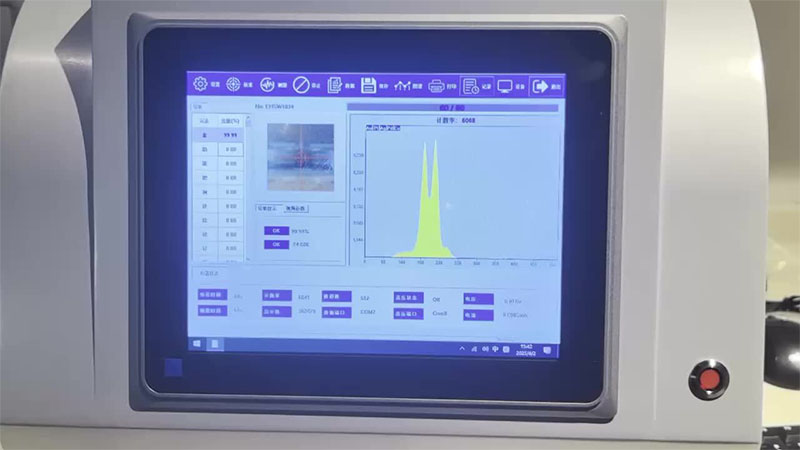
Traditional methods for verifying the gold content of surface plating lack accuracy; it is best to consult a professional testing agency! (See the image below for reference.)
Huazheng offers the following solutions:
1. One-stop CNC solutions
2. Materials: Metals and non-metals
3. Surface treatments: Gold plating, silver plating, and copper plating solutions.
WhatsApp: +86 13421341931
Email address: info@huazhengmodel.com


