



1. Introduction
Magnesium and titanium alloys are high-performance structural materials widely used in aerospace, medical devices, robotics, and automotive lightweight applications. However, each material presents distinct CNC machining challenges:
Magnesium Alloys: Extremely low density and excellent vibration-damping properties, but high chemical reactivity, fire risks during chip machining, and susceptibility to thin-wall deformation, chatter, and post-machining corrosion.
Titanium Alloys: Excellent strength-to-weight ratio and corrosion resistance, but low thermal conductivity, high cutting temperatures, significant cutting forces, and a tendency toward work hardening under certain machining conditions.
Many manufacturers focus primarily on cutting-tool grades, spindle speeds, and feed rates while overlooking the critical role of tool holders. Tool-holder runout, clamping rigidity, vibration-damping characteristics, and body geometry directly influence machining stability, dimensional accuracy, surface finish, and batch-to-batch consistency.
For Magnesium Alloy Machining, corrosion prevention must also be considered throughout the entire manufacturing process, from material selection and cutting-fluid management to post-machining cleaning, drying, and final surface treatment.
This comprehensive guide explores five major tool-holder types, practical 3-axis and 5-Axis Machining parameters, magnesium-versus-aluminum corrosion mechanisms, dimensional tolerance and surface roughness considerations, and DFM recommendations. It also explains how Huazheng Precision uses shrink-fit tool holders as part of its machining strategy to improve tool stability, maintain tight tolerances, and achieve consistent quality in demanding magnesium and titanium alloy components.
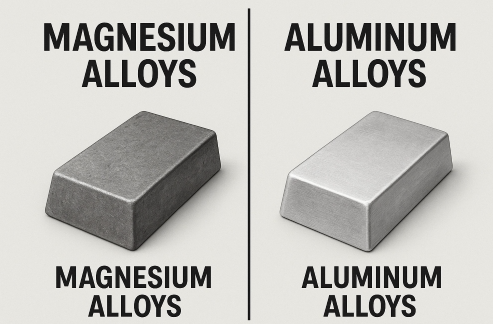
2. Corrosion Mechanisms: Magnesium Alloys vs. Aluminum Alloys
Many designers consider magnesium alloys as lightweight alternatives to aluminum, but overlook their fundamental differences in electrochemical behavior and passive-film stability.

2.1 Why Magnesium Alloy Corrosion Is More Difficult to Control
Magnesium has a highly negative electrochemical potential, making it particularly susceptible to galvanic and electrochemical corrosion. Its naturally formed surface film, mainly consisting of MgO and Mg(OH)₂, is generally less protective than the aluminum oxide film, especially in humid or chloride-containing environments.
Three key factors accelerate magnesium alloy corrosion:
1. Unstable Native Surface Film
The naturally formed MgO/Mg(OH)₂ layer is relatively porous and less protective in aggressive environments. Unlike aluminum oxide, it generally provides limited corrosion protection and cannot reliably maintain a stable passive state after surface damage.
2. Negative Difference Effect (NDE)
Magnesium may exhibit the negative difference effect during anodic dissolution, where hydrogen evolution increases as the anodic potential becomes more positive. When electrically coupled with more noble metals, galvanic corrosion can further accelerate magnesium dissolution, particularly in the presence of moisture or electrolytes.
2.1. Impurity Sensitivity
Iron, nickel, and copper impurities can form highly cathodic sites within the magnesium alloy matrix. These sites create local micro-galvanic cells, accelerating localized corrosion and pitting. Strict impurity control is therefore essential for corrosion-resistant magnesium alloy components.
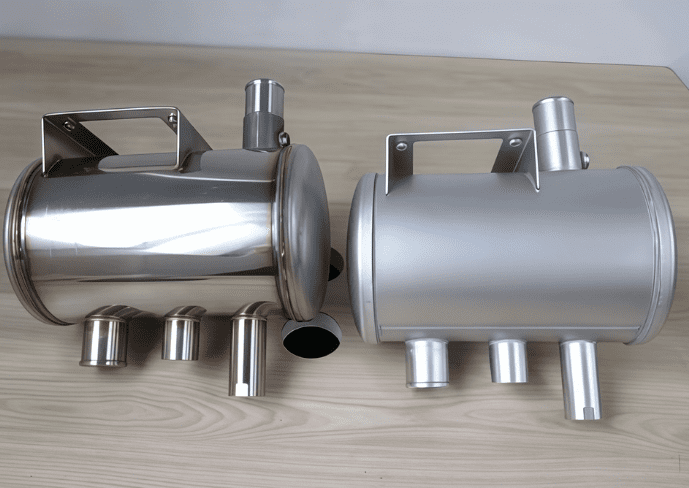
2.2 Aluminum Alloy Passivation Is Not Permanent
Aluminum naturally forms a thin, dense aluminum oxide (Al₂O₃) film when exposed to air. This passive layer provides good general corrosion resistance under normal atmospheric conditions. However, its protective performance has certain limitations:
Chloride-Induced Pitting: Chloride-rich environments can locally break down the oxide film, leading to pitting corrosion.
Intergranular Corrosion: Certain heat-treated aluminum alloys, particularly susceptible high-strength grades, may develop intergranular corrosion under specific environmental conditions.
Mechanical and Chemical Damage: Deep scratches, surface damage, or aggressive chemical treatments can compromise the protective oxide layer and increase localized corrosion risks.
Key Takeaway:
Direct material substitution should not be the first consideration when selecting between magnesium and aluminum alloys. The correct engineering approach is to evaluate the material grade, operating environment, structural requirements, joining methods, and protective surface treatments to ensure reliable magnesium-alloy component performance.
3. Comparison of Five Main Tool Holder Types for Magnesium & Titanium Alloy Machining
Five commonly used tool holder types include ER collet chucks, side-lock (Weldon) holders, hydraulic chucks, shrink-fit holders, and power chucks. Their performance varies in terms of concentricity, vibration damping, clamping rigidity, suitability for roughing and finishing, accessibility in deep-cavity machining, axial tool retention, cost, and tool change time.
Table 1. Performance Comparison of Five Tool Holder Types for Magnesium and Titanium Alloy CNC Machining
Performance | ER Collet Chuck | Side Lock (Weldon) | Hydraulic Chuck | Shrink Fit Chuck | Power Chuck |
Concentricity | Medium (runout 0.015 mm) | Poor (runout 0.010 mm) | Excellent | Excellent (<=0.0020.003 mm=""> | Excellent |
Damping Effect | Poor | Poor | Excellent | Good | Medium |
Roughing | OK | Excellent | Not good | OK | Excellent |
Finishing / Surface Quality | Limited | Poor | Excellent | Excellent | OK |
Slim Profile / Deep Cavity | Not recommended | Not recommended | Medium | Excellent | Limited |
Axial Clamping Force | Weak | Strong | Medium | Strong | Strong |
Cost | Low | Low | Medium | High | High |
Tool Change Time | Short | Short | Medium | Long (needs heating unit) | Medium |
4. Tool Holder Characteristics, Machining Challenges & Practical Solutions
4.1 ER Collet Chuck
An ER collet chuck uses a precision collet compressed by a locking nut to clamp the cutting tool shank. It is a versatile and cost-effective tool holding system compatible with a wide range of tool diameters.
Advantages:
Low purchase cost and wide availability.
Quick tool changes and flexible tool compatibility.
Suitable for small-batch production and general CNC machining.
Challenges in Magnesium & Titanium Machining:
Runout may reach 0.015 mm or more, depending on collet quality, holder condition, and assembly accuracy.
Limited clamping rigidity may contribute to chatter during heavy titanium cutting and thin-wall magnesium machining.
Tool retention and stability may become concerns under high spindle speeds if clamping conditions are inadequate.
Recommended Solution:
Use ER collet chucks for general machining, roughing, and non-critical features. For tight-tolerance finishing, high-speed machining, and vibration-sensitive components, consider shrink-fit tool holders with verified low runout.
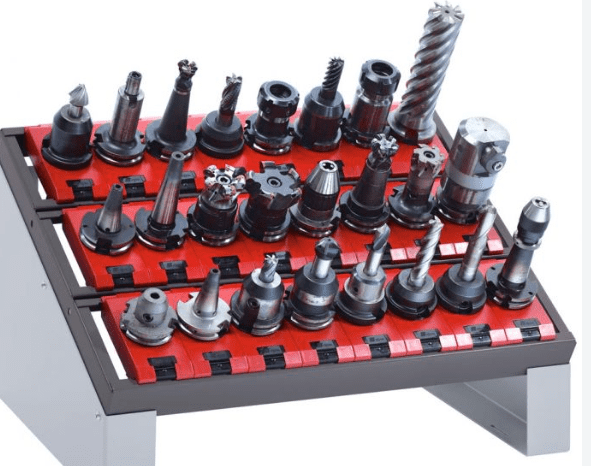
4.2 Side-Lock (Weldon) Tool Holder
A side-lock tool holder secures the cutting tool through a radial set screw engaging the Weldon flat on the tool shank, providing reliable axial retention during demanding cutting operations.
Advantages:
Strong axial tool retention.
Reliable performance during heavy roughing.
Suitable for high material removal rates and demanding milling operations.
Challenges in Magnesium & Titanium Machining:
Single-sided screw clamping can introduce radial displacement and increase runout.
Uneven clamping forces may cause localized stress or tool shank deformation.
Reduced concentricity can affect surface finish and dimensional consistency.
Less suitable for precision finishing and vibration-sensitive thin-wall magnesium components.
Recommended Solution:
Use side-lock holders primarily for roughing and heavy material removal where tool retention is the priority. For titanium finishing, precision machining, and thin-wall magnesium components, switch to high-rigidity, low-runout shrink-fit holders when the application requires better concentricity.
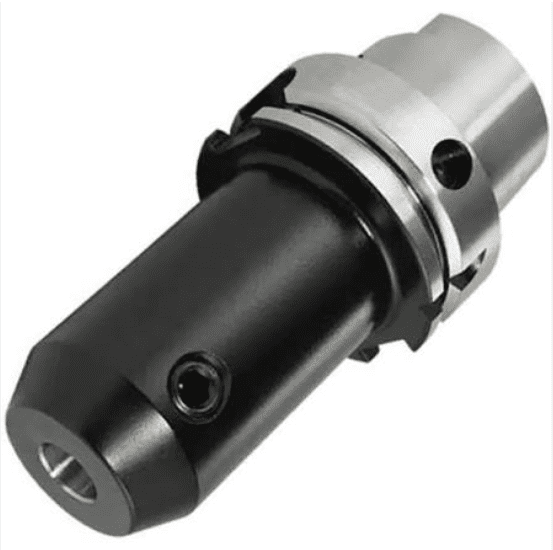
4.3 Hydraulic Tool Holder
Hydraulic tool holders use internal hydraulic pressure to expand a precision sleeve, securely clamping the cutting tool shank while providing effective vibration damping.
Advantages:
High concentricity and good vibration-damping performance.
Suitable for precision finishing and small-diameter machining.
Helps improve surface finish and machining consistency.
Challenges in Magnesium & Titanium Machining:
Limited clamping capacity compared with heavy-duty mechanical and shrink-fit systems, depending on holder design.
May not provide sufficient rigidity for demanding heavy-duty titanium cutting.
Deep-cavity and thin-wall machining may require greater clamping rigidity and tool stability.
Hydraulic system ageing, leakage, or contamination may affect long-term performance and accura
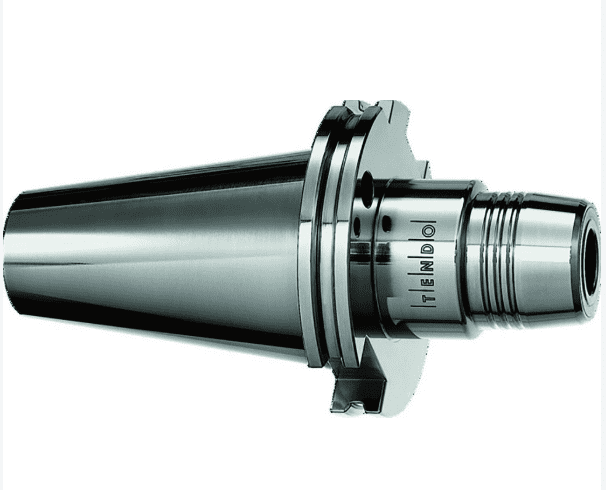
4.4 Shrink-Fit Tool Holder (Our Factory's Standard Configuration)
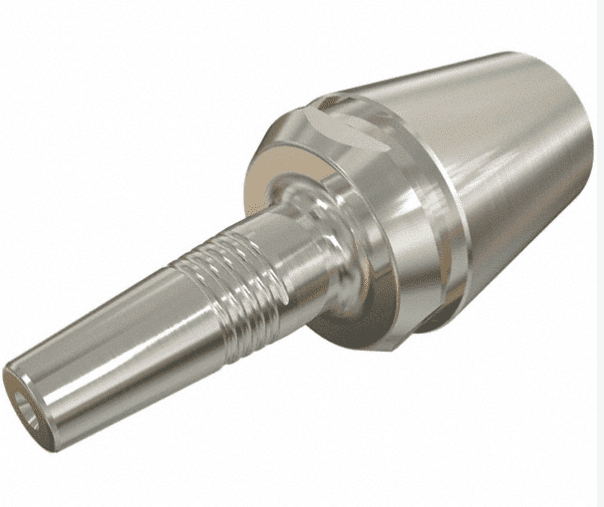
Shrink-fit holders use thermal expansion to clamp cutting tools through uniform 360° circumferential pressure, providing high rigidity and low runout.
High Concentricity: Runout can reach ≤0.002–0.003 mm at 3×D, depending on holder and tool accuracy.
High Clamping Rigidity: Reduces tool vibration, chatter, and movement during magnesium and titanium machining.
Slim Design: Improves tool accessibility for 5-axis machining, deep cavities, and narrow grooves.
Reliable Tool Retention: Provides secure clamping for high-speed magnesium finishing and medium-load titanium semi-finishing.
Limitations:
Requires dedicated heating and cooling equipment.
Higher initial equipment investment.
Requires precision-ground tool shanks with h6 tolerance.
Tool changes may take longer without automated heating equipment.
4.5 Power Chuck (High-Clamping-Force Chuck)
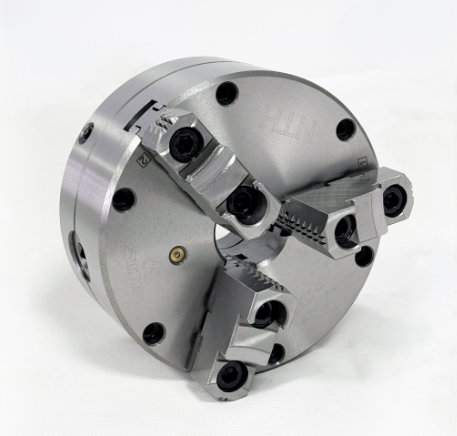
A mechanically actuated chuck with a multi-slot clamping mechanism, providing high clamping force for both roughing and finishing operations.
Advantages:High clamping force, good concentricity, and reliable workpiece retention.
Challenges in Magnesium & Titanium Machining:Its relatively large outer diameter increases collision risks during 5-axis deep-cavity machining. Moderate vibration-damping capability may still allow chatter when machining ultra-thin magnesium walls. Higher manufacturing and maintenance costs may also apply.
Recommended Application:Suitable for large-diameter workpieces, heavy roughing operations, and general precision machining where strong and stable clamping is required.
5. 3-Axis vs. 5-Axis CNC Machining: Parameters and Tool Holder Influence
3-axis machining often requires multiple setups for complex parts, increasing positioning errors. 5-axis machining reduces setups, improves tool accessibility, and enhances machining stability, especially for thin-walled magnesium and complex titanium alloy components.
Item | 3-Axis CNC | 5-Axis CNC | Tool Holder Impact |
Setup/Datum | Multiple setups increase the | Fewer setups and a consistent | Shrink-fit holders provide |
Typical Achievable | ±0.02-0.05 mm | ±0.005-0.015 mm | Low-runout tool holders help |
Thin-Wall | Higher risk of vibration, | Multi-axis machining can | Slim-profile shrink-fit holders |
Magnesium Alloy | deformation,and | reduce repositioning and | improve access to deep and |
Risk | machining instability. | improve tool accessibility, | narrow features. |
Titanium Cutting | Greater susceptibility to | Optimized tool orientation | High-rigidity shrink-fit holders |
Loads | chatter under demanding | can improve cutting stability | help withstand heavy titanium |
Fixture/Support | Often requires complex | Fewer setups and more | Performance can be further |
Requirements | custom fixtures and | flexible tool orientations can | improved with high-speed, |
6. Frequently Asked Questions (FAQ)
Q1: Is a shrink-fit tool holder necessary for all magnesium and titanium machining?
A1: No. ER or side-lock holders are suitable for general machining. Shrink-fit holders are recommended for tight tolerances, thin walls, deep cavities, and fine surface finishes.
Q2: What are the differences between 3-axis and 5-axis CNC machining?
A2: 3-axis machining often requires multiple setups for complex parts. 5-axis machining reduces setups, improves tool accessibility, and enhances machining consistency and surface quality.
Q3: How long does a shrink-fit tool holder last?
A3: Service life depends on material quality, heating cycles, operating conditions, and maintenance. Proper use helps maintain clamping performance and accuracy.
Q4: Can shrink-fit holders accommodate small-diameter tools?
A4: Yes. They support small tool diameters such as φ3 mm, φ4 mm, and φ6 mm, making them ideal for precision machining of narrow grooves and deep cavities.
Q5: What tolerances can Huazheng achieve for magnesium and titanium alloy parts?
A5: Huazheng can achieve tolerances of approximately ±0.005–0.01 mm on selected precision features, depending on part geometry, material, and machining conditions. All requirements are evaluated during DFM review.
Q6: Which surface treatment offers the best corrosion resistance for magnesium alloys?
A6: PEO (MAO) combined with sealing or a topcoat provides enhanced corrosion protection. Chemical conversion coatings are suitable for less demanding environments. Salt-spray performance requires testing.
Q7: Can water-based cutting fluids be used for magnesium machining?
A7: They require careful evaluation due to corrosion and safety risks. Oil-mist or MQL may be suitable alternatives, with proper fire-prevention measures.
Q8: What is the minimum wall thickness for magnesium alloy parts?
A8: Walls as thin as 0.4 mm may be achievable for selected components. Actual limits depend on geometry, material, and machining conditions. DFM review is recommended.
Q9: Can galvanic corrosion occur between magnesium fasteners and aluminum parts?
A9: Yes. Moisture or saltwater can trigger galvanic corrosion. Insulating washers, protective coatings, and sealed contact surfaces help reduce the risk.
7. RFQ Requirements & Quotation Process
To receive an accurate quotation, please provide the following information:
Material Grade: AZ31B, AZ91D, WE43, Ti-6Al-4V, or pure titanium.
Tolerances & Surface Finish: Critical dimensions, geometric tolerances, and Ra requirements.
Part Geometry: Wall thickness, machining depth, deep cavities, and critical features.
Production Quantity: Prototype, small-batch, or mass production.
Machining Requirements: Specific requirements for 3-axis or 5-axis CNC machining.
Surface Treatment: Chemical conversion, MAO/PEO, painting, passivation, or other finishes.
Inspection & Documentation: CMM reports, FAI reports, and material certificates.
Delivery Requirements: Target lead time and destination country.
Our Engineering Support
After receiving your drawings, our engineering team provides DFM analysis, machining feasibility evaluation, tool holder and cutting strategy optimization, cycle time estimation, and detailed quotations. We support your project from prototyping to mass production.


