



3-Axis vs 5-Axis CNC Machining: Parameters and Tool Holder Influence
Machine configuration directly affects datum accuracy, setup consistency, and the mechanical loads acting on the cutting tool and tool holder. 3-axis machining often requires multiple setups and re-fixturing for complex geometries, increasing the risk of accumulated positioning and clamping errors. In contrast, 5-Axis Machining enables complex parts to be completed in fewer setups, reducing datum shifts and improving machining stability, particularly when processing thin-walled magnesium and titanium alloy components.
Item | 3-Axis CNC | 5-Axis CNC | Tool Holder Impact |
Setup/Datum | Multiple setups increase the | Fewer setups and a consistent | Shrink-fit holders provide |
Typical Achievable | ±0.02-0.05 mm | ±0.005-0.015 mm | Low-runout tool holders help |
Thin-Wall | Higher risk of vibration, | Multi-axis machining can | Slim-profile shrink-fit holders |
Magnesium Alloy | deformation,and | reduce repositioning and | improve access to deep and |
Risk | machining instability. | improve tool accessibility, | narrow features. |
Titanium Cutting | Greater susceptibility to | Optimized tool orientation | High-rigidity shrink-fit holders |
Loads | chatter under demanding | can improve cutting stability | help withstand heavy titanium |
Fixture/Support | Often requires complex | Fewer setups and more | Performance can be further |
Requirements | custom fixtures and | flexible tool orientations can | improved with high-speed, |
Magnesium Alloy Cutting Parameters (Using Shrink-Fit Tool Holders)
Important Magnesium Machining Notes:
Use oil-mist lubrication or Minimum Quantity Lubrication (MQL) during machining. Avoid water-based coolants unless a validated process specifically permits their use, as residual moisture may contribute to corrosion. Collect fine magnesium chips separately and maintain strict fire-prevention measures. All parameters are for reference only and should be adjusted according to workpiece rigidity, tool material, tool geometry, and clamping conditions.
Table 3. Recommended Cutting Parameters for AZ31B and AZ91D Magnesium Alloys: 3-Axis vs. 5-Axis CNC Machining
Operation | 3-Axis CNC Speed / Feed / Depth | 5-Axis CNC Speed / Feed / Depth | Remarks |
Rough Milling | 6,000–10,000 rpm / 800–1,500 mm/min / 1.0–2.5 mm | 8,000–12,000 rpm / 1,000–2,000 mm/min / 0.8–2.0 mm | Use oil-mist cooling to minimize heat buildup. |
Semi-Finishing | 8,000–12,000 rpm / 1,000–1,800 mm/min / 0.4–0.8 mm | 10,000–15,000 rpm / 1,200–2,500 mm/min / 0.3–0.6 mm | Reduce machining-induced residual stress. |
Finish Milling | 10,000–15,000 rpm / 1,000–2,000 mm/min / 0.1–0.25 mm | 12,000–18,000 rpm / 1,200–3,000 mm/min / 0.08–0.2 mm | Low tool runout helps maintain consistent wall thickness. |
Operation | 3-Axis CNC Speed / Feed / Depth | 5-Axis CNC Speed / Feed / Depth | Remarks |
Supplementary Magnesium Drilling & Tapping Guidelines
Drilling: Use carbide drills at 3,000–8,000 rpm with a feed rate of 100–400 mm/min. Apply peck drilling to improve chip evacuation and prevent chip accumulation.
Tapping: Use HSS-E taps at 200–800 rpm, with the feed rate synchronized to the thread pitch. Apply dedicated tapping lubricant suitable for magnesium alloys.
Post-Machining Cleaning: Thoroughly remove all cutting fluid residues and magnesium chips or fine particles before surface treatment. Residual cutting fluids and contaminants may cause corrosion and compromise subsequent surface treatment quality.
Titanium Alloy Cutting Parameters (Using Shrink-Fit Tool Holders)
Table 4. Recommended Cutting Parameters for Ti-6Al-4V Titanium Alloy: 3-Axis vs. 5-Axis CNC Machining
Operation | 3-Axis Speed / Feed Rate / Depth of Cut | 5-Axis Speed / Feed Rate / Depth of Cut | Remarks |
Rough Milling | 5,000–7,000 rpm / 300–600 mm/min / 0.8–1.5 mm | 6,000–8,000 rpm / 400–800 mm/min / 0.6–1.2 mm | Use moderate cutting speeds and high-rigidity tool holders to maintain machining stability. |
Semi-Finishing | 6,000–8,000 rpm / 400–700 mm/min / 0.3–0.6 mm | 7,000–9,000 rpm / 500–900 mm/min / 0.25–0.5 mm | Maintain a consistent cutting load and minimize localized heat buildup. |
Finish Milling | 8,000–10,000 rpm / 400–800 mm/min / 0.15–0.3 mm | 9,000–12,000 rpm / 500–1,000 mm/min / 0.12–0.25 mm | Minimize tool runout to improve surface finish and extend tool life. |
Thin-Wall Finishing | 8,000–10,000 rpm / 250–500 mm/min / 0.08–0.15 mm | 9,000–12,000 rpm / 300–600 mm/min / 0.05–0.12 mm | Use rigid shrink-fit tool holders and optimized toolpaths to reduce vibration and chatter. |
Core Process Principle: Combine high-speed machining with low tool runout and high clamping rigidity. Precision shrink-fit tool holders provide stable tool clamping and minimize runout, supporting higher spindle speeds and lighter finishing cuts. This helps improve surface quality, maintain machining stability, and reduce deformation risks when machining magnesium alloy thin-wall components.
Standard Machining Tolerances & Surface Roughness for Magnesium and Titanium Alloy Parts
Dimensional and Geometric Tolerances
The achievable dimensional and geometric tolerances of magnesium and titanium alloy components depend on material properties, part geometry, machining strategy, workpiece rigidity, clamping conditions, and inspection methods. With advanced 5-axis CNC machining and controlled manufacturing processes, Huazheng Precision supports high-precision machining of complex components with tight dimensional requirements.
Table 5. Achievable Dimensional and Geometric Tolerances for Magnesium and Titanium Alloy Parts in 5-Axis CNC Machining
Feature | Magnesium Alloy (5-Axis) | Titanium Alloy (5-Axis) | With Shrink-Fit Optimization |
Dimension > 50 mm | ±0.05 mm | ±0.03 mm | ±0.01 mm |
Dimension 10–50 mm | ±0.03 mm | ±0.02 mm | ±0.008 mm |
Dimension < 10 mm | ±0.02 mm | ±0.015 mm | ±0.005 mm |
Hole Position | ±0.04 mm | ±0.03 mm | ±0.01 mm |
Flatness / Parallelism | 0.06 mm / 100 mm | 0.04 mm / 100 mm | 0.015 mm / 100 mm |
Thin-Wall Thickness | ±0.05 mm | ±0.03 mm | ±0.02 mm |
Surface Roughness (Ra) Standards
Table 6. Typical Surface Roughness (Ra) Benchmarks for Magnesium and Titanium Alloy CNC Machined Parts
Machining Process | Magnesium Alloy (Ra) | Titanium Alloy (Ra) |
Rough Milling | 3.2–6.3 μm | 3.2–6.3 μm |
Semi-Finishing | 1.6–3.2 μm | 1.6–3.2 μm |
Precision Finishing | 0.8–1.6 μm | 0.8–1.6 μm |
High-Precision Finishing | 0.4–0.8 μm | 0.4–0.8 μm |
Fine Grinding | 0.2–0.4 μm | 0.2–0.4 μm |
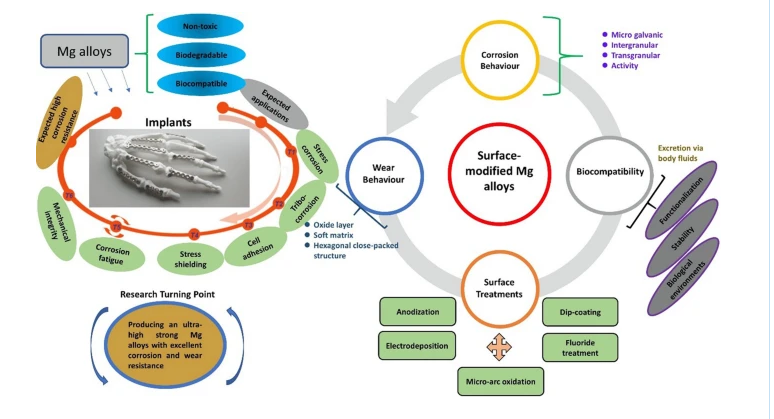
Magnesium Alloy Surface Treatments for Corrosion Protection
Freshly machined magnesium alloy surfaces are highly reactive and require appropriate surface protection to improve corrosion resistance, wear resistance, and service life. Selecting the right surface treatment depends on the alloy grade, component geometry, operating environment, and performance requirements.
Huazheng Precision supports various magnesium alloy surface treatment solutions, including:
1. Chromate-Free Chemical Conversion Coating
Forms a protective conversion layer on magnesium surfaces to improve corrosion resistance and provide an excellent base for subsequent painting or powder coating. It is a cost-effective solution for applications requiring moderate corrosion protection.
2. PEO / Micro-Arc Oxidation (MAO)
Creates a hard ceramic-like oxide coating through plasma-assisted electrochemical treatment. It provides improved surface hardness, wear resistance, and corrosion protection, making it suitable for demanding aerospace, robotics, and industrial applications.
3. Magnesium Alloy Anodizing
Uses a specialized electrochemical process to form a protective oxide layer on magnesium alloy surfaces. Depending on the process, it can improve corrosion resistance, surface hardness, and coating adhesion.
4. Powder Coating / Liquid Painting
Provides an additional protective barrier against moisture, chemicals, and environmental exposure. These coatings are commonly applied over suitable conversion coatings or PEO layers to improve overall corrosion protection and appearance.
5. Electroless Nickel Plating
Deposits a uniform nickel-phosphorus coating without external electrical current, providing improved surface hardness, wear resistance, and corrosion protection when properly applied.
Optimized Version
We standardize shrink-fit tool holders for tight-tolerance magnesium and Titanium Alloy Machining projects. Their key precision-related advantages include:
1. Consistent Batch-to-Batch Precision
Ultra-low tool runout (≤0.003 mm) helps maintain machining stability, supporting dimensional tolerances of ±0.005–0.01 mm and surface roughness of Ra 0.4–0.8 μm under optimized machining conditions.
2. Thin-Wall Part Protection
Uniform 360-degree circumferential clamping minimizes uneven clamping forces and helps reduce tool vibration. This improves machining stability and minimizes chatter marks and deformation risks when machining thin-walled magnesium components.
3. Titanium Alloy Chatter Reduction
High clamping rigidity helps resist vibration caused by titanium alloy's high cutting forces and demanding machining conditions. This contributes to improved surface quality, more consistent dimensional accuracy, and longer tool life.
4. 5-Axis Deep-Cavity Accessibility
Slim-profile tool holder designs provide better access to narrow grooves, deep pockets, and complex geometries that may be difficult to reach with bulkier tool holders.
5. Improved Machining Repeatability
Stable circumferential clamping helps maintain tool positioning and reduce the risk of tool slippage. Combined with controlled machining parameters and inspection procedures, it supports consistent quality from first-article inspection through mass production.
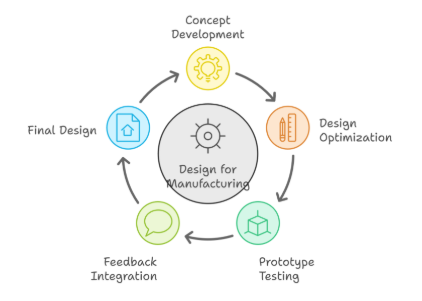
DFM (Design for Manufacturability) Guidelines
DFM should consider tool holder limitations, machining process constraints, part geometry, and magnesium alloy corrosion prevention requirements to ensure stable and efficient manufacturing.
1. Minimize Tool Overhang
Excessive tool overhang can increase tool deflection and vibration, negatively affecting machining accuracy and surface quality. For deep-cavity features, consider slim-profile shrink-fit tool holders to improve accessibility and rigidity compared with extended tool assemblies.
2. Magnesium Alloy Thin-Wall Design
Avoid wall thicknesses below 0.4 mm unless required by the part's functional or structural design. Add supporting ribs where possible and optimize cutting depths to reduce vibration and deformation risks, even when shrink-fit tool holders are used. The minimum achievable wall thickness should be confirmed through DFM evaluation and process testing.
3. Titanium Alloy Narrow-Cavity Design
Maintain sufficient clearance for the cutting tool and tool holder body when designing narrow cavities and deep pockets. During DFM reviews, our engineering team checks potential tool holder interference to improve tool accessibility and machining feasibility.
4. Rational Tolerance Allocation
Assign tight tolerances only to critical functional features. For tolerances of ±0.005 mm or tighter, our engineering team evaluates the machining strategy, tool holder configuration, fixturing, and inspection requirements. For less demanding features (e.g., tolerances of ±0.02 mm or looser), ER collet holders may be considered where suitable to optimize machining costs.
5. Tool Shank Specifications for Shrink-Fit Holders
Specify precision-ground tool shanks with the required h6 tolerance for shrink-fit applications. Scratched, worn, or out-of-specification shanks can affect clamping performance, damage the holder bore, and compromise runout accuracy.
6. Magnesium-Specific Corrosion Prevention Checklist
Include corrosion prevention requirements in the DFM review, covering material grade, cutting fluid selection, chip removal, post-machining cleaning and drying, surface protection, and contact with dissimilar metals. These measures help reduce corrosion risks during manufacturing, storage, and service.
Typical Application Industries
Huazheng Precision provides custom magnesium and titanium alloy CNC machining solutions for a wide range of high-performance applications.
Aerospace & UAV: Lightweight structural components, aircraft brackets, drone frames, and precision aerospace parts.
Medical Devices: Surgical instruments, portable diagnostic equipment housings, and titanium implant-related components.
Robotics & Automation: Robot end effectors, joint components, gimbal assemblies, and precision equipment brackets.
Automotive & Motorsport: Lightweight structural brackets, performance components, and precision automotive parts.
Electronics & Thermal Management: Heat-dissipation housings, electronic enclosures, and lightweight frames for handheld devices.
Why Choose Huazheng Precision
Specialized CNC Machining Expertise: We specialize in 3-axis and 5-axis CNC machining of high-precision magnesium and titanium alloy components, with practical experience in AZ31B, AZ91D, WE43, ZK60, Ti-6Al-4V, and commercially pure titanium.
Advanced Shrink-Fit Tool Holder Systems: We use standardized shrink-fit tool holder configurations for tight-tolerance machining projects, supported by in-house heating equipment and tool presetting to improve machining stability and consistency.
Optimized Machining Parameters: Our accumulated machining experience and process data help optimize cutting parameters for magnesium and titanium alloys, improving machining efficiency, surface quality, and dimensional consistency.
In-House Quality Inspection: Our inspection equipment includes CMM coordinate measuring machines, surface roughness testers, and height gauges. FAI reports and batch inspection records are available upon request.
Free Pre-Quotation DFM Review: Our engineering team reviews part designs before quotation to identify manufacturability issues, potential corrosion risks, and unreasonable tolerances, helping reduce production risks and unnecessary costs.
One-Stop CNC Machining Solutions: We provide CNC machining, deburring, stress relief, surface treatment coordination, cleaning, and final packaging. From one-off prototypes and small batches to mass production, we support your project throughout the manufacturing process.
RFQ Requirements & Quotation Process
To help our engineering team evaluate your project and prepare an accurate quotation, please provide the following information when submitting your drawings:
Material Grade: Specify the magnesium or titanium alloy grade, such as AZ31B, AZ91D, WE43, Ti-6Al-4V, or commercially pure titanium.
Dimensional Tolerances & Surface Finish: Indicate critical dimensional tolerances, geometric tolerances, and surface roughness (Ra) requirements.
Part Geometry & Critical Features: Provide key wall thicknesses, maximum machining depths, deep-cavity structures, and other critical design details.
Production Quantity: Specify your requirements, including one-off prototypes, small-batch production, or mass production.
Machining Requirements: Indicate any specific machining requirements or preferences. Our engineering team will evaluate the most suitable 3-axis or 5-axis machining strategy based on part geometry and accuracy requirements.
Surface Treatment: Specify the required finishing process, such as chemical conversion coating, anodizing (where applicable), passivation, MAO/PEO, painting, or other treatments.
Inspection & Documentation: Specify your inspection requirements and documentation needs, including FAI reports, CMM inspection reports, and material certificates.
Delivery Requirements: Provide your target delivery schedule and destination country.
Our Engineering Support
After receiving your drawings and project requirements, our engineering team will conduct a DFM review, evaluate machining feasibility, optimize tool holder and cutting strategies, estimate machining cycle time, and prepare a detailed quotation. We support projects from initial prototyping to small-batch and mass production.
Applications of Magnesium Alloys Across Different Industries
Magnesium alloys are increasingly used across advanced manufacturing industries due to their lightweight properties, excellent machinability, and high strength-to-weight ratio. In robotics, they are used for humanoid robot joints, quadruped robot structural components, and precision housings. In automotive and electric vehicles, magnesium alloy parts help reduce vehicle weight and improve structural efficiency. Aerospace and drone manufacturers use magnesium components in lightweight structural parts and equipment housings. Other applications include AI equipment, electronic components, medical devices, energy storage systems, precision instruments, and semiconductor manufacturing equipment. With the growing demand for lightweight and high-precision components, magnesium alloy CNC machining continues to play an important role in next-generation industrial manufacturing.
Tool holder selection is an important factor influencing machining accuracy, surface quality, and process stability in magnesium and titanium alloy CNC machining. ER collet and side-lock holders offer cost-effective solutions for general machining and roughing operations, while shrink-fit tool holders provide high concentricity, strong clamping rigidity, and slim-profile designs for demanding applications involving tight tolerances, thin walls, and deep cavities. The optimal configuration depends on part geometry, machining requirements, and the selected 3-axis or 5-axis process.
For magnesium alloy components, corrosion prevention must be considered throughout the entire manufacturing process, from material selection and cutting fluid management to post-machining cleaning, drying, surface treatment, and assembly design.
At Huazheng Precision, we apply shrink-fit tool holder systems to selected high-precision machining projects, supported by accumulated machining experience, optimized cutting parameters, advanced CNC equipment, and comprehensive quality inspection procedures. By combining appropriate tooling strategies with controlled manufacturing processes, we help customers achieve consistent dimensional accuracy and surface quality from prototypes to mass production.
Send us your 2D drawings or 3D CAD files for a complimentary DFM review and a customized CNC machining quotation.


