



Do you know how titanium alloys are classified?
Are you also struggling to choose the right type of titanium alloy?
Thanks to their excellent strength-to-weight ratio,lightweight nature,and outstanding corrosion resistance,titanium alloys have become indispensable materials in high-performance application sectors such as aerospace,medicine,automotive engineering,marine engineering,and high-end manufacturing.
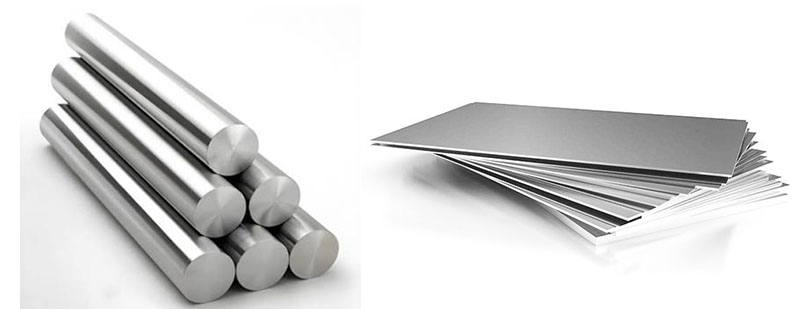
Classification of Titanium Alloys by Crystal Structure
Titanium alloys are typically classified according to their crystal structures.These structures directly influence the material's physical and mechanical properties,thereby determining their range of applications across various industries.Based on crystal structure,titanium alloys are primarily categorized into alpha(α),beta(β),and alpha-beta(α-β)types.
1.Alpha(α)Titanium Alloys
alpha titanium alloys consist primarily of the alpha(α)phase.These alloys exhibit excellent weldability,high-temperature resistance,and corrosion resistance,remaining stable in high-temperature and corrosive environments.However,compared to some other types of titanium alloys,their overall strength is generally relatively low.
Consequently,alpha titanium alloys are best suited for applications requiring high corrosion resistance,weldability,and high-temperature stability,but where requirements for ultimate strength are moderate.
2.Beta(β)Titanium Alloys
Beta titanium alloys contain a high proportion of the beta(β)phase and typically possess excellent strength,formability,and toughness.Compared to other titanium alloy types,beta alloys are highly responsive to heat treatment;appropriate heat treatment processes can yield a range of mechanical properties to meet diverse application needs.
Thanks to their high strength and excellent formability,beta titanium alloys are widely used in aerospace structural components,high-strength mechanical parts,and other industrial sectors demanding high material strength.
3.Alpha-Beta(α-β)Titanium Alloys
Alpha-beta titanium alloys contain both alpha(α)and beta(β)phases,combining the characteristics of both crystal structures.By adjusting alloy composition and heat treatment processes,the material's properties can be optimized to achieve a favorable balance of strength,toughness,and ductility.
Due to their excellent comprehensive properties and versatility,alpha-beta titanium alloys are among the most widely used titanium alloys,frequently employed in aerospace,automotive manufacturing,medical devices,and other high-performance engineering fields.
Classification | Crystal Structure | Heat Treatable | Weldability | Typical Applications |
Alpha (α) | HCP | No | Excellent | Chemical processing equipment, high-temperature engine components |
Near-alpha | Mainly HCP | Limited | Very good | Aerospace engines (maximum service temperature up to 550°C) |
Alpha-beta (α-β) | Mixed HCP/BCC | Yes | Moderate | Airframes, implants, general engineering applications |
Beta (β) | BCC | Yes | Fair to good | High-strength springs, landing gear, forgings |
Classification of Titanium Alloys by Strength
Based on tensile strength,titanium alloys are generally categorized into three groups:low-strength,medium-strength,and high-strength.The addition of alloying elements—such as aluminum,vanadium,and molybdenum—can further enhance their strength,heat resistance,and overall mechanical properties.
1.Low-Strength Titanium Alloys
Low-strength titanium alloys typically exhibit tensile strengths ranging from 345 MPa to 550 MPa;Grades 1 through 4 are representative examples.These materials prioritize formability and corrosion resistance,making them suitable for applications where strength requirements are relatively modest but demands for ease of fabrication and resistance to corrosion are high.For instance,certain titanium alloys with higher aluminum content are used for aircraft airframe components,architectural structures,and other corrosion-resistant parts.
2.Medium-Strength Titanium Alloys
Medium-strength titanium alloys generally possess tensile strengths between 550 MPa and 900 MPa and are widely used in sectors such as aerospace and shipbuilding.These alloys offer a favorable balance of strength,ductility,and corrosion resistance,making them suitable for use in complex and demanding operating environments.Grade 5 titanium(Ti-6Al-4V)is a prime example in this category,frequently utilized in aircraft airframes,aero-engine components,and marine structural parts.
3.High-Strength Titanium Alloys
High-strength titanium alloys typically feature tensile strengths exceeding 900 MPa and are primarily employed in fields demanding exceptional material performance,such as aerospace,defense,and high-end equipment manufacturing.To boost strength and heat resistance,alloying elements like molybdenum and vanadium are commonly added.Thanks to their outstanding overall properties,high-strength titanium alloys are widely used for critical components,including aerospace structural parts,turbine blades,and high-performance military equipment.
Comparison of Low-Grade and High-Grade Titanium
Grade | Composition | Tensile Strength | Main Applications | Relative Cost |
Grade 5 | Ti-6Al-4V | 895–1,170 MPa | Aerospace, medical, marine applications | Medium |
Grade 7 | Ti-0.15Pd | ~345 MPa | Chemical processing, seawater desalination | High (Pd) |
Grade 9 | Ti-3Al-2.5V | ~620 MPa | Cycling, sports, transportation | Medium |
Grade 12 | Ti-0.3Mo-0.8Ni | ~483 MPa | Chemical heat exchangers | Medium to Low |
Grade 23 | Ti-6Al-4V ELI | ~860 MPa | Implants, aerospace components requiring high toughness | High |
Grade 19 | Ti-3Al-8V-6Cr-4Mo-4Zr | >1,200 MPa (aged) | Springs, landing gear, forgings | Very High |
Classification of titanium alloy grades
Titanium and titanium alloys are classified into different grades based on their chemical composition,purity,and mechanical properties.Each grade possesses unique characteristics,allowing manufacturers to select the appropriate material based on specific operating environments and performance requirements.
1.Grade 1 Titanium
Grade 1 titanium is a high-purity grade of commercially pure titanium,with a titanium content of approximately 99%.It offers excellent corrosion resistance and good ductility and formability,though its strength is relatively low.
Due to its outstanding corrosion resistance,Grade 1 titanium is primarily used in applications requiring high resistance to corrosion,such as chemical processing equipment,marine engineering equipment,and components exposed to corrosive environments.
2.Grade 2 Titanium
Grade 2 titanium is one of the most widely used grades of commercially pure titanium in industry,offering a favorable balance of strength,ductility,and corrosion resistance.Compared to Grade 1,Grade 2 titanium offers higher strength while maintaining good workability and corrosion resistance.
Consequently,Grade 2 titanium is extensively used in sectors such as aerospace,medical devices,chemical processing equipment,and marine engineering,making it a highly versatile titanium material.
3.Grade 5 Titanium(Ti-6Al-4V)
Grade 5 titanium alloy,also known as Ti-6Al-4V,is one of the most widely used high-strength titanium alloys;its typical composition is approximately 90%titanium,6%aluminum,and 4%vanadium.This alloy features an excellent strength-to-weight ratio,high strength,good corrosion resistance,and superior overall mechanical properties.
Thanks to its outstanding performance,Grade 5 titanium is widely used in aerospace and automotive manufacturing,where lightweighting and high strength are critical requirements.Additionally,due to its excellent biocompatibility,it is widely used for orthopedic implants,dental implants,and other medical devices.
Key Application Areas of Titanium Alloys
Thanks to their excellent strength-to-weight ratio,superior corrosion resistance,good high-temperature performance,and outstanding biocompatibility,titanium alloys have become important advanced materials widely used in aerospace,medicine,marine engineering,automotive manufacturing,and various industrial sectors.
1.Aerospace
The aerospace industry is one of the sectors where titanium alloys are most widely used.Thanks to their high strength,low density,and excellent heat resistance,titanium alloys enable structural weight reduction while maintaining superior mechanical properties.
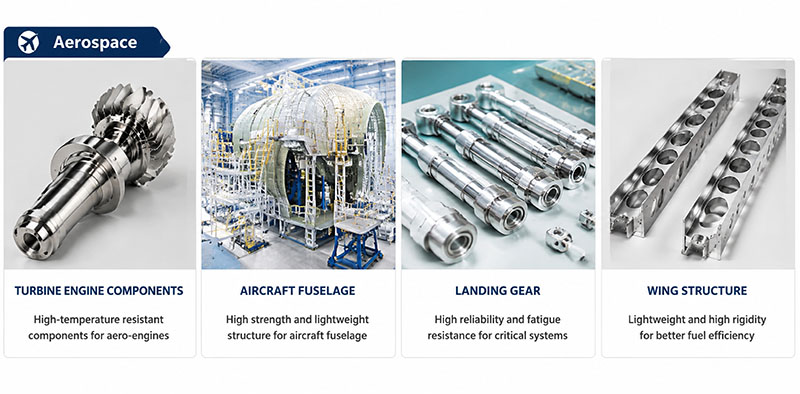
Titanium alloys are primarily used to manufacture:
Aero-engine components
Aircraft airframe structural parts
Landing gear assemblies
Wing structures and connecting components
Their outstanding overall performance makes them a key material for the lightweight design of modern aircraft and the manufacturing of high-performance aerospace equipment.
2.Medical Field
Titanium alloys are widely used in the manufacture of medical implants and surgical instruments due to their excellent biocompatibility,corrosion resistance,and high mechanical strength.
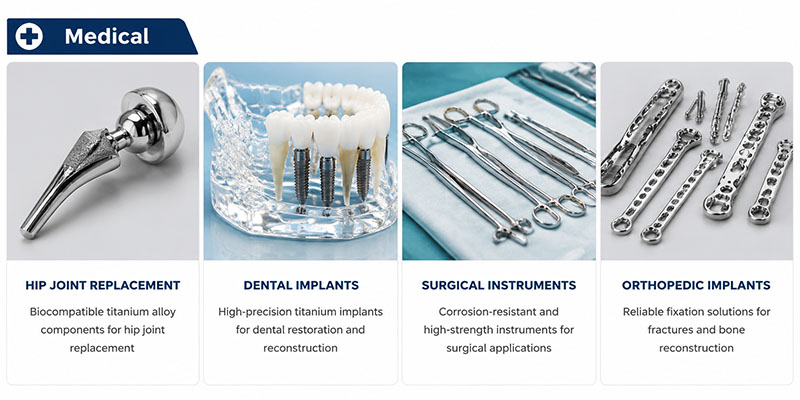
Key applications include:
Artificial hip joints and orthopedic implants
Dental implants
Surgical instruments
Precision components for medical equipment
Because titanium alloys remain stable within the human body over the long term and exhibit excellent tissue compatibility,they are an ideal choice for medical implant materials.
3.Marine and Offshore Engineering
Titanium alloys offer excellent resistance to seawater corrosion and long-term stability,making them particularly suitable for applications in harsh marine environments.
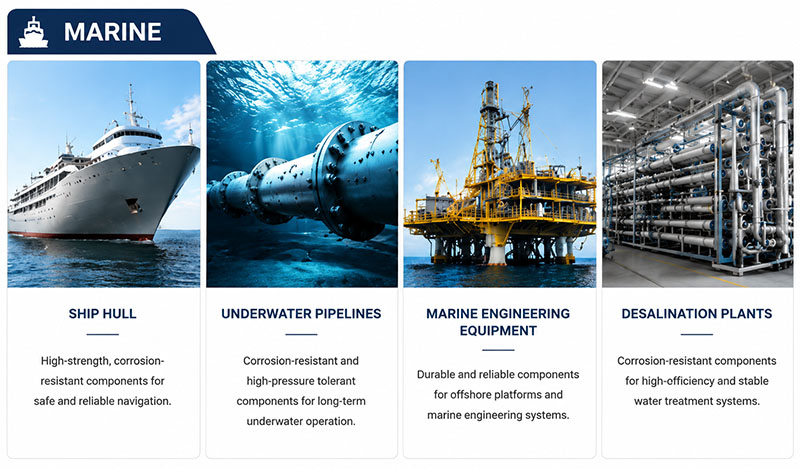
Primary applications include:
Ship structural components
Seawater piping systems
Offshore engineering equipment
Seawater desalination units
Their corrosion resistance effectively extends equipment service life and reduces maintenance costs.
4.Automotive Industry
In automotive manufacturing,titanium alloys are primarily used to achieve lightweight vehicle designs while maintaining high strength and durability.
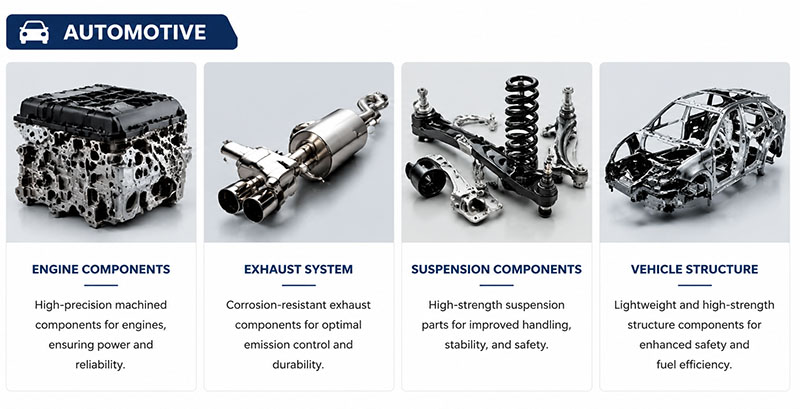
Typical applications include:
Critical engine components
Exhaust system components
Suspension system parts
Structural components for high-performance vehicles
Titanium alloys help reduce vehicle weight and improve fuel efficiency and overall performance,offering significant application potential in the high-performance and new energy vehicle sectors.
5.Chemical&Industrial Sectors
Thanks to their excellent resistance to chemical corrosion and high temperatures,as well as their long-term stability,titanium alloys are ideally suited for use in complex industrial environments.
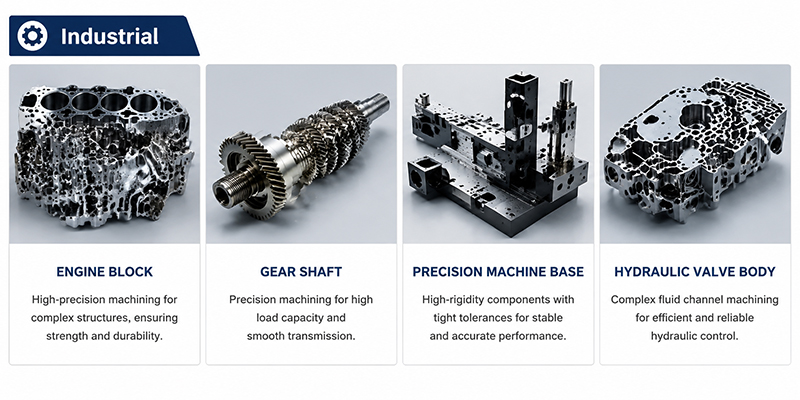
Key applications include:
Chemical processing equipment
Heat exchangers
Reactors
Equipment for transporting corrosive media
Capable of withstanding a wide range of chemical media and high-temperature environments,titanium alloys are vital materials in the chemical,energy,and industrial equipment manufacturing sectors.
Titanium Alloy FAQ
1. What are the primary applications of titanium alloys?
Characterized by high strength, light weight, and corrosion resistance, titanium alloys are widely used in aerospace, medical implants, automotive manufacturing, marine engineering, and chemical processing equipment.
2. What is the difference between α-titanium alloys and β-titanium alloys?
α-titanium alloys: Offer good corrosion resistance and high-temperature performance, with moderate strength.
β-titanium alloys: Feature high strength and excellent formability; their properties can be enhanced through heat treatment.
3. Why are titanium alloys used for medical implants?
Titanium alloys possess excellent biocompatibility, corrosion resistance, and a high strength-to-weight ratio, making them suitable for long-term implantation in the human body.
4. What is the most commonly used high-strength titanium alloy?
Grade 5 titanium alloy (Ti-6Al-4V) is one of the most widely used high-performance titanium alloys, particularly in the aerospace and medical sectors.
5. How can the strength of titanium alloys be increased?
The strength and performance of titanium alloys can be improved by adding alloying elements—such as aluminum, vanadium, and molybdenum—and by employing heat treatment processes.
6. Can titanium alloys be welded?
Yes, titanium alloys can be welded; common methods include argon arc welding, laser welding, and electron beam welding. High-purity argon gas is required during the welding process to shield the weld and prevent contamination by elements such as oxygen and nitrogen. Post-weld heat treatment can be used to relieve stress and restore material properties.


