



Titanium is widely used in aerospace, medical, automotive, energy, marine, and high-performance industrial applications because of its excellent strength-to-weight ratio, corrosion resistance, and high-temperature performance. However, titanium is also one of the more difficult metals to machine efficiently.
For manufacturers asking how to mill titanium, the key is not simply to reduce cutting speed. Successful titanium milling requires the correct cutting tools, stable workholding, controlled heat generation, suitable feeds and speeds, effective coolant delivery, and a machining strategy that keeps the cutting edge engaged consistently.
Whether you need CNC Machining Titanium prototypes, production components, or complex CNC titanium parts, understanding the machining characteristics of titanium can significantly improve tool life, dimensional accuracy, surface finish, and production efficiency.
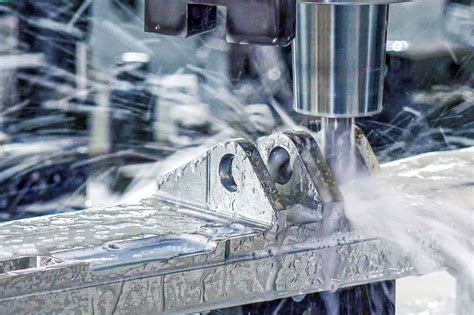
Why Is Titanium Difficult to Mill?
Titanium is not extremely hard compared with some hardened steels, but several of its physical properties make machining challenging.
The main difficulties in CNC titanium machining include:
Low thermal conductivity
High cutting temperature
Strong chemical reactivity at elevated temperatures
High strength
Low elastic modulus
Tendency toward vibration
Tool wear and edge chipping
Possible work hardening
Unlike aluminum, titanium does not transfer cutting heat efficiently into the workpiece or chips.
A large portion of the heat remains concentrated around the cutting edge. This can cause rapid tool wear if cutting conditions are not properly controlled.
For this reason, CNC milling titanium normally requires lower cutting speeds than aluminum machining, combined with carefully selected feed rates and effective cooling.
How to Mill Titanium Step by Step
A reliable titanium milling process usually follows several basic principles:
Select the correct titanium alloy and understand its machinability.
Use rigid CNC equipment and stable workholding.
Choose sharp carbide cutting tools.
Use appropriate cutting speed and feed.
Maintain consistent cutter engagement.
Apply sufficient coolant.
Minimize vibration and tool overhang.
Monitor tool wear throughout production.
Following these principles helps improve the stability of precision titanium machining and reduces the risk of tool failure.
1. Understand the Titanium Grade
Before determining how to mill titanium, you need to know exactly which titanium grade will be machined.
Common titanium grades include:
| Titanium Grade | Main Characteristics | Typical Applications |
|---|---|---|
| Grade 1 | Soft, highly ductile, corrosion resistant | Chemical equipment, marine parts |
| Grade 2 | Good strength and corrosion resistance | Industrial and medical components |
| Grade 4 | Stronger commercially pure titanium | Medical and aerospace parts |
| Grade 5 Ti-6Al-4V | High strength, widely used | Aerospace, automotive, medical |
| Grade 23 Ti-6Al-4V ELI | High purity and fatigue resistance | Medical implants, aerospace |
Among these, Ti-6Al-4V is one of the most common materials used in custom titanium machining.
Different titanium grades require different cutting parameters, so machining conditions should always be adjusted according to material composition and hardness.
2. Use a Rigid CNC Milling Machine
Machine rigidity is extremely important when milling titanium.
Because titanium has relatively low stiffness compared with steel, cutting forces can cause vibration if the machine, spindle, toolholder, fixture, or cutting tool lacks rigidity.
A suitable titanium CNC milling machine should provide:
High spindle rigidity
Stable toolholding
Accurate feed control
Effective coolant delivery
Strong workholding
Minimal spindle runout
Good vibration resistance
Three-axis, four-axis, and five-axis machining centers can all be used for CNC machining titanium, depending on component complexity.
Five-axis CNC machines are particularly useful for aerospace components, medical parts, impellers, brackets, and complex structural components.
3. Choose the Right Cutting Tool
Carbide tools are commonly used for CNC milling titanium because they provide good wear resistance and maintain cutting-edge strength at elevated temperatures.
Tool selection should focus on:
Sharp cutting edges
Heat-resistant carbide grades
Suitable coatings
Positive cutting geometry
Effective chip evacuation
Strong cutting-edge support
Common tool coatings for titanium machining may include TiAlN, AlTiN, or other high-temperature-resistant coatings, depending on the cutting tool manufacturer and machining conditions.
Using dull tools should be avoided.
A dull cutting edge increases friction, generates additional heat, and can accelerate work hardening.
4. Control Cutting Speed
Titanium usually requires lower cutting speeds than aluminum.
Excessive cutting speed is one of the most common reasons for premature tool failure during CNC titanium machining.
Instead of maximizing spindle speed, manufacturers should focus on maintaining stable cutting conditions.
Cutting parameters depend on:
Titanium grade
Cutter diameter
Number of flutes
Tool coating
Radial engagement
Axial depth of cut
Machine rigidity
Coolant strategy
Always begin with the cutting tool manufacturer's recommended parameters and optimize based on actual machining results.
5. Maintain the Correct Feed Rate
Reducing the feed too aggressively is not always beneficial when machining titanium.
If the feed per tooth is too low, the cutting edge may rub against the material instead of producing a proper chip.
This rubbing can generate heat and contribute to work hardening.
A suitable feed rate should allow the tool to form chips efficiently while controlling cutting forces.
During precision titanium machining, manufacturers need to balance:
Feed per tooth
Cutting speed
Radial depth of cut
Axial depth of cut
Tool engagement angle
Stable chip formation is generally more important than simply selecting the lowest possible feed.
6. Avoid Excessive Tool Engagement
One of the most effective strategies for milling titanium is reducing radial cutter engagement.
Instead of using full-width conventional milling, modern machining strategies often use smaller radial depths of cut combined with larger axial engagement.
This can help:
Reduce cutting heat
Improve tool life
Maintain stable cutting forces
Improve chip evacuation
Increase machining consistency
High-efficiency milling and adaptive toolpaths are often used in modern CNC titanium machining.
These toolpaths maintain a more consistent tool engagement angle compared with traditional roughing methods.
7. Use Climb Milling
Climb milling is generally preferred for titanium machining when the CNC machine and workholding system are sufficiently rigid.
During climb milling, chip thickness typically starts higher and decreases as the cutting edge exits the material.
This can reduce rubbing and unnecessary heat generation.
Climb milling can also help improve surface quality during CNC milling titanium.
However, machine rigidity and backlash control remain important.
8. Use Adequate Coolant
Coolant plays a major role in titanium machining.
Because titanium has low thermal conductivity, heat can remain concentrated around the cutting edge.
Effective coolant delivery helps:
Remove heat
Reduce friction
Improve tool life
Flush away chips
Improve surface finish
Reduce built-up material
High-pressure coolant can be particularly useful for demanding titanium machining applications.
Coolant should reach the cutting zone directly rather than simply flooding the general machining area.
For deep pockets and difficult geometries, through-tool coolant may improve performance.
9. Reduce Tool Overhang
Long tool overhang increases vibration and reduces cutting stability.
When machining titanium, tools should be kept as short as practical.
Reducing tool overhang helps improve:
Rigidity
Surface finish
Dimensional accuracy
Tool life
Process stability
For deep-pocket titanium components, specialized long-reach tools may still be necessary, but cutting parameters should be adjusted accordingly.
10. Prevent Titanium Work Hardening
Titanium can work harden if the tool repeatedly rubs against the material.
Work hardening can make subsequent cutting more difficult and accelerate tool wear.
To reduce this problem:
Use sharp cutting tools
Avoid unnecessary dwell
Maintain appropriate feed
Avoid repeated rubbing
Keep tool engagement consistent
Replace worn tools promptly
Continuous tool movement is generally preferable to stopping or dwelling while the cutting edge remains in contact with the workpiece.
Rough Milling Titanium
Rough machining removes large amounts of material before finishing.
For rough CNC machining titanium, manufacturers usually prioritize:
Stable tool engagement
Efficient chip evacuation
Controlled temperature
Strong cutting tools
Consistent material removal
Adaptive clearing and high-efficiency milling strategies can be highly effective.
Rather than maximizing depth and width of cut simultaneously, the process can use controlled radial engagement and deeper axial cuts.
This distributes tool wear across a larger portion of the cutting edge.
Finish Milling Titanium
Finishing requires different priorities.
The objective is to achieve:
Dimensional accuracy
Low surface roughness
Stable geometry
Minimal tool marks
Consistent tolerance
Finishing tools should be sharp and have minimal runout.
The machine should also maintain high rigidity and stable workholding.
For high-precision aerospace and medical titanium CNC parts, finishing passes may use lighter cutting loads while still maintaining sufficient feed to avoid rubbing.
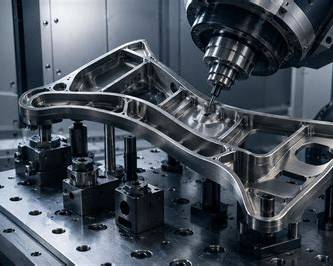 How to Machine Thin-Wall Titanium Parts
Thin-wall titanium components are common in aerospace structures.
However, low stiffness makes these parts susceptible to vibration and deformation.
Machining strategies for thin-wall CNC titanium parts may include:
Balanced material removal
Reduced radial cutting forces
Optimized toolpaths
Strong fixture support
Controlled finishing allowance
Alternating machining sequences
Low-vibration cutting tools
Custom fixtures can also help support thin sections during machining.
Experienced titanium machining companies will often consider fixture design during the early manufacturing planning stage.
Titanium Milling vs Titanium Turning
Milling is used for components containing flat surfaces, pockets, slots, contours, and complex 3D geometries.
Turning is mainly used for cylindrical parts.
Common applications of lathe turning titanium include:
Shafts
Pins
Sleeves
Rings
Threaded components
Medical components
Aerospace fasteners
Although this article focuses on milling, many manufacturers provide both milling and titanium lathe turning as part of a complete titanium machining service.
How to Machine Titanium on Lathe
Manufacturers searching how to machine titanium on lathe face many of the same challenges found in milling.
When machining titanium lathe components, important considerations include:
Use sharp carbide inserts
Maintain rigid workholding
Minimize insert overhang
Control cutting speed
Maintain sufficient feed
Apply coolant directly to the cutting zone
Monitor insert wear
During titanium lathe turning, excessive speed can cause rapid insert wear because heat accumulates around the cutting edge.
Maintaining stable chip formation is important for both tool life and surface finish.
Common Problems When Milling Titanium
Several machining problems frequently occur.
| Problem | Possible Cause | Recommended Action |
|---|---|---|
| Rapid tool wear | Excessive cutting speed | Reduce speed and improve cooling |
| Chatter | Poor rigidity or excessive overhang | Improve setup rigidity |
| Poor surface finish | Worn tool or vibration | Replace tool and stabilize setup |
| Work hardening | Tool rubbing or dwell | Increase proper feed and maintain movement |
| Tool chipping | Excessive cutting load | Reduce engagement |
| Chip recutting | Poor chip evacuation | Improve coolant and chip removal |
| Dimensional error | Heat or fixture movement | Improve cooling and workholding |
Monitoring these problems is important for maintaining consistent precision titanium machining.

CNC Machining Titanium for Complex Parts
Modern CNC technology makes it possible to manufacture complex titanium components with very tight tolerances.
Typical titanium CNC parts include:
Aerospace brackets
Aircraft structural parts
Medical implants
Surgical instruments
Automotive racing components
Heat-resistant industrial parts
Marine components
High-strength fasteners
Robotics components
Energy equipment parts
Advanced multi-axis equipment allows a titanium CNC service provider to manufacture complex geometries with fewer setups.
Reducing setups can improve positional accuracy and shorten total production time.
Benefits of Custom Titanium Machining
Custom titanium machining is particularly valuable when standard components cannot meet specific engineering requirements.
Manufacturers can customize:
Dimensions
Geometry
Tolerances
Surface finish
Threads
Holes
Pockets
Material grade
Surface treatment
A professional CNC supplier can combine milling, turning, drilling, tapping, grinding, and finishing processes to manufacture complete titanium components.
How to Choose a Titanium CNC Service
When selecting a titanium CNC service, price should not be the only consideration.
Titanium is expensive, and machining mistakes can significantly increase material and production costs.
Consider the following factors:
CNC Equipment
Check whether the manufacturer has suitable three-axis, four-axis, or five-axis CNC machines.
Titanium Machining Experience
Experienced titanium machining companies understand tool wear, heat control, workholding, and titanium-specific cutting strategies.
Tolerance Capability
For aerospace, medical, or precision industrial applications, the supplier should demonstrate strong dimensional inspection capability.
Quality Control
Look for suitable inspection equipment such as:
CMM
Height gauges
Micrometers
Surface roughness testers
Optical inspection systems
Milling and Turning Capability
A supplier offering both CNC milling titanium and lathe turning titanium can manufacture a wider range of components without outsourcing multiple processes.
Prototype and Production Capability
A flexible supplier should support prototypes, small batches, and volume production.
CNC Titanium Machining vs Other Metals
Titanium requires a different machining approach compared with aluminum or steel.
| Feature | Titanium | Aluminum | Stainless Steel |
|---|---|---|---|
| Strength-to-weight ratio | Excellent | Good | Moderate |
| Thermal conductivity | Low | High | Low |
| Cutting speed | Lower | High | Moderate |
| Tool wear | Relatively high | Low | Moderate to high |
| Machining difficulty | High | Low | Medium to high |
| Corrosion resistance | Excellent | Good | Excellent |
The low thermal conductivity of titanium is one of the main reasons CNC titanium machining requires careful heat management.
Frequently Asked Questions
Is titanium difficult to mill?
Yes. Titanium is more difficult to mill than aluminum because it has low thermal conductivity, generates concentrated cutting heat, and can cause rapid tool wear.
What is the best tool for milling titanium?
Carbide end mills designed for titanium are commonly used. Tool geometry, coating, flute design, and coolant delivery should match the application.
Can titanium be CNC machined?
Yes. CNC machining titanium is widely used in aerospace, medical, automotive, marine, energy, and industrial manufacturing.
What machine is used for titanium milling?
A rigid CNC machining center is typically used. Depending on part complexity, manufacturers may use three-axis, four-axis, or five-axis equipment as a titanium CNC milling machine.
Why does titanium destroy cutting tools quickly?
Titanium transfers heat poorly, so much of the cutting heat remains close to the cutting edge. This accelerates tool wear when speed, cooling, and engagement are not properly controlled.
Can titanium be turned on a lathe?
Yes. Machining titanium lathe components is common for shafts, rings, pins, sleeves, and threaded parts.
How do you machine titanium on a lathe?
For anyone asking how to machine titanium on lathe, the main principles are sharp carbide inserts, rigid setup, controlled cutting speed, sufficient feed, effective coolant, and regular tool-wear monitoring.
What is precision titanium machining?
Precision titanium machining refers to CNC manufacturing processes designed to produce titanium components with controlled dimensions, tight tolerances, good surface quality, and repeatable accuracy.
Understanding how to mill titanium starts with recognizing that titanium behaves differently from aluminum, steel, and many other common engineering metals.
Successful titanium milling requires sharp carbide tools, rigid machines, stable fixtures, controlled cutting speeds, appropriate feeds, consistent tool engagement, effective coolant delivery, and careful tool-wear monitoring.
Modern CNC titanium machining makes it possible to manufacture highly complex and precise components for aerospace, medical, automotive, marine, and industrial applications.
Whether the project involves CNC milling titanium, lathe turning titanium, prototypes, or high-volume CNC titanium parts, choosing suitable machining strategies and working with an experienced titanium CNC service provider can improve quality, reduce tool consumption, and achieve more reliable production results.


