



Titanium CNC machining is widely used to manufacture high-performance components for aerospace, medical, automotive, and industrial applications. Titanium alloys offer an excellent strength-to-weight ratio, corrosion resistance, and reliable mechanical performance, making them suitable for demanding engineering environments.
However, CNC machining titanium is considerably more challenging than machining conventional materials such as aluminum and many grades of steel. Low thermal conductivity, high cutting forces, chemical reactivity, and rapid tool wear can affect machining efficiency, dimensional accuracy, and surface quality.
Understanding these challenges and applying appropriate machining strategies are essential for producing reliable titanium components.
This article explores the major challenges of titanium CNC machining, common machining processes, advanced cutting strategies, and practical engineering solutions for improving machining performance.
1. Why Is CNC Machining Titanium Alloys Difficult?
Titanium alloys are generally classified as difficult-to-machine materials. Their machining challenges arise primarily from three interconnected factors: heat generation, mechanical cutting forces, and chemical reactivity.
1.1 Low Thermal Conductivity
Low thermal conductivity is one of the most significant challenges in titanium machining.
For example, Ti-6Al-4V has a thermal conductivity of approximately 6–7 W/m·K at room temperature, substantially lower than aluminum alloys and many commonly used steels.
During machining, the heat generated at the cutting interface is not efficiently dissipated through the workpiece. As a result, high temperatures can develop near the cutting edge and tool–chip interface.
This creates several machining problems.
Rapid Tool Wear
Concentrated cutting heat accelerates tool wear, particularly when combined with high contact pressure and chemical interactions between titanium and cutting tool materials.
Excessive temperatures may cause edge deterioration, coating failure, and reduced cutting tool life.
Thermal Damage to the Workpiece
Poorly controlled cutting temperatures can affect the integrity of the machined surface.
Depending on machining conditions, excessive heat may contribute to surface damage, residual stresses, microstructural changes, or reduced fatigue performance.
Engineering Solution
Use appropriate cutting speeds, effective coolant delivery, sharp cutting tools, and optimized toolpaths to reduce excessive heat accumulation.
High-pressure coolant systems can be particularly useful for improving cooling and chip evacuation when correctly applied.
1.2 High Strength and Cutting Forces
Titanium alloys combine relatively high mechanical strength with low density.
Many titanium alloys, particularly Ti-6Al-4V, maintain substantial strength at elevated temperatures. This increases the mechanical demands placed on cutting tools and machining systems.
During machining, excessive cutting forces may lead to:
Tool deflection and accelerated wear
Workpiece deformation
Vibration and machining chatter
Dimensional inaccuracies
Reduced surface finish quality
These problems become more significant when machining thin-walled components, deep cavities, or complex geometries.
Engineering Solution
Use rigid workholding systems, minimize unnecessary tool overhang, and optimize cutting parameters according to the material grade and component geometry.
For complex titanium components, 5-axis CNC machining can improve tool accessibility, reduce repeated setups, and help maintain suitable cutting orientations.
1.3 High Chemical Reactivity
Titanium exhibits strong chemical affinity with several elements, particularly at elevated temperatures.
During machining, high temperatures and contact pressures at the tool–chip interface can promote adhesion, diffusion, and chemical wear.
Titanium may also react with oxygen, nitrogen, and hydrogen under suitable thermal and environmental conditions.
Reaction with Oxygen and Nitrogen
At elevated temperatures, titanium can react with oxygen and nitrogen.
Oxygen diffusion into titanium can produce an oxygen-enriched, hardened, and potentially brittle surface region commonly known as alpha case.
Alpha-case formation is especially associated with elevated-temperature processing and exposure conditions. It should not be confused with ordinary oxide formation or assumed to occur during every CNC machining operation.
Reaction with Hydrogen
Under certain conditions, titanium can absorb hydrogen, potentially contributing to embrittlement and reduced ductility.
Appropriate processing environments and contamination control are important when manufacturing titanium components for demanding applications.
Reaction with Cutting Tool Materials
Titanium can interact with carbide cutting tools, including WC/Co tool systems.
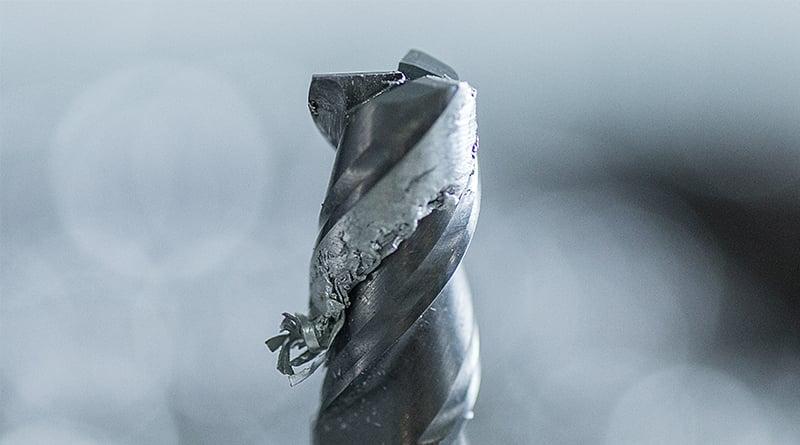
Under high temperature and pressure, titanium chips may adhere to the tool's rake face or cutting edge.
This adhesion can cause:
Built-up edge formation
Unstable cutting geometry
Poor surface finish
Increased friction and cutting forces
Accelerated tool wear
Engineering Solution
Select cutting tools designed for titanium alloys, maintain stable cutting conditions, and apply effective cooling and lubrication.
Tool coatings and cutting-edge geometries should be selected according to the specific titanium grade, machining operation, and cutting environment.
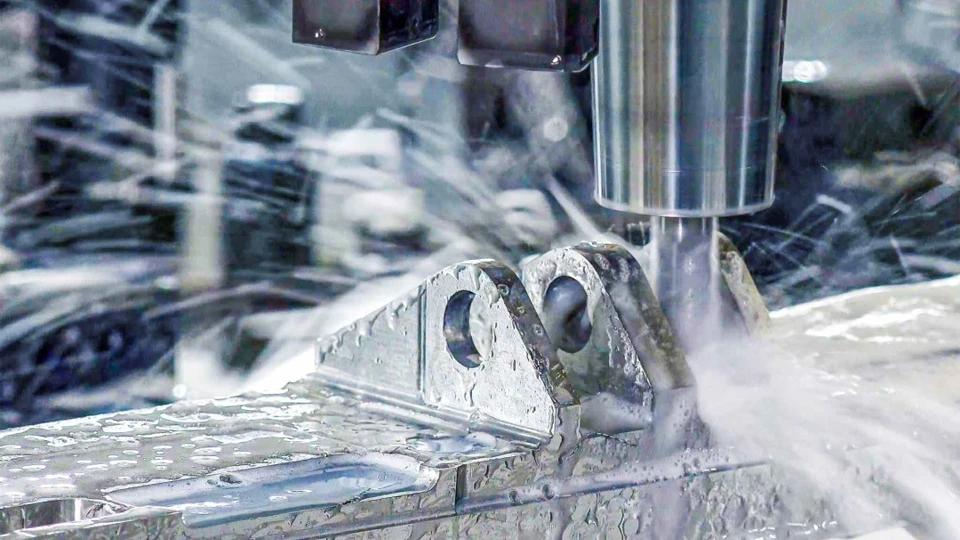
2. Common Titanium CNC Machining Processes
Different titanium components require different machining methods depending on their geometry, tolerances, surface requirements, and production volume.
The most common processes include CNC milling, CNC turning, drilling, and 5-Axis Machining.
2.1 CNC Milling Titanium
CNC milling titanium is commonly used to manufacture complex profiles, pockets, slots, mounting surfaces, and precision mechanical structures.
However, titanium's low thermal conductivity and tendency toward tool adhesion require carefully controlled milling conditions.
Recommended strategies include:
Use sharp carbide tools suitable for titanium.
Apply climb milling where appropriate.
Optimize radial engagement and axial depth of cut.
Avoid excessive tool engagement and unnecessary full-width slotting.
Maintain consistent chip formation.
Use effective coolant delivery and chip evacuation.
For complex components, adaptive milling toolpaths can help maintain more consistent cutting loads and reduce sudden increases in tool engagement.
2.2 CNC Turning Titanium
CNC turning titanium is suitable for producing cylindrical and rotational components such as shafts, sleeves, bushings, threaded parts, and precision connectors.
Titanium turning requires careful control of cutting speed, feed rate, tool geometry, and coolant delivery.
Improper cutting conditions may cause chip adhesion, excessive tool wear, poor surface finish, or dimensional deviations.
To improve turning performance, manufacturers should use rigid toolholding systems, appropriate cutting inserts, stable feed rates, and suitable chip-breaking strategies.
2.3 CNC Drilling Titanium
Drilling titanium presents particular challenges because heat and chips can become concentrated inside the hole.
Poor chip evacuation may lead to chip packing, excessive friction, drill wear, or tool breakage.
Effective titanium drilling strategies include:
Use drills designed for titanium alloys.
Apply through-tool coolant where available.
Optimize feed rates and cutting speeds.
Ensure reliable chip evacuation.
Select suitable drilling cycles based on hole depth and diameter.
For deep-hole applications, specialized drilling methods and carefully controlled coolant delivery may be required.
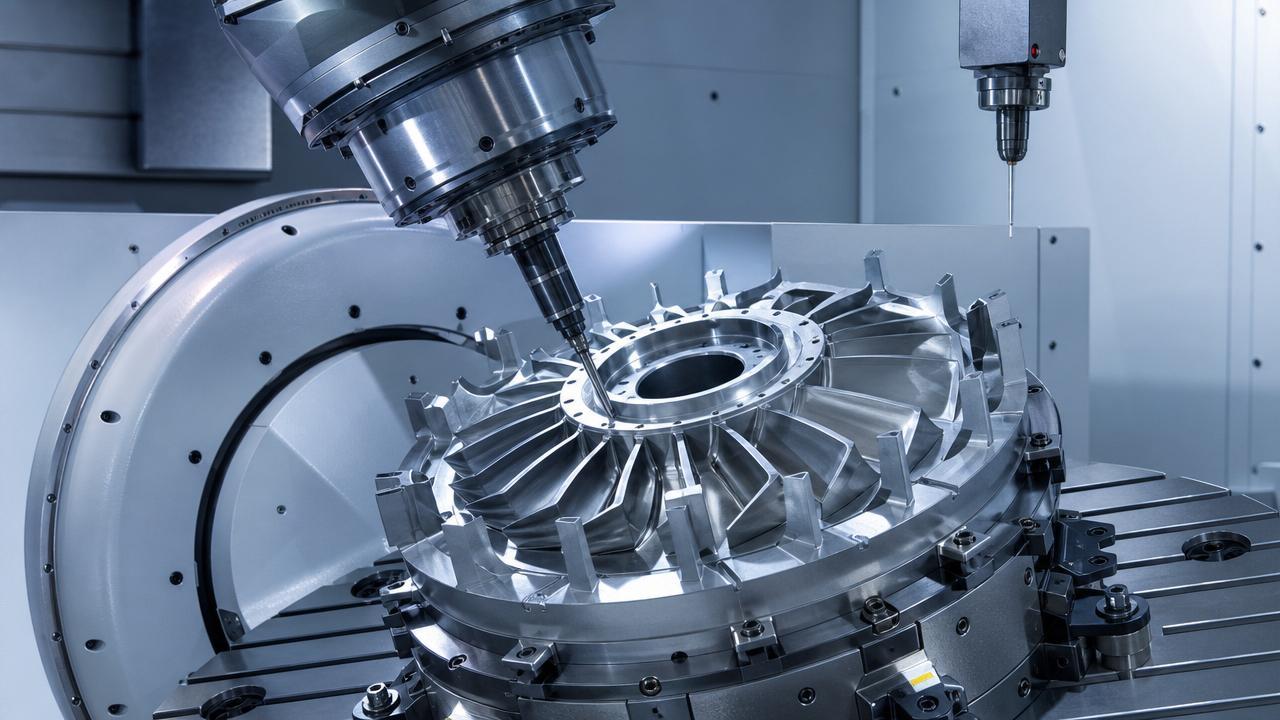
2.4 5-Axis Titanium CNC Machining
5-axis titanium CNC machining is particularly valuable for complex parts requiring multiple machining orientations.
It is commonly applied to components featuring:
Complex curved surfaces
Deep cavities
Multi-sided machining features
Thin-wall structures
Difficult-to-access geometries
By allowing the cutting tool to approach the workpiece from multiple orientations, 5-axis machining can reduce repositioning requirements and improve access to complex features.
It can also help maintain favorable tool orientations and reduce unnecessary tool extension, supporting improved machining stability.
 3. Advanced Titanium Machining Techniques
Advanced machining strategies help manufacturers improve productivity while controlling cutting temperatures, tool loads, and dimensional accuracy.
3.1 High-Efficiency Milling
High-efficiency milling uses optimized toolpaths and controlled tool engagement to improve material removal efficiency.
For titanium alloys, this generally involves maintaining consistent cutting loads rather than simply increasing cutting speed.
Key strategies include:
Controlled radial engagement
Optimized axial depth of cut
Consistent tool engagement
Appropriate feed rate adjustments
Effective coolant delivery
These methods can reduce sudden increases in cutting forces and help maintain stable machining conditions.
However, cutting speeds and feed rates must always be selected according to the titanium grade, tool geometry, machine rigidity, and cooling system.
3.2 Plunge Milling
Plunge milling is an effective roughing strategy for certain deep cavities and difficult-to-machine titanium components.
Unlike conventional side milling, plunge milling primarily directs cutting forces along the tool axis.
This can reduce lateral tool deflection and improve machining stability.
Key advantages include:
Reduced radial cutting forces
Improved stability in deep cavities
Lower risk of excessive tool deflection
Potential improvements in tool life
Effective roughing of difficult geometries
Plunge milling is especially useful when conventional milling produces excessive vibration or unstable cutting loads.
3.3 Electrical Discharge Machining (EDM)
Electrical Discharge Machining is a non-contact material removal process that uses controlled electrical discharges to remove material from electrically conductive workpieces.
EDM can be used to manufacture intricate titanium features that may be difficult to produce with conventional cutting tools.
Typical applications include narrow slots, complex internal profiles, and precision features.
Advantages
No conventional mechanical cutting forces
Suitable for complex geometries
Capable of machining hard, electrically conductive materials
Considerations
EDM may have slower material removal rates than conventional machining and can produce a recast layer or other surface alterations.
For components with strict fatigue or surface-integrity requirements, additional finishing and inspection may be necessary.
3.4 Abrasive Waterjet Cutting
Abrasive waterjet cutting uses a high-pressure water stream combined with abrasive particles to cut titanium.
Unlike conventional thermal cutting processes, abrasive waterjet cutting does not create a conventional heat-affected zone.
This makes it suitable for cutting titanium sheets, plates, and preforms before precision CNC machining.
Advantages
Minimal thermal distortion
No conventional heat-affected zone
Suitable for titanium sheet and plate cutting
Potential reduction in material waste
Waterjet cutting is often used as a preliminary manufacturing process, followed by CNC milling or turning to achieve final dimensions and surface requirements.
4. Common Titanium Machining Challenges and Solutions
Even with suitable machining equipment, titanium components may experience machining defects if cutting conditions are not properly controlled.
The following table summarizes common problems and practical engineering solutions.
| Machining Challenge | Common Causes | Recommended Solutions |
|---|---|---|
| Heat accumulation | Low thermal conductivity and excessive cutting temperatures | Optimize cutting speed and coolant delivery |
| Tool adhesion and galling | High tool–chip contact pressure and chemical affinity | Use suitable tool materials, sharp cutting edges, and effective lubrication |
| Surface hardening or damage | Excessive rubbing, deformation, or poorly controlled machining conditions | Maintain effective chip formation and avoid tool rubbing |
| Vibration and chatter | Insufficient rigidity, long tool overhang, or unstable cutting loads | Improve workholding and optimize tool engagement |
| Short tool life | High cutting temperatures, adhesion, and abrasive wear | Select suitable tooling and optimize machining parameters |
| Poor chip evacuation | Inadequate coolant delivery or unsuitable chip formation | Improve coolant flow and chip removal |
| Burrs and poor surface finish | Tool wear, unstable cutting, or unsuitable parameters | Use sharp finishing tools and stable cutting conditions |
| Dimensional inaccuracies | Tool deflection, thermal effects, or workpiece deformation | Improve fixture rigidity and machining sequence |
| High machining costs | Expensive material, longer cycle times, and high tooling consumption | Optimize toolpaths, setups, and machining efficiency |
Successful titanium machining requires a balanced approach rather than simply increasing cutting speed or using more aggressive cutting parameters.
5. How to Improve Titanium CNC Machining Efficiency
Improving titanium machining efficiency requires coordinated optimization of cutting tools, cooling systems, machining strategies, and process control.
5.1 Select Appropriate Cutting Tools
Cutting tool selection directly affects machining stability and tool life.
Carbide tools are commonly used for titanium machining because they provide a useful combination of hardness, toughness, and wear resistance.
However, tool performance depends on multiple factors, including substrate grade, cutting-edge preparation, coating selection, and chip evacuation geometry.
Not every high-temperature coating or high-flute-count cutter is suitable for every titanium machining operation.
5.2 Optimize Cooling and Lubrication
Effective cooling is essential for controlling heat near the cutting interface.
Depending on the machining process, suitable strategies may include flood cooling, through-tool coolant, and high-pressure coolant systems.
Coolant delivery should be designed to reach the cutting zone effectively while supporting chip evacuation.
5.3 Maintain Stable Cutting Conditions
Sudden changes in tool engagement can increase cutting forces and accelerate tool wear.
Optimized CNC programs should maintain stable chip formation and avoid unnecessary interruptions, rubbing, or excessive engagement.
Adaptive machining strategies can help improve cutting consistency for complex titanium parts.
5.4 Improve Workholding and Machine Rigidity
Rigid workholding is particularly important when machining thin-walled or complex titanium components.
Unstable fixtures and excessive tool extension may lead to vibration, dimensional errors, and poor surface quality.
Appropriate fixtures, toolholders, and machining sequences help reduce these risks.
5.5 Apply Suitable Inspection Methods
Precision titanium machining requires inspection throughout the manufacturing process.
Depending on component requirements, inspection may include:
Coordinate Measuring Machine (CMM)
Optical dimensional measurement
Surface roughness testing
Hardness testing
Visual and dimensional inspection
These methods help verify that machined components meet specified engineering requirements.
6. What Factors Affect Titanium CNC Machining Costs?
Titanium CNC machining is generally more expensive than machining many conventional engineering materials.
The final manufacturing cost depends on several factors.
Material Grade
Different titanium grades have different mechanical properties and machining characteristics.
Commercially pure titanium grades such as TA1 and TA2 may require different machining strategies from higher-strength titanium alloys such as TC4 and TA15.
Part Complexity
Components featuring thin walls, deep pockets, complex contours, or multiple machining orientations typically require more sophisticated programming and machining strategies.
Machining Time
Lower cutting speeds, tool changes, and additional finishing operations may increase total machining time.
Tooling Consumption
Titanium machining can result in relatively high tool wear, increasing cutting tool consumption and replacement costs.
Tolerance and Surface Finish Requirements
Tight dimensional tolerances and demanding surface finishes may require additional finishing passes, specialized fixtures, and more extensive inspection.
Production Quantity
Prototype manufacturing and batch production have different cost structures.
Larger production volumes may allow tooling, programming, and setup costs to be distributed across more components.
Cost Optimization Strategy
Design for Manufacturability (DFM) analysis can help identify unnecessary machining complexity, improve tool accessibility, and optimize manufacturing methods before production begins.
 7. Applications of Titanium CNC Machined Parts
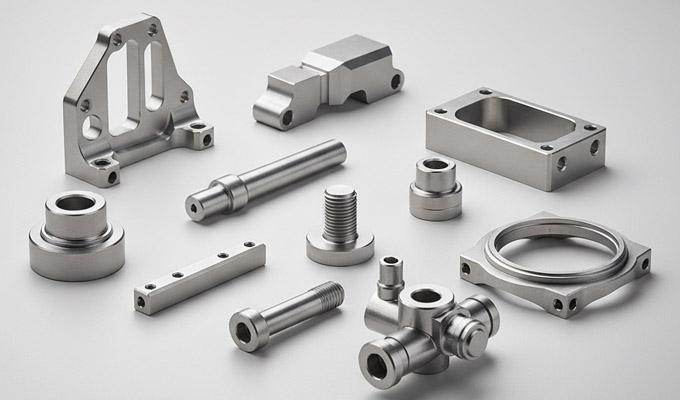
Titanium CNC machined components are widely used in industries requiring high strength, low weight, corrosion resistance, or reliable performance under demanding conditions.
Aerospace Components
Titanium alloys are used in aerospace structures, brackets, fittings, housings, and other high-performance mechanical components.
Their strength-to-weight ratio and corrosion resistance make them suitable for weight-sensitive applications.
Medical Equipment
Titanium is widely used in medical devices and equipment because of its corrosion resistance and, for appropriate grades and applications, biocompatibility.
Precision CNC machining can produce medical instrument components, equipment parts, and certain implant-related geometries.
Medical applications may require additional material certification, validation, traceability, and regulatory controls.
Automotive Components
Titanium components may be used in high-performance automotive applications where weight reduction and mechanical performance are important.
Examples include selected fasteners, engine-related components, and precision mechanical parts.
Industrial Equipment
Titanium CNC machined parts are also used in chemical processing equipment, marine systems, precision instruments, and other industrial applications requiring corrosion resistance and mechanical reliability.
8. Why Choose Huazheng for Titanium CNC Machining?
Huazheng provides precision titanium CNC Machining Services for complex and high-performance components.
By combining CNC machining capabilities, process engineering, and quality inspection, Huazheng supports customers from prototype development to batch production.
Titanium Alloy Machining Expertise
Huazheng supports machining of titanium materials including TA1, TA2, TC4, TA15, and other titanium alloys according to project requirements.
Different material grades require suitable cutting tools, machining parameters, and process planning to achieve reliable results.
5-Axis CNC Machining Capabilities
Our 5-axis CNC machining capabilities support complex surfaces, multi-sided features, deep cavities, and precision components requiring advanced tool accessibility.
By optimizing machining orientations and reducing unnecessary setups, we help improve manufacturing consistency.
CNC Milling and Turning Services
Huazheng provides CNC milling and turning solutions for a variety of titanium component structures.
Our manufacturing approach considers part geometry, material properties, tolerance requirements, and production volume.
Optimized Machining Strategies
Titanium machining requires careful management of cutting temperatures, tool wear, and chip evacuation.
Our process engineering approach focuses on selecting appropriate machining parameters, cutting tools, cooling strategies, and toolpaths to support stable production.
Precision Quality Inspection
Huazheng uses inspection methods including CMM, 2.5D optical measurement, surface roughness testing, and hardness testing to evaluate component quality according to project requirements.
Surface Finishing Solutions
Depending on the titanium grade and application, Huazheng supports suitable finishing options such as anodizing, micro-arc oxidation (MAO), PVD, DLC coatings, nitriding, and electropolishing.
The selection of surface treatment depends on the required appearance, corrosion resistance, wear performance, and functional specifications.
Prototype to Production
From initial prototypes and small-batch manufacturing to larger production orders, Huazheng provides integrated manufacturing support for custom titanium components.
Our services cover DFM review, material selection, CNC machining, finishing, inspection, and delivery.
9. Frequently Asked Questions About Titanium CNC Machining
Is titanium harder to machine than stainless steel?
Titanium is often more challenging to machine than many common stainless steel grades because of its low thermal conductivity, strong chemical affinity with cutting tools, and demanding cutting conditions.
However, machinability depends on the specific titanium and stainless steel grades, machining operation, and cutting parameters.
What is the best cutting tool for titanium?
Carbide cutting tools designed specifically for titanium alloys are commonly used.
The best tool depends on the machining operation, material grade, machine rigidity, cooling system, and required surface finish.
Can titanium be CNC milled?
Yes. Titanium can be CNC milled using appropriate cutting tools, machining parameters, and cooling strategies.
CNC milling is widely used to produce titanium brackets, housings, pockets, profiles, and complex mechanical components.
What is the difference between Grade 2 and Grade 5 titanium?
Grade 2 titanium is commercially pure titanium known for its corrosion resistance and formability.
Grade 5 titanium, commonly designated Ti-6Al-4V, is an alloy containing aluminum and vanadium. It provides substantially higher strength and is widely used in aerospace and other high-performance applications.
Why is titanium CNC machining expensive?
Titanium CNC machining costs are influenced by raw material prices, tool wear, machining time, complex part geometries, and inspection requirements.
Optimized machining strategies and DFM analysis can help reduce unnecessary manufacturing costs.
Can Huazheng manufacture custom titanium parts?
Yes. Huazheng provides custom titanium CNC machining services based on customer drawings, material specifications, tolerance requirements, and production quantities.
Our manufacturing capabilities support prototypes, precision components, and batch production projects.
10. Custom Titanium CNC Machining Services from Huazheng
Titanium CNC machining requires more than advanced machine tools. Successful manufacturing depends on a thorough understanding of material behavior, cutting mechanics, thermal management, tool selection, and quality control.
By combining appropriate machining strategies with experienced process engineering, manufacturers can reduce tool wear, improve surface quality, and achieve consistent dimensional accuracy.
Huazheng provides custom titanium CNC machining solutions for customers requiring precision components, complex geometries, and reliable manufacturing support.
From DFM analysis and material selection to CNC machining, surface finishing, inspection, and delivery, we help customers develop practical and cost-effective manufacturing solutions.
Looking for a reliable titanium CNC machining manufacturer?
Contact Huazheng with your engineering drawings, titanium material grade, tolerance requirements, and estimated order quantity to discuss your custom machining project and request a quotation.


