



Titanium is widely used in aerospace, medical equipment, automotive, and precision engineering because of its excellent strength-to-weight ratio, corrosion resistance, and mechanical performance. However, transforming titanium into complex, high-precision components requires carefully controlled manufacturing processes.
How does CNC Machining Titanium work? CNC machining titanium is a subtractive manufacturing process that uses computer-controlled cutting tools to remove material from titanium or titanium alloy workpieces. The process converts digital engineering designs into finished components through operations such as CNC milling, turning, drilling, and 5-Axis Machining.
Unlike machining aluminum or conventional steel, titanium CNC machining requires particular attention to cutting temperatures, tool selection, machining stability, and chip evacuation.
This guide explains the complete titanium CNC machining process, from CAD design and material preparation to precision cutting, surface finishing, and quality inspection.
1. What Is Titanium CNC Machining?
Titanium CNC machining is a precision manufacturing process in which Computer Numerical Control (CNC) machines automatically control cutting tool movement to shape titanium materials into finished components.
The process begins with a digital design created using Computer-Aided Design (CAD) software. Computer-Aided Manufacturing (CAM) software then converts the design into machining instructions that guide the CNC equipment.
During machining, cutting tools remove excess titanium material according to programmed toolpaths, creating the required dimensions, features, and surface finish.
Common titanium materials used in CNC machining include:
| Titanium Grade | Main Characteristics | Typical Applications |
|---|---|---|
| TA1 / Grade 1 | Commercially pure titanium, excellent corrosion resistance and formability | Chemical equipment, corrosion-resistant components |
| TA2 / Grade 2 | Commercially pure titanium with a balance of strength and ductility | Industrial equipment, marine components |
| TC4 / Grade 5 (Ti-6Al-4V) | High strength-to-weight ratio and good mechanical performance | Aerospace, precision mechanical components |
| TA15 | High-strength titanium alloy with elevated-temperature performance | Aerospace structural components |
Material selection depends on the mechanical requirements, operating environment, component geometry, and applicable engineering standards.
2. How Does the Titanium CNC Machining Process Work?
The titanium CNC machining process typically involves seven main stages. Each stage contributes to dimensional accuracy, surface quality, and manufacturing consistency.
Step 1: CAD Design and Engineering Analysis
The process begins with a detailed engineering drawing or 3D CAD model.
Engineers define the component's geometry, dimensions, tolerances, surface finish requirements, and material specifications.
Before machining begins, Design for Manufacturability (DFM) analysis helps evaluate whether the component can be produced efficiently.
Important considerations include:
Wall thickness and structural rigidity
Hole dimensions and machining accessibility
Internal corners and deep cavities
Dimensional tolerances
Surface finish requirements
Material utilization
For titanium components, DFM analysis is particularly important because complex geometries and difficult tool access can significantly increase machining time and production costs.
Step 2: CAM Programming and Toolpath Planning
After the CAD design is finalized, engineers use CAM software to generate CNC machining programs.
The software determines how cutting tools will move across the titanium workpiece.
Programming parameters typically include:
Cutting speed
Spindle speed
Feed rate
Axial and radial depth of cut
Tool engagement
Cutting tool selection
Machining sequence
For titanium alloys, toolpaths must be optimized to maintain stable cutting loads and avoid excessive heat generation.
Adaptive milling and other controlled-engagement strategies can help improve machining consistency.
Step 3: Titanium Material Preparation
The appropriate titanium grade is selected according to the component's design and performance requirements.
Raw materials may be supplied as titanium plates, bars, billets, or forgings.
Before machining, the material is inspected and prepared for the required manufacturing process.
Material preparation may include cutting stock to size, checking material documentation, and selecting suitable workholding fixtures.
Proper preparation reduces unnecessary material removal and supports efficient CNC machining.
Step 4: CNC Milling, Turning, or Drilling
Once the material and CNC program are ready, the machining process begins.
The selected CNC machine removes excess titanium material using cutting tools that follow programmed paths.
Different machining operations are used depending on component geometry.
CNC Milling Titanium
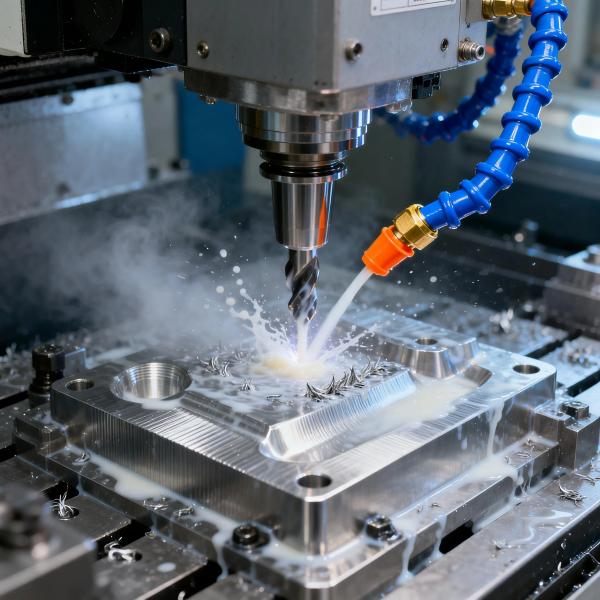
CNC milling uses rotating cutting tools to remove material from a stationary or repositioned workpiece.
It is suitable for machining pockets, slots, mounting surfaces, complex profiles, and precision housings.
CNC Turning Titanium
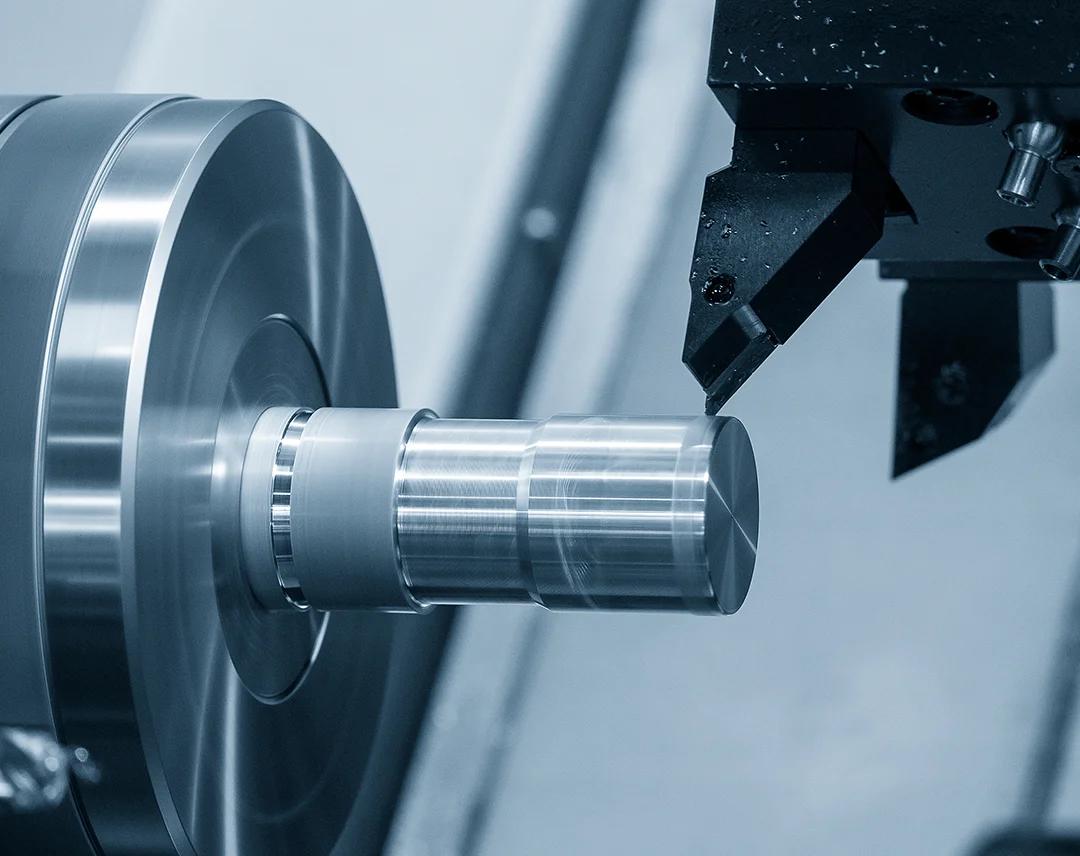
CNC turning rotates the titanium workpiece while a cutting tool removes material.
It is commonly used to manufacture shafts, sleeves, threaded components, bushings, and other rotational parts.
CNC Drilling Titanium
CNC drilling creates holes with controlled diameters and depths.
Effective chip evacuation and cooling are essential because titanium chips can accumulate inside the hole and increase cutting temperatures.
5-Axis Titanium Machining
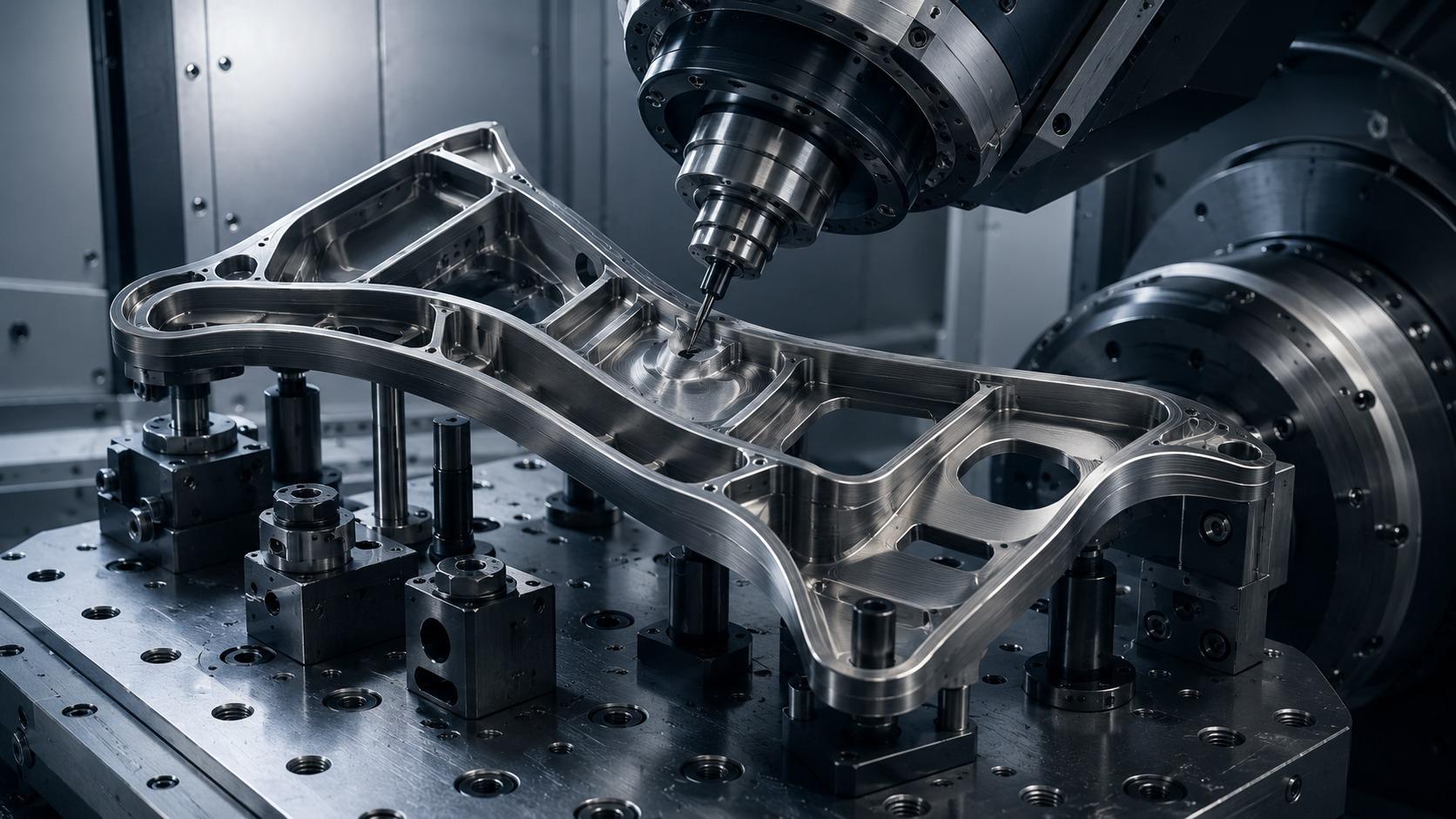
For complex geometries, 5-axis CNC machines provide additional tool orientation flexibility.
This allows manufacturers to machine multi-sided features and complex surfaces with fewer repositioning operations.
Step 5: Cooling and Chip Evacuation
Cooling is one of the most important aspects of CNC machining titanium.
Titanium alloys have relatively low thermal conductivity, which means cutting heat can become concentrated near the cutting edge.
Without appropriate thermal control, high temperatures may accelerate tool wear, cause material adhesion, and affect surface quality.
Common cooling strategies include:
Flood coolant for general cooling and lubrication
Through-tool coolant for targeted delivery
High-pressure coolant for demanding cutting operations
Optimized chip evacuation to prevent chip accumulation
Coolant selection and delivery must be compatible with the machining operation and tooling system.
Titanium chips also require appropriate handling because fine titanium particles and certain chip accumulations can present fire hazards.
Step 6: Surface Finishing and Deburring
After the main machining operations, additional finishing processes may be required to meet component specifications.
Common finishing operations include:
Precision finishing passes
Deburring
Mechanical polishing
Electropolishing
Titanium anodizing
Micro-arc oxidation (MAO)
Selected PVD or DLC coating processes
The appropriate finishing method depends on the titanium grade, application, and required surface properties.
Not every finishing process is suitable for every titanium component, so compatibility and performance requirements should be evaluated before selection.
Step 7: Quality Inspection
The final stage is dimensional and surface quality inspection.
Precision titanium components may require verification of critical dimensions, geometric tolerances, and surface characteristics.
Common inspection methods include:
| Inspection Method | Purpose |
|---|---|
| Coordinate Measuring Machine (CMM) | Verifies dimensions and geometric tolerances |
| 2.5D Optical Measurement | Measures profiles, edges, and selected geometric features |
| Surface Roughness Testing | Evaluates machined surface texture |
| Hardness Testing | Checks material or surface hardness where specified |
| Visual Inspection | Identifies burrs, surface defects, and visible machining issues |
Inspection requirements depend on the application, customer drawings, and relevant quality standards.
3. What CNC Machining Methods Are Used for Titanium?
Although CNC milling and turning are the most common methods, different machining technologies offer advantages for different component structures.
| Machining Method | How It Works | Suitable Components |
|---|---|---|
| CNC Milling | Rotating tools remove material from the workpiece | Housings, brackets, pockets, complex profiles |
| CNC Turning | The workpiece rotates against a cutting tool | Shafts, sleeves, cylindrical components |
| CNC Drilling | Rotating drills create precision holes | Mounting holes, mechanical connections |
| 5-Axis CNC Machining | Multiple machine axes control tool positioning and orientation | Complex surfaces, multi-sided parts |
| EDM | Electrical discharges remove conductive material | Intricate profiles and narrow features |
The choice of machining method depends on the component's geometry, tolerances, production volume, and surface requirements.
For complex custom titanium parts, manufacturers may combine multiple processes to achieve the desired results.
4. Why Does Titanium Require Special CNC Machining Strategies?
Titanium can be machined using conventional CNC equipment, but its material properties create challenges that require specialized machining strategies.
Low Thermal Conductivity
Titanium does not dissipate cutting heat as effectively as aluminum and many steels.
This can produce high temperatures at the tool–chip interface, accelerating cutting tool wear.
Tool Adhesion
Under high temperature and pressure, titanium may adhere to cutting tools.
This can change the effective cutting-edge geometry and negatively affect surface finish.
Cutting Forces and Tool Deflection
Titanium alloys can generate demanding cutting conditions, particularly when machining high-strength grades.
Insufficient machine rigidity or excessive tool overhang may cause vibration, deflection, and dimensional errors.
Chip Evacuation
Titanium chips must be removed efficiently to prevent re-cutting, chip packing, and excessive friction.
These challenges explain why machining parameters used for aluminum or conventional steels cannot simply be transferred to titanium.
For a more detailed explanation of these machining difficulties and their engineering solutions, read our related technical guide: Titanium CNC Machining: Challenges, Processes, and Engineering Solutions.
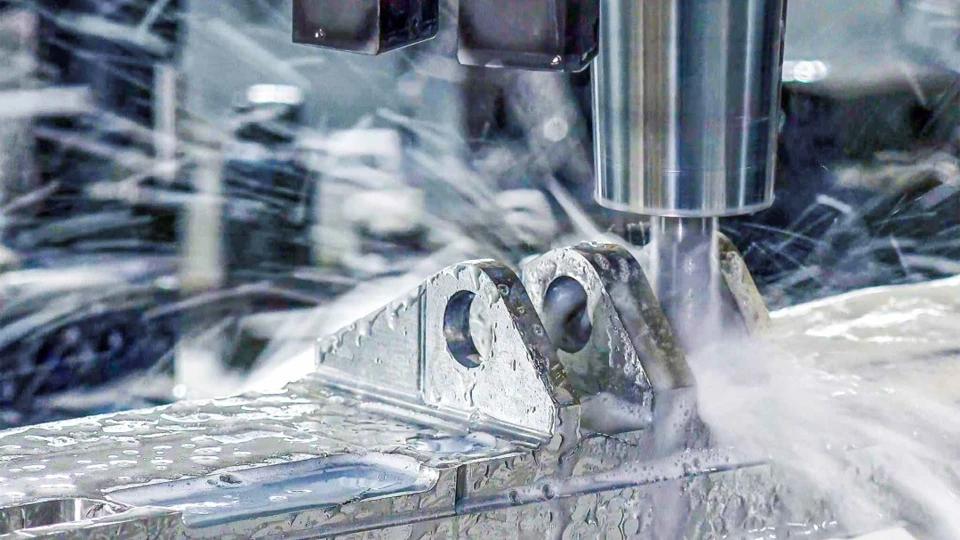 5. What Cutting Tools Are Used for CNC Machining Titanium?
Cutting tool selection directly affects titanium machining efficiency, surface quality, and tool life.
Carbide cutting tools are commonly used because they offer a useful combination of hardness, toughness, and wear resistance.
However, tool selection must account for the titanium grade, machining operation, machine rigidity, and coolant system.
Carbide Cutting Tools
Solid carbide end mills and carbide inserts are widely used for titanium milling and turning.
Tool geometry should support effective chip formation and minimize excessive friction.
Tool Coatings
Depending on the application, suitable coated or uncoated carbide tools may be selected.
Coatings such as TiAlN can provide advantages in certain cutting conditions, but coating performance depends on the tool substrate, cutting temperature, and machining strategy.
Cutting Edge Geometry
Sharp cutting edges can help reduce rubbing and excessive cutting forces.
Appropriate rake angles, corner radii, and flute geometries also influence chip formation and machining stability.
For titanium machining, the best cutting tool is not necessarily the hardest tool. It is the tool that provides a suitable balance of cutting performance, thermal resistance, chip evacuation, and durability.
6. How Can Manufacturers Improve Titanium CNC Machining Efficiency?
Improving machining efficiency requires more than increasing spindle speed or feed rate.
Effective titanium machining focuses on stable material removal, controlled cutting temperatures, and consistent tool performance.
Optimize Cutting Parameters
Select cutting speeds, feed rates, and depths of cut according to the material grade and cutting tool recommendations.
Use Effective Cooling
Deliver coolant directly to the cutting zone where appropriate to reduce thermal loads and support chip evacuation.
Improve Toolpath Design
Use controlled-engagement toolpaths to avoid sudden increases in cutting forces.
Maintain Machine Rigidity
Rigid fixtures, stable toolholders, and minimized tool overhang help reduce vibration and dimensional errors.
Reduce Unnecessary Setups
Multi-axis machining can reduce workpiece repositioning and improve access to complex features.
Together, these strategies can improve machining stability, reduce tool wear, and support more consistent production quality.
7. What Factors Affect Titanium CNC Machining Accuracy?
The achievable accuracy of titanium CNC machining depends on the complete manufacturing system rather than the CNC machine alone.
Important factors include:
Machine tool precision and rigidity
Cutting tool condition
Workholding stability
Thermal effects during machining
Part geometry and wall thickness
Machining sequence
Inspection and measurement methods
Thin-walled titanium components may be particularly sensitive to cutting forces and workpiece deflection.
To maintain dimensional accuracy, manufacturers may use optimized machining sequences, suitable fixtures, intermediate inspection, and controlled finishing passes.
The final tolerance capability should always be evaluated according to the specific part geometry and manufacturing requirements.
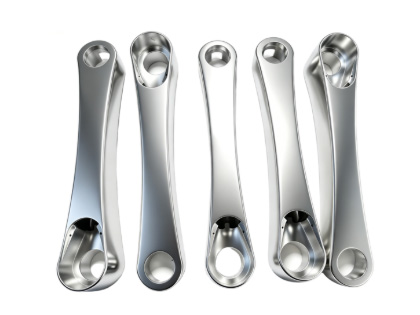 8. Applications of CNC Machined Titanium Parts
Titanium CNC machining is used in industries where high strength, corrosion resistance, low weight, or reliable mechanical performance are essential.
Aerospace
Titanium components are used in aircraft structures, brackets, fittings, and other weight-sensitive mechanical systems.
Medical Equipment
Titanium is used in medical instruments, equipment components, and certain implant applications where appropriate material grades and regulatory requirements are satisfied.
Automotive
High-performance automotive applications may use titanium fasteners, precision mechanical components, and selected lightweight parts.
Industrial Equipment
Titanium components are used in chemical processing systems, marine equipment, and corrosion-resistant industrial machinery.
The specific manufacturing process and inspection requirements vary according to the application.
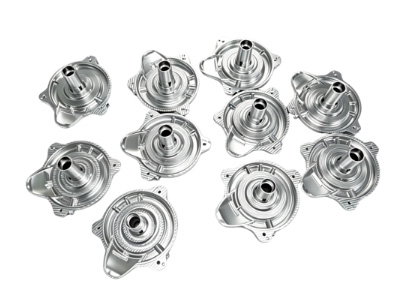 9. Why Choose Huazheng for Titanium CNC Machining?
Huazheng provides precision titanium CNC Machining Services for customers requiring custom components, complex geometries, and reliable manufacturing support.
Our manufacturing approach combines engineering analysis, CNC machining, process optimization, and quality inspection.
Titanium Material Expertise
Huazheng supports machining of titanium grades including TA1, TA2, TC4, and TA15 according to project requirements.
CNC Milling, Turning, and 5-Axis Machining
Our CNC machining capabilities support a variety of titanium component structures, from conventional milled and turned parts to complex multi-sided geometries.
Engineering and Process Optimization
By evaluating component geometry, material characteristics, tool accessibility, and machining requirements, we help customers develop practical manufacturing solutions.
Quality Inspection
Inspection methods including CMM, optical measurement, surface roughness testing, and hardness testing support dimensional verification and quality control.
Prototype to Batch Production
Huazheng supports custom titanium component manufacturing from initial prototype development to production orders.
10. Frequently Asked Questions
Can titanium be machined with a CNC machine?
Yes. Titanium and titanium alloys can be machined using CNC milling machines, CNC lathes, drilling equipment, and multi-axis machining centers.
Suitable cutting tools, machining parameters, and cooling strategies are essential for achieving reliable results.
Is CNC machining titanium difficult?
Titanium is generally more difficult to machine than aluminum and many conventional steels because of its low thermal conductivity, chemical affinity with cutting tools, and demanding cutting conditions.
However, appropriate machining strategies can improve stability and manufacturing efficiency.
What is the best CNC machining process for titanium?
The best process depends on the component geometry.
CNC milling is suitable for complex profiles and pockets, CNC turning is ideal for cylindrical components, and 5-axis machining provides advantages for complex multi-sided geometries.
What is the difference between CNC milling and CNC turning titanium?
In CNC milling, the cutting tool rotates to remove material from the workpiece.
In CNC turning, the workpiece rotates while a cutting tool removes material.
Both methods are widely used for manufacturing precision titanium components.
Why is cooling important when machining titanium?
Cooling helps control cutting temperatures, reduce excessive tool wear, and improve chip evacuation.
Effective cooling is especially important because titanium has relatively low thermal conductivity.
Can Huazheng manufacture custom titanium CNC parts?
Yes. Huazheng provides custom titanium CNC machining services based on engineering drawings, material specifications, dimensional tolerances, and production requirements.
Customers can submit their project details for engineering review and quotation.
How does CNC machining titanium work? The process begins with digital part design and CNC programming, followed by material preparation, precision cutting, cooling, finishing, and quality inspection.
Although titanium presents machining challenges related to heat, tool wear, and cutting stability, appropriate machining strategies make it possible to manufacture complex, high-quality components.
Successful titanium CNC machining depends on selecting suitable cutting tools, controlling machining parameters, maintaining machine rigidity, and applying effective quality inspection.
Huazheng provides precision titanium CNC machining services, including CNC milling, turning, and 5-axis machining for custom components.
Whether you require prototype development or batch production, our team can review your drawings, material specifications, and manufacturing requirements to develop an appropriate machining solution.
Contact Huazheng to discuss your custom titanium CNC machining project and request a quotation.


