



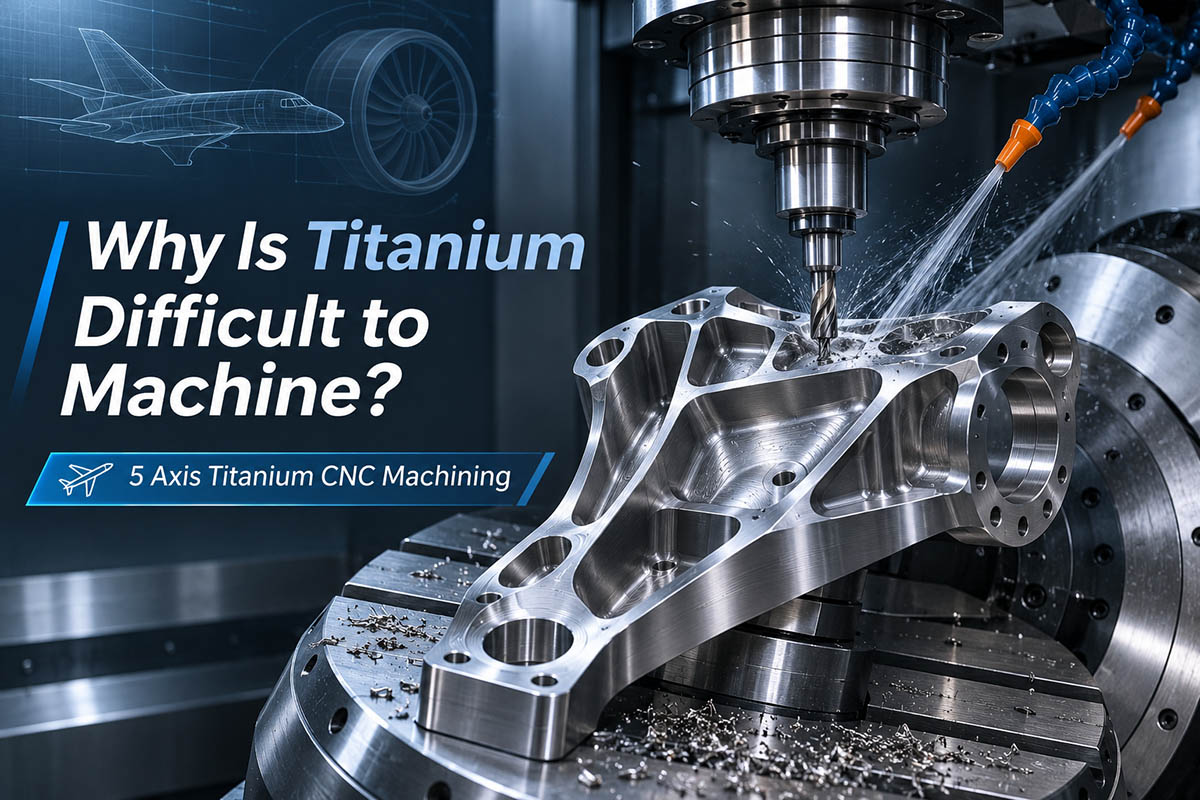
Titanium is widely used in aerospace, robotics, medical equipment, and industrial applications because of its high strength-to-weight ratio, corrosion resistance, and excellent mechanical properties. However, machining titanium is significantly more challenging than machining common materials such as aluminum.
For manufacturers producing Custom Titanium CNC Parts, the main difficulties include excessive cutting heat, rapid tool wear, material deformation, and maintaining dimensional accuracy.
Modern manufacturing methods, including 5 Axis Titanium CNC Machining, advanced cutting tools, and optimized machining strategies, can help overcome these challenges.
Understanding titanium's machining characteristics is important for engineers and OEM buyers who need reliable precision components.
1. What Makes Titanium Difficult to Machine?
Titanium's machining difficulties are primarily related to its physical and mechanical properties.
Low Thermal Conductivity
Titanium conducts heat poorly compared with aluminum and many steels. During machining, a significant amount of cutting heat remains concentrated near the cutting edge.
This can result in:
Rapid cutting tool wear
Increased machining temperatures
Reduced tool life
Surface quality problems
Effective cooling and carefully selected cutting parameters are essential for stable Precision Titanium Machining.
High Strength and Cutting Resistance
Titanium alloys, especially Ti-6Al-4V, retain considerable strength at elevated temperatures.
This creates higher cutting resistance and makes material removal more demanding. Manufacturers must carefully control cutting speed, feed rate, and cutting depth to maintain machining stability.
Chemical Reactivity With Cutting Tools
At elevated cutting temperatures, titanium can react with or adhere to cutting tool materials.
This may cause built-up material, tool chipping, and premature cutting edge failure. Appropriate carbide tooling, coatings, lubrication, and chip evacuation strategies help reduce these problems.
Elastic Deformation and Vibration
Titanium has a relatively low elastic modulus compared with steel. Thin-wall components and slender features can deflect under cutting forces.
For High Precision Titanium Machining, fixture design, tool rigidity, and machining sequences are especially important for maintaining dimensional accuracy.
These challenges are documented in titanium machining research from NASA and NIST.
2. How Does 5 Axis Titanium CNC Machining Improve Manufacturing?
Traditional 3-axis CNC machines can produce many titanium components, but parts containing complex angles, deep cavities, and multiple machined surfaces may require repeated setups.
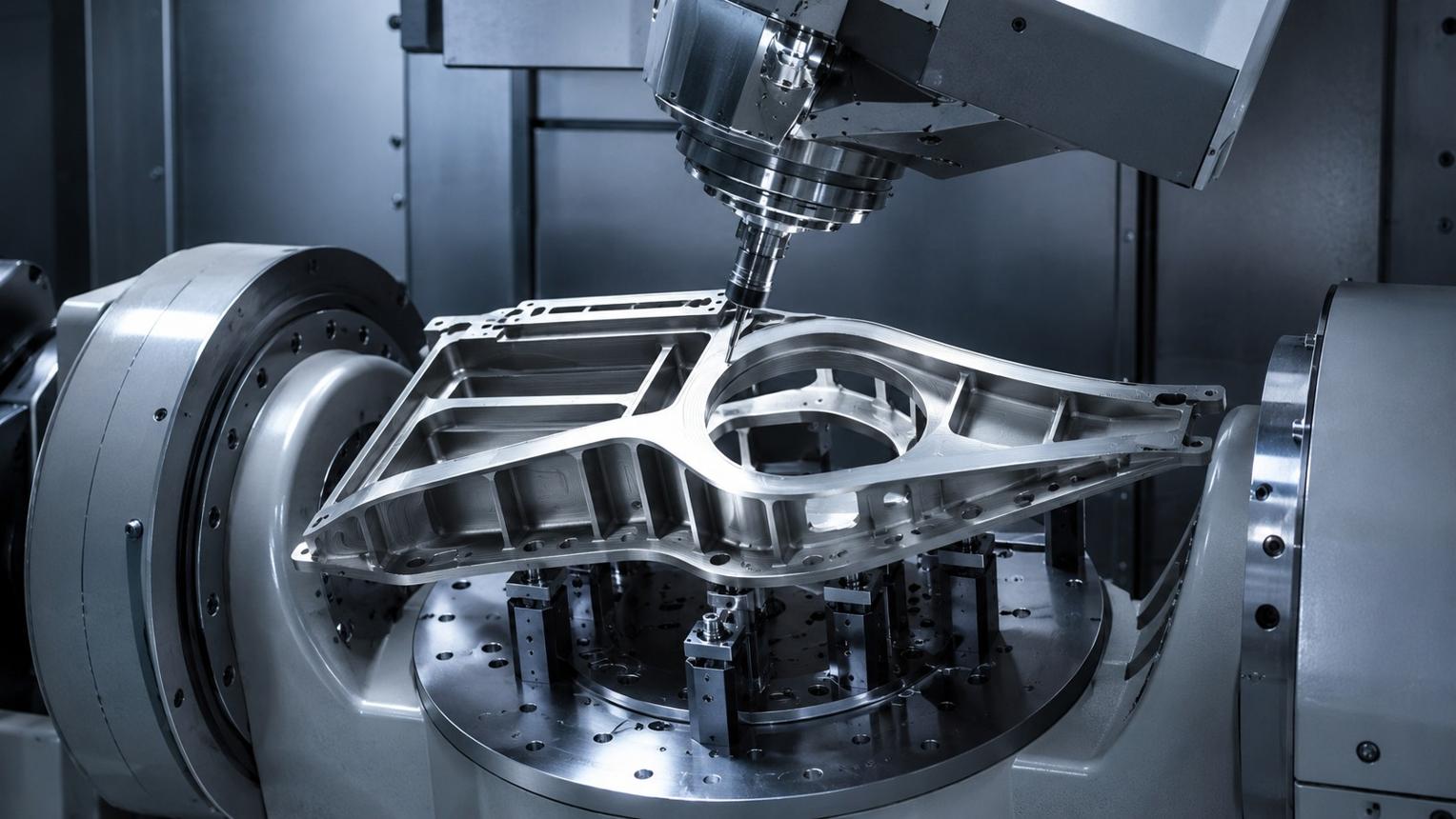
5 Axis Titanium CNC Machining provides additional rotational movement, allowing the cutting tool to approach the workpiece from different orientations.
Key advantages include:
Fewer setups for complex components
Improved access to angled and curved features
Reduced repositioning errors
Better tool orientation and cutting engagement
More efficient machining of multi-surface parts
For Complex Titanium Part Machining, a 5-axis machine can reduce the number of operations and simplify the manufacturing process.
However, 5-Axis Machining does not automatically eliminate titanium's heat or tool wear problems. Tool selection, coolant delivery, and process planning remain essential.
3. Grade 5 Titanium Machining: Why Is Ti-6Al-4V Challenging?
Grade 5 titanium, also known as Ti-6Al-4V, is one of the most commonly used titanium alloys in precision manufacturing.
It contains approximately 6% aluminum and 4% vanadium, offering an excellent combination of strength, weight reduction, and corrosion resistance.
Grade 5 Titanium Machining is commonly used for components requiring mechanical strength and relatively low weight.
Typical applications include aerospace brackets, robotic structural parts, equipment housings, and precision mechanical components.
Compared with commercially pure titanium, Grade 5 generally presents greater cutting resistance because of its higher strength.
Successful Custom Titanium Alloy Machining requires cutting strategies selected according to the actual titanium grade, component geometry, and finishing requirements.
4. Titanium CNC Precision Milling for Complex Components
Titanium CNC Precision Milling is used to manufacture components with tight geometric requirements, intricate profiles, and multiple functional features.
Common features include:
Thin walls and deep pockets
Precision mounting holes
Angled surfaces and complex contours
Threaded connections
Curved structural features
For these components, the machining strategy must balance material removal efficiency with dimensional stability.
Rough machining typically removes most of the excess material, while finishing operations establish the final dimensions and surface condition.
In Titanium 5 Axis Milling Services, selecting suitable tool orientations and cutting paths can improve accessibility and reduce the need for additional fixtures.
5. Applications of Custom Titanium CNC Parts
Titanium components are used in industries that require a combination of strength, durability, corrosion resistance, and reduced weight.
Application | Typical Titanium Components | Main Manufacturing Considerations |
|---|---|---|
Aerospace | Brackets, structural fittings, mounting components | Material traceability, dimensional accuracy |
Robotics | Joint components, structural connectors, mounting parts | Weight reduction, mechanical strength |
Industrial Equipment | Precision housings, supports, connecting parts | Fit, alignment, surface quality |
Medical Equipment | Instrument components, equipment structures | Material selection, surface finish |
Automation Systems | Precision connectors, mounting frames | Repeatability, assembly accuracy |
Titanium Aerospace Components
Titanium is frequently selected for aerospace applications because its strength-to-weight ratio can provide advantages over heavier materials.
Manufacturing Titanium Aerospace Components requires careful control of material specifications, critical dimensions, and surface integrity.
Depending on the component's intended use, aerospace buyers may also require material certifications, inspection reports, and documented production processes.
Titanium Robot Components
For robotic systems, reducing moving mass can improve mechanical efficiency and support performance goals.
Titanium Robot Components may include joint connectors, structural brackets, precision mounting elements, and lightweight mechanical supports.
The use of titanium must still be evaluated against manufacturing cost, stiffness, and alternative materials.
Titanium Housing Machining
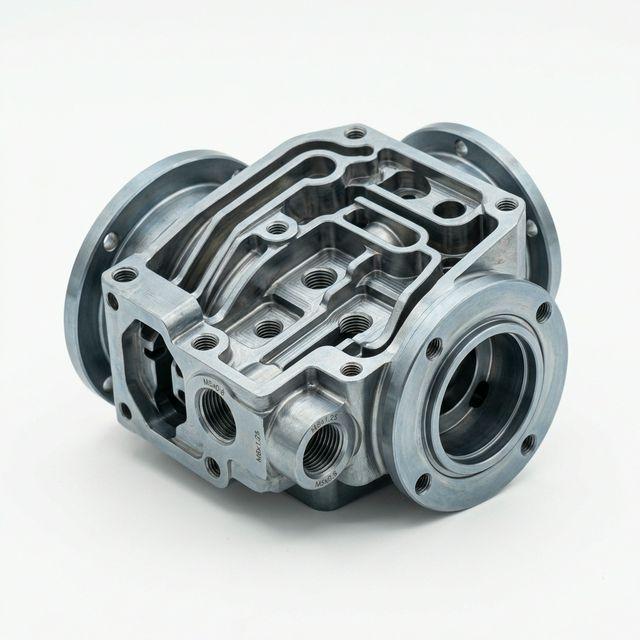
Titanium Housing Machining involves producing protective or structural housings with features such as internal cavities, mounting holes, threaded connections, and precision mating surfaces.
Thin-wall housing designs require special attention because cutting forces and residual stresses may affect their final dimensions.
6. When Is Titanium Precision Grinding Necessary?
CNC milling and turning can achieve accurate dimensions and good surface finishes, but certain parts require additional finishing operations.
Titanium Precision Grinding may be considered when a component requires particularly demanding dimensional or surface characteristics.
Typical applications include precision mating surfaces, bearing-related features, and selected components requiring controlled geometry.
Grinding titanium also presents thermal challenges. Appropriate grinding wheels, coolant delivery, and controlled material removal are important to reduce the risk of surface damage.
Not every titanium component requires grinding. The decision should depend on functional specifications rather than an assumption that additional finishing always improves performance.
7. Small Batch Titanium Machining for Prototypes and OEM Production
Many OEM projects begin with limited production quantities before moving to larger manufacturing volumes.
Small Batch Titanium Machining can be suitable for engineering prototypes, functional testing, custom machinery, and low-volume specialized components.
For smaller production runs, manufacturers should consider:
Material availability and minimum purchasing quantities
Fixture and tooling requirements
CNC programming and setup costs
Inspection requirements
Potential design revisions
For parts with complex geometry, using a well-planned 5-axis process may reduce multiple setups, although the overall economics depend on component complexity and production quantity.
8. How to Reduce Titanium CNC Machining Costs
Titanium machining costs depend on more than material price.
Several design and manufacturing decisions can significantly influence the final quotation.
Simplify Unnecessary Features
Avoiding nonfunctional deep cavities, excessively narrow slots, and difficult-to-access surfaces can reduce machining time.
Specify Realistic Tolerances
Applying extremely tight tolerances to every feature increases machining and inspection requirements.
Critical dimensions should be identified separately from general dimensions.
Select the Appropriate Titanium Grade
Not every application requires Grade 5 titanium. Material selection should follow mechanical, corrosion-resistance, and operating requirements.
Optimize the Manufacturing Process
Selecting between 3-axis machining, 5 Axis Titanium CNC Machining, turning, and grinding should depend on the geometry and required finish.
Plan for Repeat Orders
For repeated production, documented machining programs, tooling requirements, and inspection criteria can improve manufacturing consistency.
9. What Should OEM Buyers Look for in Titanium CNC Machining Services?
Selecting a manufacturer for Titanium CNC Machining Services requires more than comparing quoted prices.
Buyers should evaluate whether the supplier understands the technical requirements of their specific components.
Evaluation Area | What Buyers Should Confirm |
|---|---|
Material Expertise | Experience with the specified titanium grade |
Machining Capability | Suitable 3-axis, 4-axis, or 5-axis equipment |
Complex Geometry | Ability to machine angled features, pockets, and thin walls |
Quality Control | Dimensional inspection methods and reporting |
Surface Finishing | Available finishing processes and surface quality control |
Production Quantity | Prototype, small-batch, or repeat-production suitability |
Engineering Support | Ability to review drawings and recommend practical adjustments |
For Custom Titanium CNC Parts, providing complete technical drawings and clear inspection requirements helps suppliers prepare more accurate manufacturing proposals.
10. What Information Should Be Included in a Titanium CNC Machining RFQ?
Before requesting a quotation for Titanium CNC Machining Services, OEM buyers should prepare the following information:
2D technical drawings and 3D CAD models
Titanium grade and applicable material specifications
Required dimensions, tolerances, and geometric requirements
Surface finish and post-processing requirements
Prototype or production quantities
Required inspection documents
Target delivery schedule
Complete RFQ information helps reduce misunderstandings during technical evaluation and quotation.
Frequently Asked Questions
Is titanium harder to machine than stainless steel?
Titanium alloys are generally considered difficult-to-machine materials because of their low thermal conductivity, high chemical reactivity, and strength at elevated temperatures. However, the actual difficulty depends on the specific titanium and stainless steel grades, tooling, and machining conditions.
Can titanium be machined with a 5-axis CNC machine?
Yes. 5 Axis Titanium CNC Machining is suitable for many complex components containing angled surfaces, curved profiles, and features that require multiple tool orientations.
What is the advantage of Grade 5 titanium?
Grade 5 titanium offers high strength, relatively low density, and good corrosion resistance, making it useful for aerospace, robotics, and industrial applications.
Is small batch titanium machining expensive?
Small-batch production may have a higher cost per part because programming, tooling, setup, and inspection expenses are distributed across fewer components. The actual price depends on geometry, material grade, quantity, and quality requirements.
Can titanium CNC parts achieve tight tolerances?
Yes. Precision titanium components can be manufactured to tight tolerances when the machining process, fixturing, and inspection methods are appropriate. Achievable tolerances must be evaluated according to individual features and part geometry.
When should OEM buyers choose titanium 5 axis milling services?
Titanium 5 Axis Milling Services are worth considering when a component contains multiple angled features, complex surfaces, or difficult-to-access areas that would otherwise require several machining setups.
Titanium is difficult to machine because of its low thermal conductivity, high cutting temperatures, chemical reactivity, and tendency to deflect under cutting forces.
However, these challenges can be managed through suitable tooling, coolant delivery, stable fixturing, and carefully developed machining processes.
For OEM buyers requiring High Precision Titanium Machining, the most important considerations are material selection, component geometry, machining capability, dimensional requirements, and quality control.
Whether the project involves Custom Titanium CNC Parts, aerospace components, robotic parts, or precision housings, selecting an appropriate manufacturing approach early in development can help improve production consistency and control costs.


