



Magnesium alloys are increasingly considered for lightweight components where weight reduction, dimensional accuracy, and structural design flexibility are important. However, manufacturing complex magnesium parts requires more than conventional cutting equipment. Thin walls, deep cavities, curved surfaces, and multi-angle features must be carefully managed to maintain dimensional stability and consistent quality.
5 Axis Magnesium CNC Machining offers an effective manufacturing solution for components with demanding geometries. By controlling tool movement across multiple axes, manufacturers can machine intricate features with fewer setups, improve tool accessibility, and reduce positioning errors caused by repeated workpiece clamping.
For OEM customers developing lightweight industrial components, electronic housings, precision mechanical structures, and specialized equipment parts, professional Magnesium CNC Machining Services can help transform complex designs into manufacturable products.
 What Is 5 Axis Magnesium Machining?
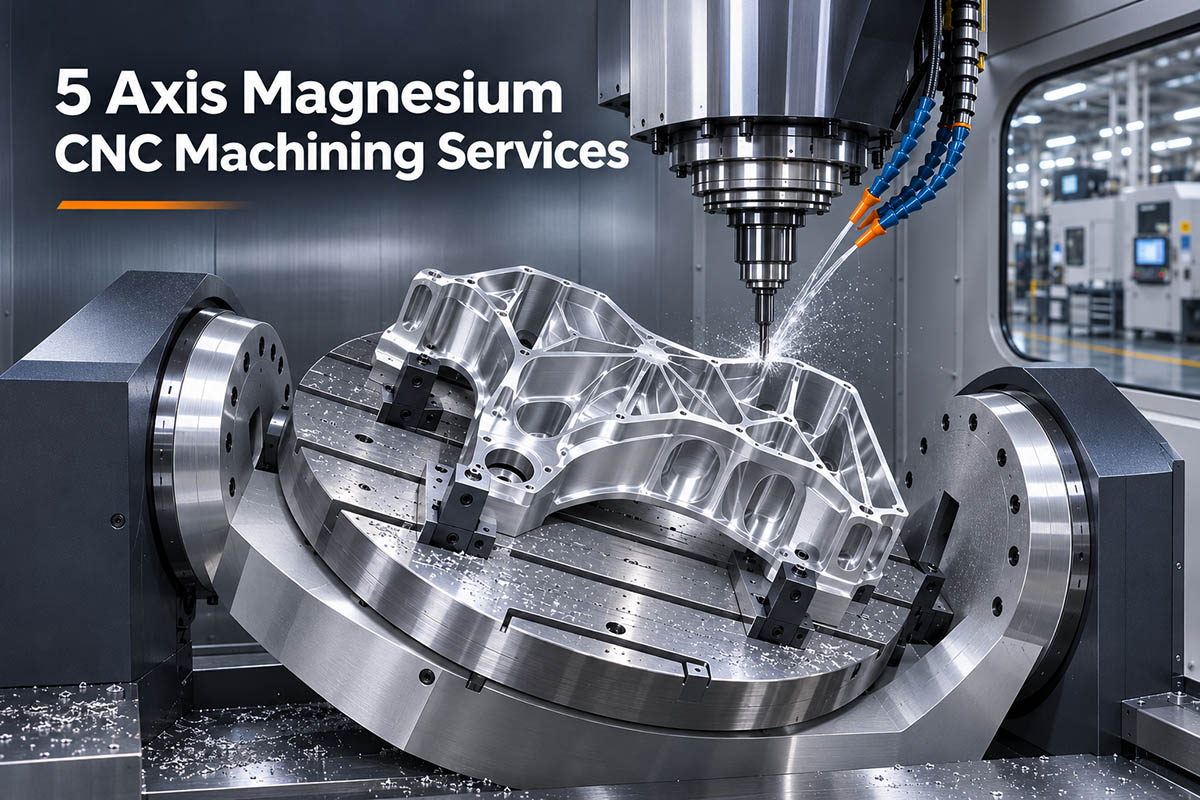
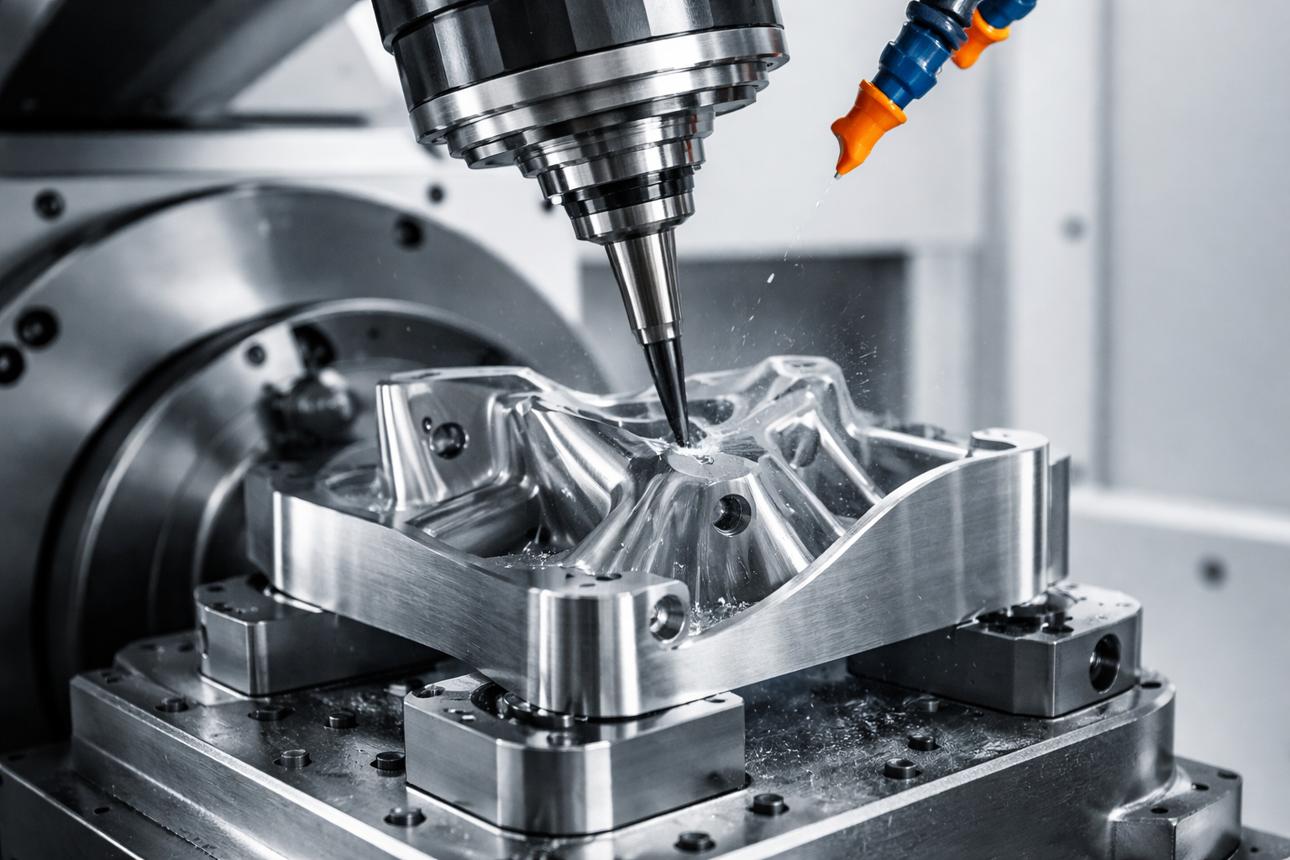
5 Axis Magnesium Machining is an advanced CNC manufacturing process that uses five controlled axes to machine magnesium alloy workpieces from multiple orientations.
Unlike conventional three-axis machining, which primarily moves along the X, Y, and Z directions, five-axis machining introduces two additional rotational axes. This enables cutting tools to approach complex features from different angles without repeatedly repositioning the component.
Depending on the geometry, manufacturers may use indexed 3+2 machining or Simultaneous 5 Axis Magnesium Machining, where linear and rotational movements are coordinated during cutting.
This technology is particularly valuable for magnesium components containing:
Deep internal cavities and complex pockets
Thin-wall structures and lightweight frames
Multi-angle holes and mounting features
Curved and irregular surfaces
Precision interfaces on multiple faces
Complex geometric transitions
Components requiring consistent relationships between critical dimensions
Through advanced toolpath planning and controlled machining strategies, Precision 5 Axis Magnesium Machining supports accurate manufacturing of complex components that would otherwise require multiple machining operations.
Why Choose Magnesium Alloy for CNC Machined Parts?
Magnesium alloys offer several material advantages that make them attractive for weight-sensitive engineering applications.
1. Lightweight Material Properties
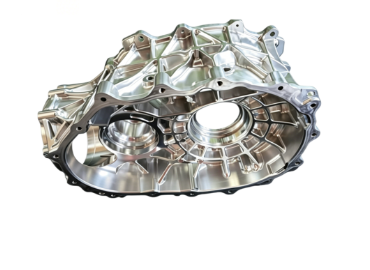
Magnesium has a lower density than aluminum and many other engineering metals. This makes it suitable for applications where reducing component weight is a primary design objective.
Custom magnesium components may be considered for aerospace structures, portable electronic products, robotic assemblies, optical equipment, and lightweight mechanical systems.
2. Good Machinability
With appropriate tooling, cutting parameters, chip management, and safety controls, magnesium alloys can offer efficient material removal.
Magnesium CNC Milling is suitable for machining pockets, profiles, mounting surfaces, holes, and complex structural features.
3. Design Flexibility
Magnesium alloys can be used to manufacture lightweight housings, brackets, frames, and other components combining structural and functional features.
Using Magnesium Multi Axis Machining, engineers can incorporate multiple surfaces and complex mounting geometries into a single machined component.
4. Potential for Component Integration
Complex magnesium parts can combine several mechanical functions into one design, potentially reducing the number of separate components and assembly operations.
However, alloy selection must consider actual operating loads, corrosion exposure, surface treatment requirements, and the intended service environment.
 Our 5 Axis Magnesium CNC Machining Service Scope
Precision 5 Axis Magnesium Milling
5 Axis Magnesium Milling is suitable for complex magnesium alloy parts requiring multi-directional machining, precise positioning, and controlled surface geometry.
Compared with conventional machining strategies, five-axis technology can improve access to difficult features and reduce additional setups.
Typical applications include complex housings, precision brackets, multi-face components, and lightweight structural parts.
Simultaneous 5 Axis Magnesium Machining
For components with continuous curved surfaces or geometries requiring changing tool orientations, simultaneous five-axis milling provides additional flexibility.
This machining strategy allows the cutting tool to maintain appropriate contact angles throughout complex toolpaths.
It is particularly useful for:
Freeform surface machining
Complex curved profiles
Difficult-to-access features
Multi-angle transitions
Precision surface finishing
Not every part requires simultaneous five-axis movement. Indexed five-axis machining may offer a more economical solution for simpler multi-face components.
Magnesium Deep Cavity Machining
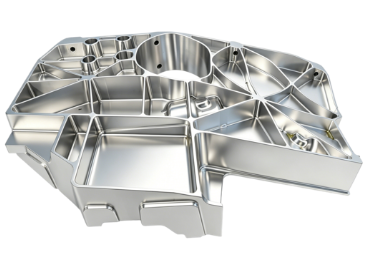
Magnesium Deep Cavity Machining presents challenges involving tool accessibility, chip evacuation, vibration, and dimensional accuracy.
Five-axis machining can help optimize the tool approach angle and, in suitable geometries, allow shorter and more rigid cutting tools.
Careful machining strategies are required to manage cavity depth, internal corner geometry, wall thickness, and surface quality.
Magnesium Thin Wall Machining
Magnesium Thin Wall Machining is commonly required for lightweight housings, frames, and structural components.
Thin sections may be susceptible to deformation caused by clamping forces, residual stresses, material removal, and cutting loads.
Manufacturing considerations include:
Controlled material removal sequences
Suitable workholding and fixture design
Optimized cutting forces
Adequate support for thin sections
Intermediate dimensional verification
Final inspection after machining
The appropriate manufacturing strategy depends on wall thickness, part geometry, magnesium alloy grade, and tolerance requirements.
Magnesium Complex Surface Machining
Magnesium Complex Surface Machining is used for parts with curved contours, compound angles, and three-dimensional transitions.
Five-axis CNC milling enables flexible tool orientation, which can improve accessibility and produce more consistent surfaces on suitable geometries.
For engineering applications, surface quality should be evaluated together with dimensional requirements rather than judged by appearance alone.
Magnesium CNC Machining Capabilities
Different manufacturing processes can be selected according to part geometry, production requirements, and engineering specifications.
| Manufacturing Process | Typical Applications |
|---|---|
| 5 Axis Magnesium CNC Milling | Complex multi-face components and precision structures |
| Simultaneous 5 Axis Milling | Curved surfaces and continuously changing geometries |
| Magnesium CNC Milling | Pockets, slots, holes, profiles, and mounting features |
| Magnesium CNC Turning | Round parts, cylindrical features, and rotational components |
| Magnesium Deep Cavity Machining | Recessed housings and complex internal pockets |
| Magnesium Thin Wall Machining | Lightweight frames and thin-section enclosures |
| High Precision Magnesium Milling | Components with demanding dimensional and surface requirements |
The final manufacturing process should be selected after reviewing the engineering drawings, material specifications, tolerance requirements, and production volume.
Custom Magnesium CNC Parts and Applications
Custom Magnesium Machining is particularly valuable when standard components cannot meet application-specific design requirements.
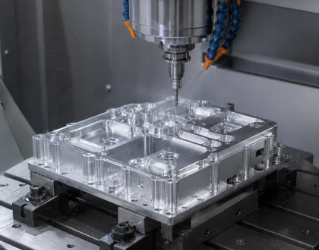
Aerospace and Lightweight Structures
Magnesium alloy precision parts may be considered for selected lightweight housings, brackets, equipment frames, and non-critical structural applications, subject to applicable material and industry requirements.
Electronics and Communication Equipment
Custom magnesium housings and frames can support lightweight electronic assemblies, precision mounting features, and compact mechanical designs.
Applications may include equipment enclosures, communication device structures, and electronic support components.
Robotics and Automation
Robotic equipment often requires a balance between component weight, rigidity, and mechanical integration.
Magnesium Alloy Precision Parts can be considered for lightweight mounting brackets, mechanical frames, and specialized motion-system components.
Optical and Precision Instruments
Optical equipment may require complex mounting positions, precision holes, stable mechanical interfaces, and carefully controlled component dimensions.
High Precision Magnesium Milling supports the manufacture of parts with integrated positioning and mounting features.
Industrial Equipment
Magnesium machined components may also be considered for specialized machinery, instrument housings, and mechanical assemblies where weight reduction offers a practical advantage.
Material suitability must be evaluated against operating temperature, environmental exposure, loading, and other service conditions.
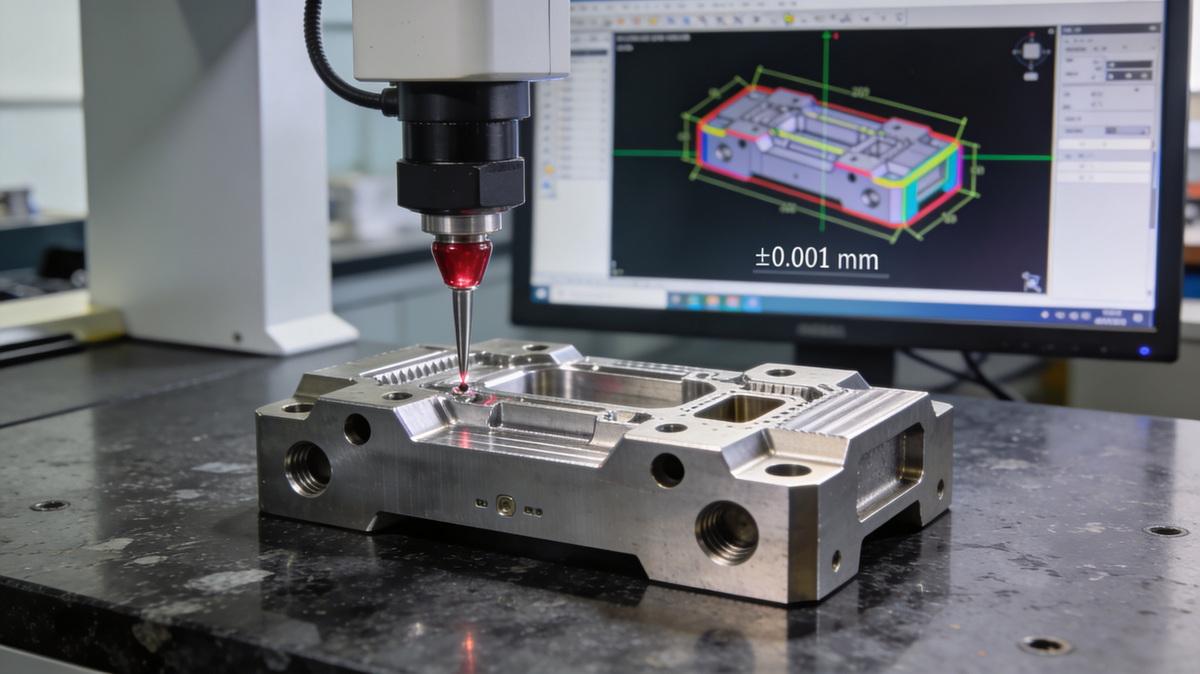 Quality Control for Precision Magnesium Machined Parts
Dimensional consistency is a critical consideration in Magnesium Component Manufacturing, particularly when complex features must align during assembly.
A practical quality management process should cover several stages.
Engineering Drawing Review
Before machining, drawings and 3D models should be reviewed to identify critical dimensions, geometric tolerances, machining access limitations, and manufacturing risks.
Material Verification
The magnesium alloy grade and material condition should match the approved engineering specification.
Common magnesium alloy families used in engineering include AZ and ZK grades, although specific material availability and machinability must be confirmed for each project.
Machining Process Control
Tool selection, machining sequence, workholding, and cutting parameters should be planned according to component geometry and material characteristics.
Magnesium machining also requires dedicated safety controls for combustible chips and dust, suitable housekeeping and collection methods, and appropriate metal-fire emergency procedures.
Dimensional Inspection
Inspection methods may include coordinate measuring machines, precision gauges, and appropriate surface-measurement equipment.
The actual inspection plan depends on the drawing requirements, part geometry, and agreed acceptance criteria.
Final Product Verification
Before delivery, critical dimensions, visual condition, surface requirements, and agreed quality documentation should be checked against the approved specifications.
Choosing the Right Magnesium CNC Manufacturer
Selecting a reliable Magnesium CNC Manufacturer requires evaluating more than machining equipment alone.
For complex parts, procurement teams should consider whether the supplier can support the entire manufacturing process, from initial design evaluation to inspection and repeat production.
Important evaluation criteria include:
Engineering capability: Can the supplier review complex geometries, identify manufacturing risks, and provide useful design-for-manufacturing feedback?
Multi-axis machining capability: Does the supplier have the appropriate equipment, programming knowledge, and workholding strategy for the proposed magnesium components?
Magnesium machining safety: Are suitable procedures in place for chip handling, dust control, cutting-fluid selection, and metal-fire prevention?
Dimensional inspection: Can the supplier verify critical dimensions and geometric tolerances using suitable measurement methods?
Prototype and production support: Can the manufacturing process be documented and repeated consistently when moving from samples to production orders?
Communication and documentation: Can the supplier clarify technical requirements, drawing revisions, material specifications, and inspection expectations before manufacturing begins?
A qualified Magnesium Machining Company should be able to explain how it intends to manufacture and inspect the parts rather than relying only on general statements about precision.
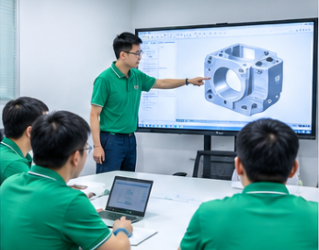 Custom Magnesium CNC Machining: From Design to Production
A structured production workflow helps minimize misunderstandings between engineering teams and manufacturing suppliers.
Step 1: RFQ and Technical Drawing Submission
Customers provide 2D drawings, 3D CAD models, magnesium alloy requirements, quantity expectations, and critical quality specifications.
Step 2: Design for Manufacturability Review
The manufacturing team evaluates machining accessibility, minimum wall sections, deep cavities, workholding requirements, tolerances, and potential production risks.
Step 3: Process Planning and CNC Programming
Suitable machining methods are selected, which may include conventional milling, indexed five-axis milling, simultaneous five-axis machining, or turning.
Step 4: Prototype Machining and Inspection
Prototype parts are manufactured and inspected according to agreed requirements. Engineering feedback may lead to design or process adjustments.
Step 5: Production and Quality Verification
Following prototype approval, production planning focuses on process consistency, inspection control, and delivery requirements.
This workflow can support the transition from one-off development parts to repeat Magnesium CNC Machining Services.
Frequently Asked Questions
What are the advantages of 5 axis magnesium CNC machining?
Five-axis machining allows cutting tools to access complex features from multiple orientations. It can reduce repeated workpiece setups, improve access to deep cavities, and support accurate machining of multi-face components. The actual benefits depend on part geometry and machining strategy.
Is magnesium suitable for High Precision CNC Machining?
Yes. Magnesium alloys can be precision machined with appropriate equipment, workholding, tooling, and process control. Achievable tolerances depend on the selected alloy, component dimensions, geometry, and inspection requirements.
Can 5 Axis CNC Machining produce thin-wall magnesium components?
Yes. Five-axis machining can be used for thin-wall magnesium parts, but deformation control requires careful fixture design, machining sequence planning, and dimensional verification.
What is the difference between 5 axis magnesium machining and conventional CNC milling?
Conventional three-axis milling uses three linear motion axes. Five-axis machining adds two rotational axes, allowing the tool or workpiece to approach features from more directions. This is especially useful for complex geometries and components requiring machining on multiple faces.
Is simultaneous 5 axis machining always necessary?
No. Simultaneous five-axis machining is generally most valuable for complex curved surfaces and continuously changing tool orientations. Indexed 3+2 machining can be a practical and economical alternative for many multi-face parts.
Which magnesium alloys can be CNC machined?
Several magnesium alloy grades, including selected AZ-series and ZK-series materials, can be machined. The appropriate alloy depends on mechanical properties, application requirements, material availability, and manufacturing considerations.
What information is required for a custom magnesium CNC machining quotation?
A complete RFQ should include engineering drawings, 3D CAD files, magnesium alloy grade, required quantity, dimensional tolerances, surface finish requirements, intended application, and delivery expectations.
How do I choose a magnesium CNC supplier?
Evaluate the supplier's experience with magnesium alloys, five-axis machining capabilities, safety procedures, quality inspection methods, engineering support, and ability to manage prototype-to-production requirements.
Request a Quote for Custom Magnesium CNC Machining
Complex magnesium components require careful coordination between material selection, machining strategy, and dimensional inspection.
Whether your project involves 5 Axis Magnesium CNC Machining, deep cavity milling, thin-wall housings, precision mechanical structures, or custom Magnesium Alloy Components, choosing the appropriate manufacturing process is essential to achieving reliable results.
For a technical evaluation, prepare your engineering drawings, material specifications, tolerances, and expected production quantities.
Discuss your custom magnesium CNC machining project and request a manufacturing quotation based on your design requirements.


