



Do you know how aluminum alloys are classified?
Are you also struggling to choose the right type of Aluminum alloys?Aluminum alloys are the foundation of modern engineering, offering an ideal combination of strength, lightweight properties, and corrosion resistance. Their exceptional versatility has made them essential across a wide range of industries, from aerospace to precision manufacturing. Whether extruded, cast, or machined, aluminum alloys can be precisely customized to satisfy the demanding requirements of structural components, thermal systems, and high-speed automation applications.
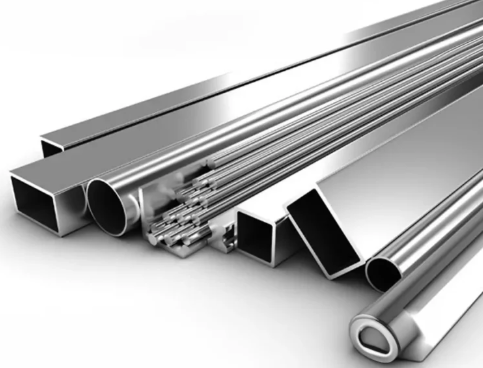
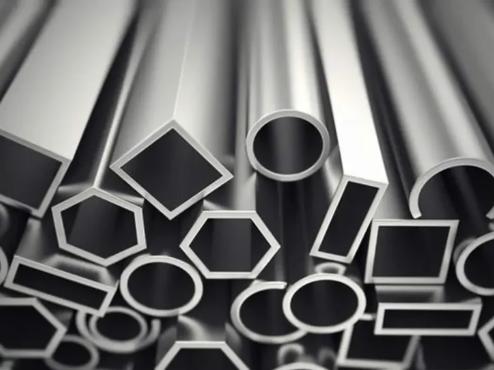
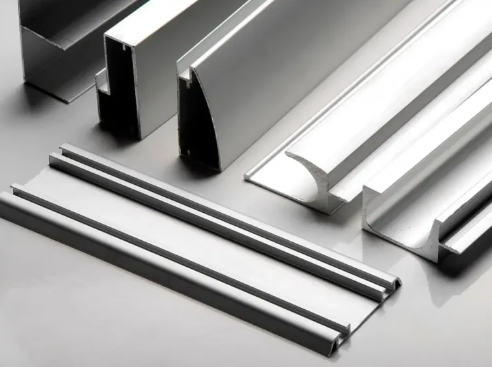
Aluminum Alloy Defined
Aluminum alloy is an engineered metal material primarily composed of aluminum, with additional alloying elements introduced to improve its mechanical, thermal, and chemical properties. While pure aluminum is naturally lightweight and highly corrosion-resistant, it is relatively soft and does not provide sufficient strength for many industrial applications. By combining aluminum with elements such as copper, magnesium, silicon, zinc, and manganese, manufacturers can precisely adjust its characteristics to meet specific performance requirements.
Aluminum alloys are generally divided into two main categories: wrought alloys and cast alloys.
Wrought aluminum alloys are manufactured through mechanical deformation processes, including rolling, extrusion, and forging. These processes enhance material strength and structural integrity, making wrought alloys widely used for structural components, aerospace parts, automotive components, and high-strength applications.
Cast aluminum alloys, in contrast, are produced by pouring molten aluminum alloy into molds, enabling manufacturers to create complex geometries, intricate designs, and components with excellent dimensional accuracy. This makes cast alloys suitable for applications requiring detailed shapes and efficient production.
Each aluminum alloy is identified using a four-digit numerical designation system, where different series indicate specific alloy compositions and performance characteristics.
For example:
6000 series aluminum alloys (such as 6061) are widely used in aerospace and automotive applications due to their excellent strength, corrosion resistance, and machinability.
1000 series aluminum alloys consist of nearly pure aluminum and are valued for their outstanding electrical conductivity and corrosion resistance.
With their unique combination of lightweight properties, strength, corrosion resistance, and machining versatility, aluminum alloys have become essential materials in precision manufacturing, aerospace, automotive, electronics, and industrial engineering applications.
Types of Aluminum Alloy
Alloy Series | Example Alloys | Common Applications |
1000 Series | 1050, 1100, 1350 | Electrical conductors, chemical processing equipment, food and beverage containers |
2000 Series | 2024, 2219 | Aerospace structures, military components, high-performance automotive parts |
3000 Series | 3003, 3105 | Roofing sheets, cooking utensils, beverage cans, HVAC equipment |
5000 Series | 5052, 5083, 5005 | Marine components, fuel tanks, pressure vessels, structural applications |
6000 Series | 6061, 6063, 6082 | Aerospace, automotive frames, industrial machinery, bicycle frames |
7000 Series | 7075, 7050 | Aerospace frames, military components, high-performance bicycles, sporting goods |
| Cast Aluminum Alloys | A356, A319, A380 | Automotive engine blocks, aerospace castings, cookware, industrial machinery housings |
Physical Properties
Alloy Series | Main Alloying Element(s) | Strength | Corrosion Resistance | Machinability | Weldability | Formability |
1000 Series | Pure Aluminum | Low | Excellent | Excellent | Excellent | Excellent |
2000 Series | Copper | Very High | Poor | Fair | Poor | Poor |
3000 Series | Manganese | Moderate | Good | Good | Good | Excellent |
5000 Series | Magnesium | Moderate-High | Excellent | Fair | Excellent | Good |
6000 Series | Magnesium & Silicon | Moderate-High | Good | Good | Good | Good |
7000 Series | Zinc | Very High | Poor-Moderate | Fair | Poor | Poor |
Cast Aluminum | Various (Silicon, Copper, Magnesium) | Moderate | Good | Good | Poor | Fair |
1. Aerospace & Transportation Applications
Aluminum alloy plays a critical role in the aerospace and transportation industries where lightweight and high-performance materials are required. Its excellent strength, durability, and corrosion resistance make it ideal for manufacturing aerospace aluminum parts, aircraft structural components, automotive parts, and rail transportation components.
Typical applications include:
Aircraft frames and fuselage structures
Wing components and aerospace brackets
Automotive body parts and lightweight structural components
Engine parts and precision machined components
High-speed rail car bodies and interior structures
Through 5-axis CNC Machining and precision aluminum machining, complex aluminum alloy components can be produced with tight tolerances and superior surface finishes.

2. Industrial Equipment & Electronics Applications
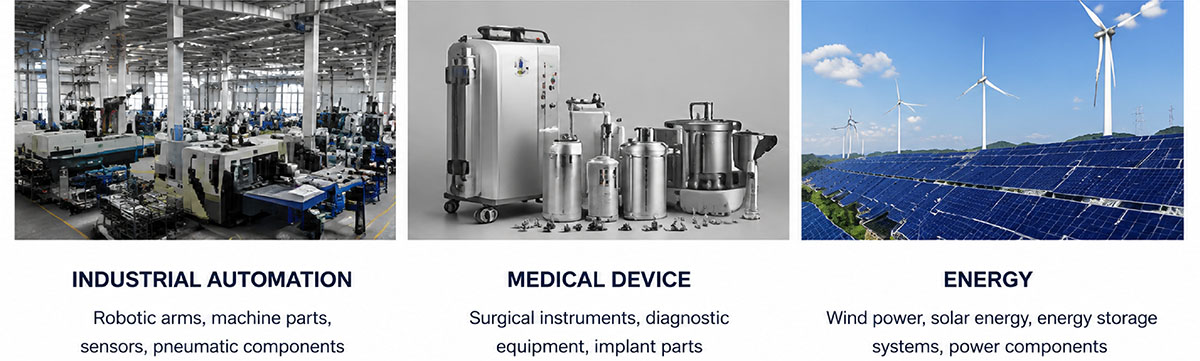
Aluminum alloy is widely used in industrial automation, robotics, and electronic equipment manufacturing because of its excellent machinability, dimensional stability, and heat dissipation performance.
Common aluminum alloy applications include:
Robot arms and automation equipment frames
Machine parts and mechanical structures
Conveyor system components and fixtures
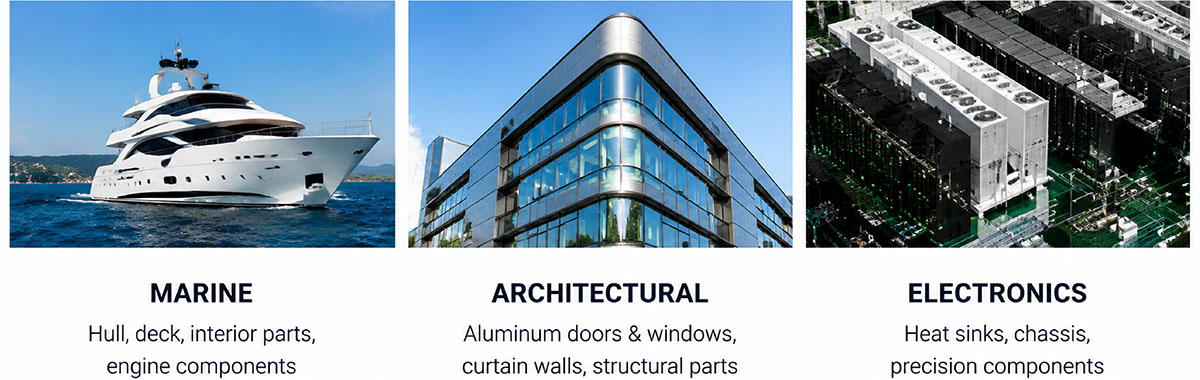
Aluminum heat sinks and electronic housings
Precision brackets, chassis, and enclosures
Custom CNC aluminum machining services enable manufacturers to produce high-precision aluminum components for advanced industrial systems and electronic devices.
3. Marine, Construction & Energy Applications
Due to its lightweight structure, corrosion resistance, and long service life, aluminum alloy is an excellent material choice for marine, construction, and renewable energy applications.
Aluminum alloy components are commonly used in:
Ship hull structures and marine equipment parts
Boat decks and interior components
Aluminum doors, windows, and curtain wall systems
Architectural structural profiles
Solar panel frames and wind energy components
Battery enclosures and energy system housings
Precision aluminum machining helps create durable and reliable components that meet the demanding requirements of modern engineering applications.
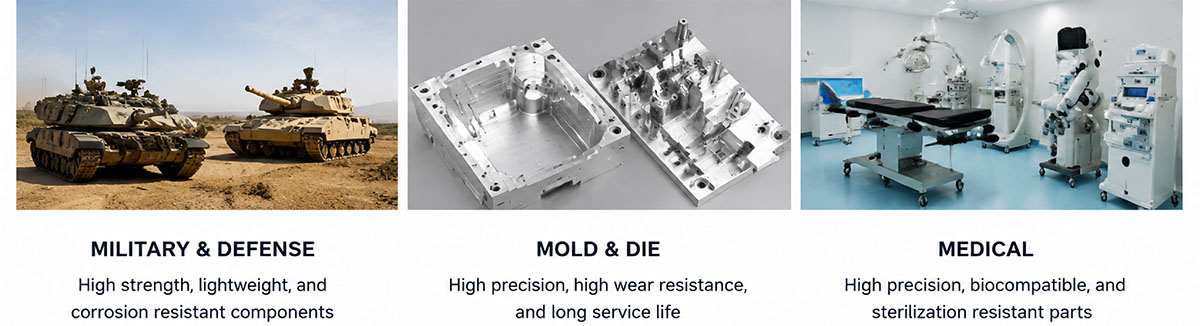
4. Defense, Medical & Consumer Product Applications
Aluminum alloy provides an ideal balance of strength, lightweight design, corrosion resistance, and precision machining capability, making it suitable for high-performance industries.
Applications include:
Military vehicle structural components
Defense equipment housings and protective parts
Medical device housings and surgical instrument components
Diagnostic equipment frames
Food packaging containers and consumer products
Precision aluminum components for various applications
With advanced CNC machining capabilities, surface finishing, and quality inspection, manufacturers can achieve reliable aluminum parts with strict dimensional accuracy and consistent performance.
About Forged Aluminum Parts FAQ
Q1: Do all forged aluminum parts really need a "stress relief" cycle before machining?
A: For any high-precision, complex, or thin-walled forged aluminum parts, we strongly recommend a stress relief cycle before machining. Think of it as creating a stable foundation before building a house. Although it adds an additional process step and increases the initial cost slightly, it significantly reduces the risk of part deformation, dimensional changes, and scrapping caused by warping during machining. In the long run, this process investment can effectively save time and manufacturing costs.
Q2: My part is pretty small, so why is it still warping?
A: Part size is not the only factor affecting deformation. If a component features thin walls, complex structures, or an asymmetrical shape, even a small part can experience significant warping when internal stress is released during machining.
This is where advanced machining techniques become essential. Factors such as the clamping strategy, fixture design, and machining sequence play a critical role in maintaining dimensional accuracy and preventing deformation.
Q3: How do I know if my supplier is using good quality aluminum material?
A: A professional supplier should always be able to provide a Mill Certificate (or Material Test Report) for the raw material. This document verifies the chemical composition and mechanical properties of the aluminum material, ensuring it meets the required specifications.
Customers should request this certification during the quotation or shipment process as a fundamental quality guarantee for their forged aluminum parts.
Q4: I thought aluminum was soft and easy to machine. Why are there so many problems?
A: This is a common misconception. Although aluminum is softer than steel, it has unique machining characteristics. Aluminum can be highly ductile, creating a "gummy" cutting behavior, it can easily adhere to cutting tools, and it experiences significant thermal expansion during machining.
If aluminum is machined using the same approach as steel without adjusting cutting parameters, tooling selection, and cooling methods, problems such as poor surface finish, tool wear, and dimensional instability may occur.
Q5: Is the forging die design really that important for the final machining?
A: Absolutely. Forging die design has a major impact on the final performance of forged aluminum parts. A well-designed die controls the orientation of the metal's grain structure ("flow lines") within the component.
Ideally, the grain should flow along the primary stress-bearing directions. This improves mechanical strength, creates more uniform internal stress distribution, and significantly reduces the possibility of cracking or warping during machining.
The forging process defines the material foundation, while machining creates the final precision. Getting the forging process right makes the entire manufacturing process more stable and efficient.
Q6: If my budget is tight, where should I invest to ensure quality?
A: The most valuable investment is early planning and technical communication. Partnering with an experienced machining supplier, like Huazheng Precision, that can review your designs, identify potential manufacturing challenges, and optimize the entire process from the beginning can prevent costly trial-and-error.
A well-planned manufacturing strategy helps reduce unnecessary costs, improve production efficiency, and ensure consistent quality. This is the most effective way to save time and avoid unexpected manufacturing issues in the long term.


