



Choosing between magnesium AZ31B and aluminum 6061-T6 requires more than comparing material weight. Engineers must consider stiffness, strength, machinability, corrosion protection, dimensional stability, and total manufacturing cost.
Magnesium AZ31B is attractive for weight-sensitive components because of its low density and vibration-damping characteristics. Aluminum 6061-T6, meanwhile, offers a widely used combination of mechanical strength, machinability, corrosion resistance, and manufacturing versatility.
For aerospace equipment, UAV structures, robotics, and precision housings, the best material depends on the component's geometry, loading conditions, operating environment, and production requirements.
In this guide, Huazheng Precision explains the key differences between AZ31B magnesium alloy and 6061-T6 aluminum alloy and the factors engineers should evaluate before selecting a material for custom CNC machined parts.
1. AZ31B vs. 6061-T6: Key Differences at a Glance
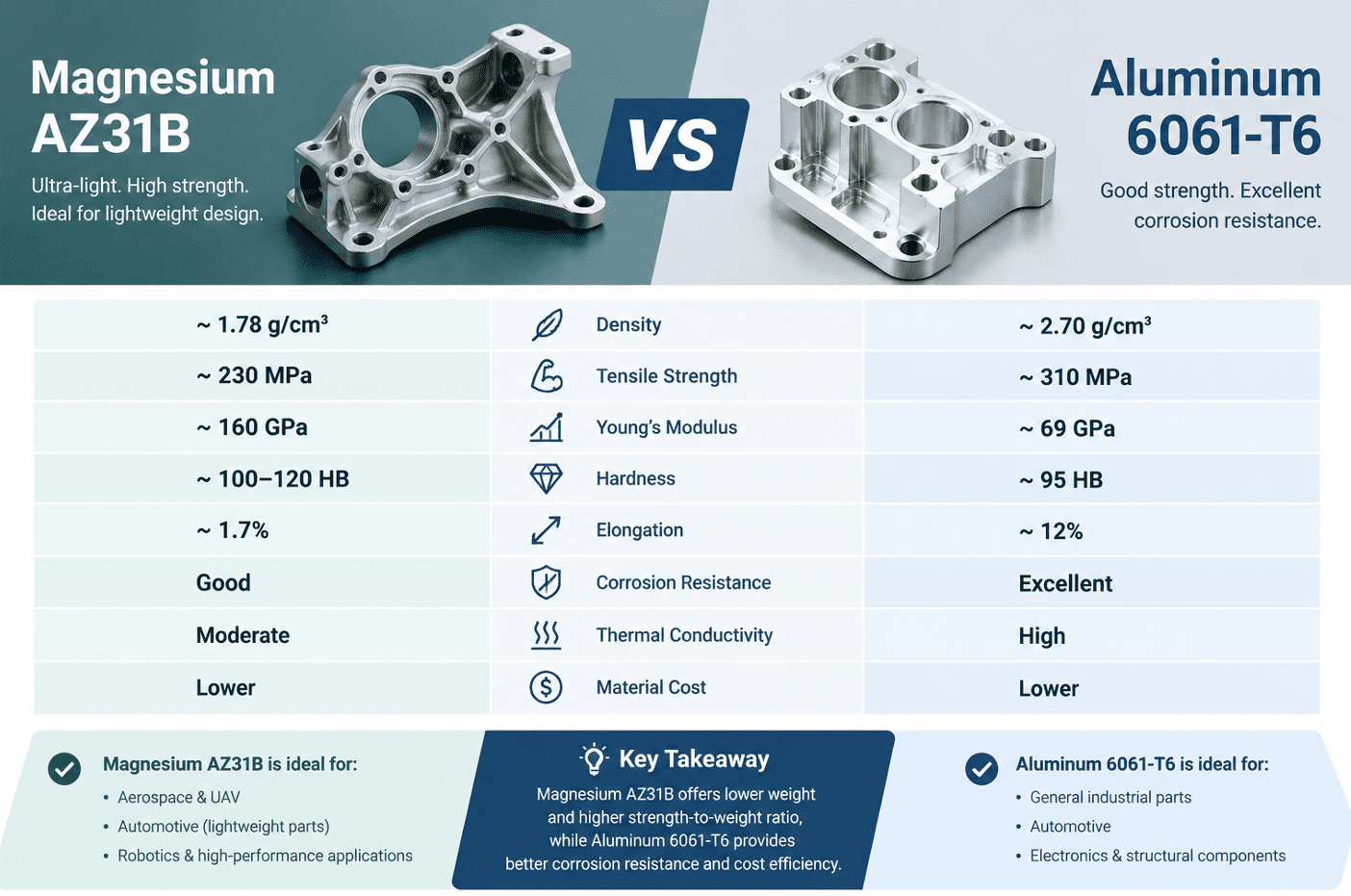
The primary advantage of magnesium AZ31B is its lower density. Aluminum 6061-T6 generally provides greater absolute stiffness, while magnesium may offer a significant weight advantage when the part is designed appropriately.
Property | Magnesium AZ31B | Aluminum 6061-T6 |
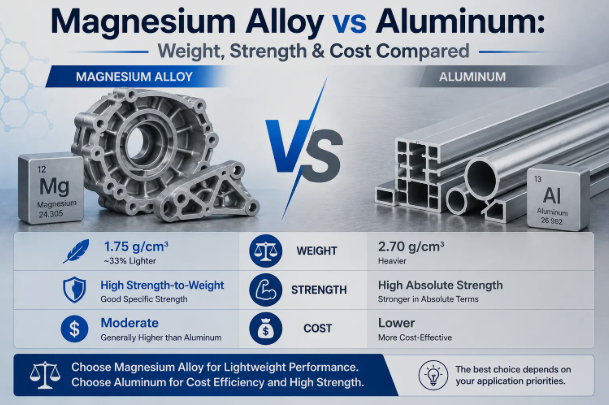
Typical density | Approximately 1.77 g/cm³ | Approximately 2.70 g/cm³ |
Relative weight | Lower | Higher |
Elastic modulus | Approximately 45 GPa | Approximately 69 GPa |
Structural stiffness | Lower at equal geometry | Higher at equal geometry |
Weight-saving potential | Excellent | Moderate |
Vibration damping | Generally favorable | Generally lower than magnesium |
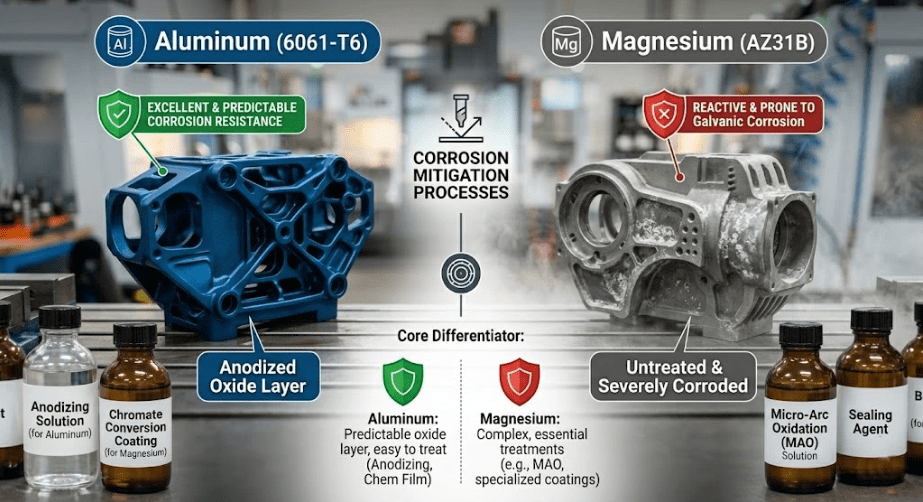
Corrosion protection | Requires application-specific protection | Often suitable for conventional anodizing |
Corrosion protection | Requires application-specific protection | Often suitable for conventional anodizing |
Requires magnesium-specific safety controls | Widely used in precision machining | |
Typical applications | Lightweight housings, UAV components, equipment structures | Machine components, enclosures, brackets, structural parts |
2. Weight Reduction and Structural Stiffness
Why is magnesium AZ31B lighter than aluminum 6061-T6?
Using nominal densities of 1.77 g/cm³ for AZ31B and 2.70 g/cm³ for 6061-T6, the theoretical density-based weight reduction is:
Weight reduction = (2.70 − 1.77) / 2.70 × 100% ≈ 34.4%
This difference can be valuable for UAV components, portable equipment, robotic end-effectors, and other assemblies where reducing moving mass is important.
However, a 34.4% density advantage does not automatically translate into the same weight reduction in a finished component. Wall thickness, ribs, mounting features, stiffness requirements, and safety factors all affect the final design.
How does elastic modulus affect part design?
At the same geometry and under comparable elastic loading, AZ31B generally deflects more than 6061-T6 because magnesium has a lower elastic modulus.
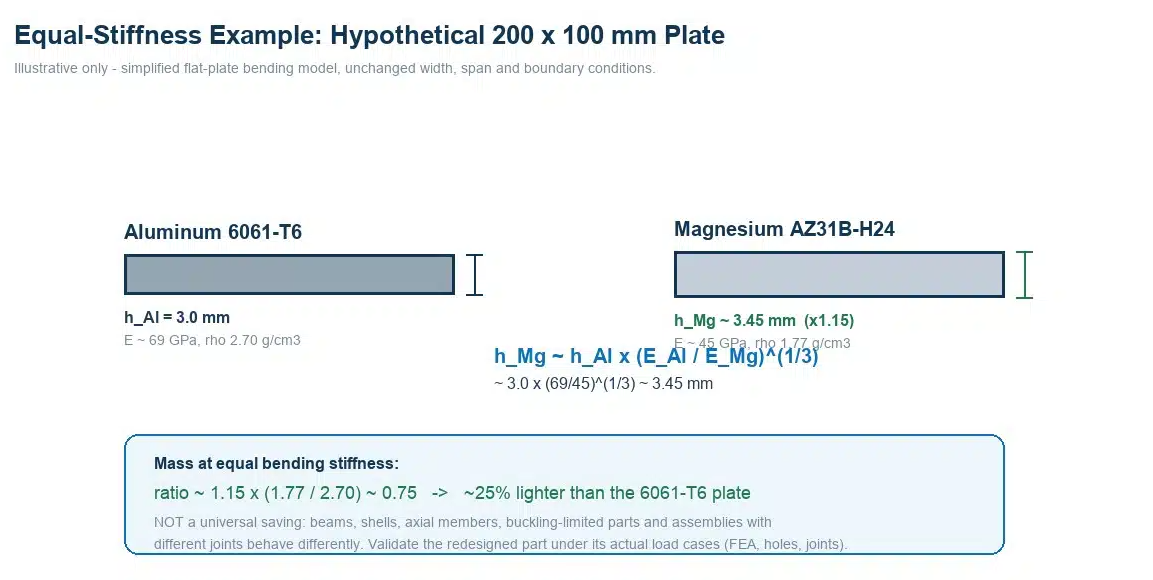
For a simplified flat plate under idealized bending conditions, flexural rigidity is proportional to the elastic modulus multiplied by the cube of the thickness.
If the material properties are approximated as 45 GPa for AZ31B and 68.9 GPa for 6061-T6, an idealized thickness adjustment for equivalent bending rigidity is:
tₘg / tₐₗ ≈ (68.9 / 45)^(1/3) ≈ 1.15
This suggests that the magnesium plate would need approximately 15% greater thickness under those simplified assumptions.
This is an analytical illustration, not a universal design rule. Actual components require evaluation of boundary conditions, geometry, load direction, local stresses, buckling, and mounting constraints.
3. Machinability and 5-Axis CNC Manufacturing
Both alloys can be machined into precision components, but they require different process considerations.
Magnesium AZ31B CNC machining
Magnesium alloys can offer favorable machining efficiency because of their relatively low cutting forces. Potential benefits include shorter machining cycles and reduced tool loading when the process is properly optimized.
However, magnesium chips and fine particles can present serious fire and combustible-dust hazards. Suitable machine configuration, chip management, housekeeping, fire protection, and coolant selection must be determined by qualified personnel for the actual machining operation.
Aluminum 6061-T6 CNC machining
Aluminum 6061-T6 is widely used for CNC milling, CNC turning, and multi-axis machining. Its combination of strength, machinability, availability, and finishing options makes it a practical choice for many custom components.
Tool selection, chip evacuation, cutting parameters, and workholding still need to be optimized for the specific part geometry and required surface finish.
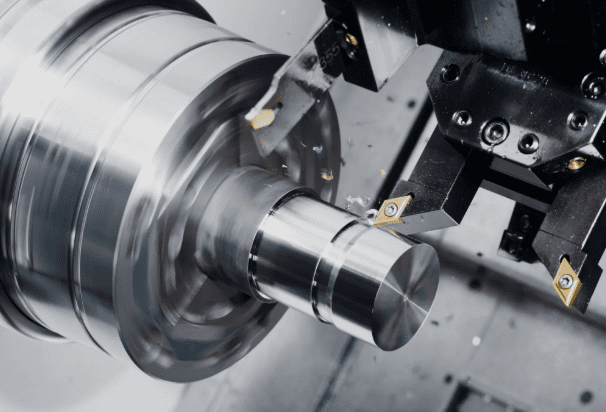
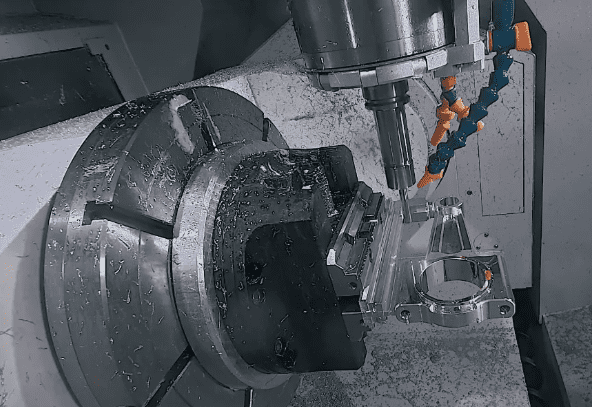
Magnesium AZ31B CNC machining Aluminum 6061-T6 CNC machining
When is 5-Axis CNC Machining useful?
5-Axis CNC Machining can provide access to multiple surfaces and complex geometries with fewer setups than many conventional machining strategies.
For lightweight housings and precision structural parts, this can help reduce repeated-fixturing errors and maintain the relationship between critical features.
Important design considerations include:
Thin-wall stability and cutting-induced deformation.
Tool access to deep cavities and complex surfaces.
Datum selection and geometric dimensioning and tolerancing (GD&T).
Workholding strategy and machining sequence.
Inspection access for critical holes, bores, and reference surfaces.
The appropriate machining strategy depends on the component's geometry, tolerance requirements, and production volume.
4. Corrosion Protection and Surface Finishing
Material selection should account for the finished component's operating environment, not only its performance immediately after machining.
Magnesium AZ31B surface treatment
Magnesium alloys generally require carefully selected corrosion protection, especially in humid, marine, or electrically conductive assemblies.
Potential finishing options include:
Micro-Arc Oxidation (MAO), also known as Plasma Electrolytic Oxidation (PEO).
Suitable conversion coatings.
Protective paint or polymer sealing systems.
Other qualified coating systems selected for the application.
The correct treatment depends on the alloy, surface condition, dimensional requirements, exposure conditions, and compatibility with adjoining materials.
Aluminum 6061-T6 surface treatment
Common options for 6061-T6 include:
Sulfuric acid anodizing.
Hardcoat anodizing.
Chemical conversion coatings.
Painting and other specified protective finishes.
The coating type should be selected according to wear resistance, corrosion requirements, electrical properties, appearance, and dimensional tolerances.
How should corrosion resistance be verified?
ASTM B117 provides a method for conducting salt-spray testing. Test duration alone does not establish service life in every real-world environment.
Where corrosion performance is critical, define the applicable test method, specimen preparation, coating specification, acceptance criteria, and reporting requirements before production.
5. Dimensional Accuracy and Thin-Wall Design
Achieving tight tolerances requires more than selecting a high-precision CNC machine.
For both magnesium and aluminum components, dimensional accuracy can be affected by workholding forces, residual stress, cutting heat, tool deflection, geometry, and inspection conditions.
For thin-walled parts, engineers should consider:
Using appropriate workholding to avoid excessive clamping deformation.
Separating roughing and finishing operations when needed.
Reviewing residual stress and material stability.
Establishing suitable machining and inspection temperature conditions.
Measuring critical features against clearly defined datums.
Selecting an inspection method appropriate to the required tolerance and geometry.
For example, a drawing tolerance of ±0.005 mm represents a demanding precision requirement. Whether it is achievable depends on the specific feature, part size, material, geometric tolerance scheme, production process, and verification method. It should be confirmed through a drawing review and manufacturing feasibility assessment.
6. Comparing Total CNC Manufacturing Cost
Raw material price alone does not determine the final cost of a CNC machined component.
A practical cost comparison should consider:
Cost factor | What to evaluate |
Raw material | Alloy grade, temper, stock form, size, and material utilization |
Machining time | Setup time, cutting time, tool changes, and cycle stability |
Tooling | Tool life, tool geometry, and replacement frequency |
Surface treatment | Required finish, coating thickness, and process availability |
Inspection | Critical dimensions, CMM inspection, and documentation |
Scrap and rework | Process stability, material waste, and rejection risk |
Production volume | Prototype, small-batch, or volume-production requirements |
Magnesium may provide a cost advantage in some complex, weight-sensitive applications when machining efficiency offsets higher material or finishing costs. In other applications, aluminum 6061-T6 may offer the better overall value.
The correct decision should be based on a project-specific quotation using the actual drawing, material specification, production quantity, and finishing requirements.
7. Typical Applications
Aerospace and UAV components
Lightweight housings, equipment brackets, and selected structural components may benefit from magnesium's lower density. Material selection must account for the actual structural loads, environmental exposure, and applicable qualification requirements.
Robotics and automation
Reducing the mass of moving components can help improve dynamic response in certain robotic applications. Stiffness, fatigue performance, mounting interfaces, and vibration behavior must be assessed alongside weight.
Precision equipment housings
Magnesium and aluminum are both potential options for equipment enclosures and precision housings. The choice depends on required mass, structural rigidity, thermal behavior, surface finish, and corrosion protection.
8. Frequently Asked Questions
Is magnesium AZ31B lighter than aluminum 6061-T6?
Yes. Based on nominal densities of 1.77 g/cm³ and 2.70 g/cm³, respectively, AZ31B is approximately 34.4% lighter by volume. The weight difference in a finished component depends on its final geometry.
Is magnesium AZ31B suitable for 5-Axis CNC Machining?
It can be suitable for complex precision components when the machining process, workholding, chip management, and safety controls are appropriate for the alloy and operation.
Can magnesium AZ31B use the same anodizing process as aluminum 6061-T6?
Not generally. Magnesium requires surface treatments specifically suitable for magnesium alloys. MAO/PEO and other qualified protective systems may be considered according to the application and coating specification.
Which material is more cost-effective for custom CNC parts?
There is no universal winner. Aluminum may be preferable for general-purpose components, while magnesium may justify its additional material and finishing costs when weight reduction is especially valuable. Compare the complete manufacturing cost rather than the raw material price alone.
What information is needed for a CNC machining quotation?
Provide the 2D engineering drawing, 3D CAD file, material grade and temper, required surface treatment, production quantity, critical tolerances, and any inspection or documentation requirements.
9. Custom Magnesium and Aluminum CNC Machining Solutions
Choosing the right material is an important step toward producing reliable precision components. The final decision should balance weight, mechanical performance, machinability, corrosion protection, dimensional requirements, and manufacturing cost.
Huazheng Precision provides custom CNC machining solutions for precision components. Our engineering review can help evaluate part geometry, material requirements, machining feasibility, surface finishing, and inspection needs.
Whether your project involves magnesium AZ31B, aluminum 6061-T6, or another engineering material, contact our team to discuss your drawings and production requirements.
Request a CNC Machining Quote
Share your CAD files, material specifications, target quantity, and critical tolerances to begin a manufacturing feasibility review.


