



Magnesium alloys are widely used in 3C products, medical devices, new energy vehicles, aerospace, robotics, and military equipment due to their excellent lightweight properties. However, Magnesium Alloy Machining parts naturally suffer from low surface hardness and poor corrosion resistance, which limits their use in high-end engineering applications.
To solve these challenges, micro arc oxidation coating technology has become one of the most advanced surface treatment solutions for magnesium alloys.
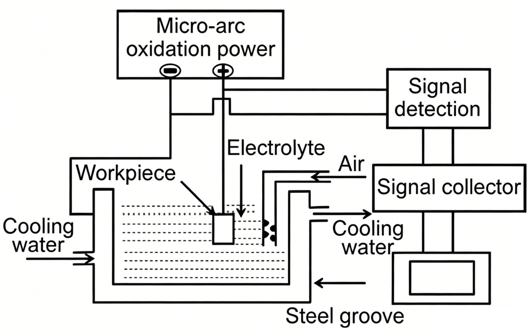
What is Micro Arc Oxidation (MAO)?
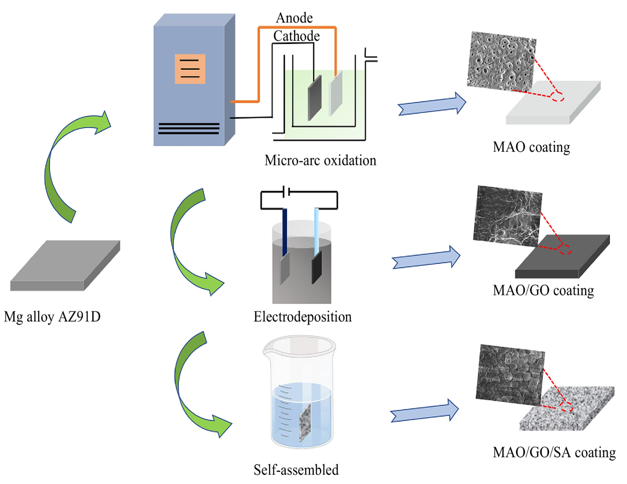
Micro arc oxidation (microarc oxidation), also known as Plasma Electrolytic Oxidation (PEO), is an advanced electrochemical surface treatment process used on metals such as magnesium, aluminum, and titanium.
The micro arc oxidation process uses high-voltage plasma discharge in an electrolyte solution to generate a dense ceramic oxide layer directly on the metal surface.
In simple terms, micro arc oxidation (MAO) transforms the surface of magnesium into a hard ceramic coating through controlled electrical discharge.
How the Micro Arc Oxidation Process Works
During the micro arc oxidation process, the magnesium alloy surface undergoes instantaneous high temperature and high pressure micro-discharges. These discharges cause in-situ growth of a ceramic oxide layer mainly composed of magnesium oxide.
This process creates a strong metallurgical bond between the coating and the substrate, making it far superior to traditional surface treatments used in Magnesium Machining applications.
Coating Structure of Micro Arc Oxidation
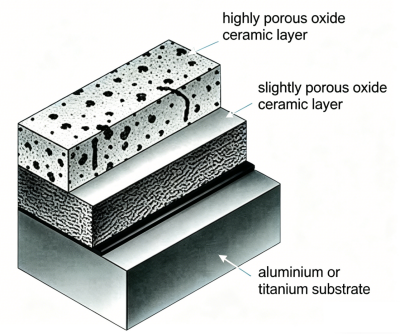
The micro arc oxidation coating has a unique dual-layer structure:
1. Dense inner layer
Thickness: about 100 nm
Compact and non-porous
Acts as the main corrosion barrier
Prevents moisture and corrosive media from penetrating
2. Porous outer layer
Provides mechanical interlocking
Improves adhesion for secondary coatings (paint, sealing, etc.)
Can be further sealed to enhance corrosion resistance
This structure ensures both protection and functional performance in Magnesium Alloy Machining surface finishes.
Key Advantages of Micro Arc Oxidation Coating
1. Extremely high hardness and wear resistance
The ceramic layer can reach 300–1000 HV, and in high-performance cases up to 2000–3000 HV, close to cemented carbide.
This significantly improves the durability of magnesium alloy parts under friction and wear conditions.
2. Excellent corrosion resistance
The coating greatly enhances corrosion protection:
Neutral salt spray resistance: 400–800 hours or more
Advanced composite coatings: up to 3000 hours
Far superior to conventional anodizing or phosphating
This makes it ideal for harsh environments in magnesium alloy machining applications.
3. Strong bonding strength
The coating is formed through metallurgical bonding with the substrate:
Shear strength: ~330 MPa
Tensile strength: ~370 MPa
Excellent adhesion, no peeling or flaking
4. Good electrical insulation
Resistance > 100 MΩ
Breakdown voltage > 5000V/s
This makes it suitable for electronic and precision applications in magnesium machining.
5. Controllable coating thickness
Typically 10–100 μm
Adjustable via voltage, time, and electrolyte composition
Suitable for different engineering requirements
6. Environmentally friendly process
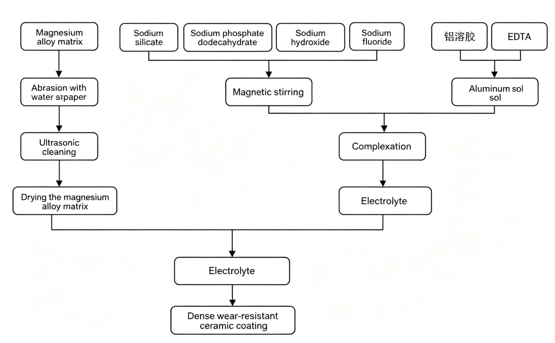
The microarc oxidation coating process uses eco-friendly electrolytes, contains no toxic heavy metals, and supports recyclable solutions.
7. Strong adaptability
It can uniformly coat complex geometries such as:
Deep holes
Grooves
Irregular shapes
This is especially important for precision magnesium alloy machining surface finishes.
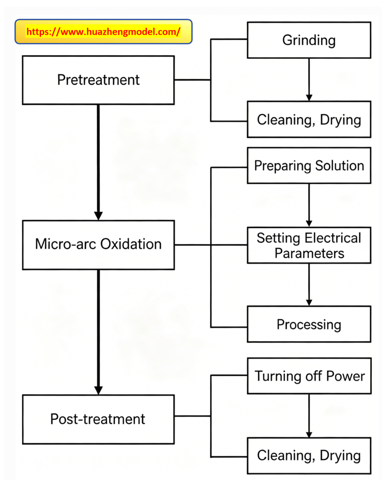
Manufacturing Process Flow
The complete micro arc oxidation process is simple and efficient:
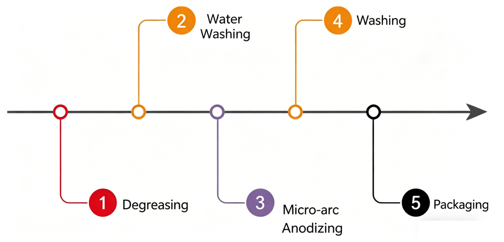
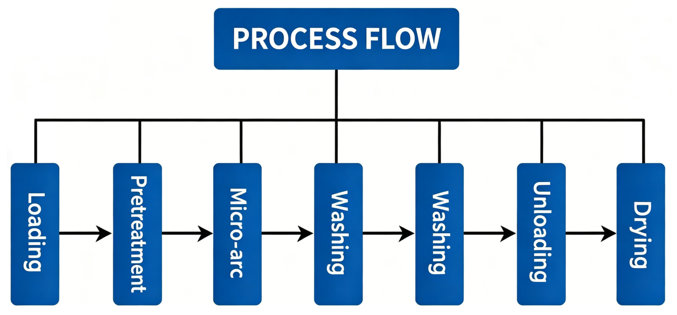
Workpiece → Degreasing → Cleaning → Micro arc oxidation → Cleaning → Post-treatment
Degreasing – Removes oil and contaminants for better bonding
Cleaning – Prevents electrolyte contamination
Micro arc oxidation – Core process forming ceramic coating
Post-treatment – Sealing and reinforcement for enhanced performance
 Application Areas of Micro Arc Oxidation
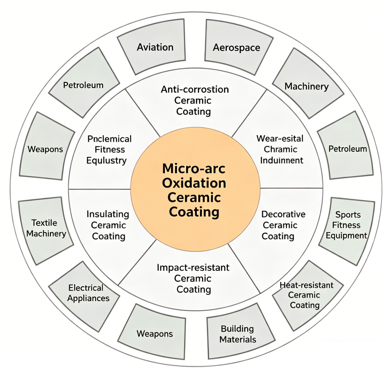
Due to its superior properties, microarc oxidation technology is widely used in high-end industries:
Aerospace
Lightweight structural components
High corrosion and wear resistance parts
Automotive & New Energy Vehicles
Engine components
Transmission and structural parts
Medical Industry
Surgical instruments
Implant components requiring biocompatibility
3C Electronics
Magnesium alloy housings
Lightweight precision components
Robotics & Precision Equipment
Structural frames
High-strength moving parts
These applications fully demonstrate the value of magnesium alloy machining combined with micro arc oxidation coating technology.
Micro arc oxidation (MAO) is a breakthrough surface treatment technology that significantly enhances the performance of magnesium alloys. By forming a dense ceramic layer through the micro arc oxidation process, it solves key problems in magnesium machining, such as corrosion, low hardness, and wear resistance.
As a result, it has become one of the most important solutions for improving magnesium alloy machining surface finishes in modern high-end manufacturing industries.


