

Do you really understand 5-axis machining?
When it comes to 5-axis CNC machining, most people’s first impression is: high-level technology, high cost, and difficult operation. But is 5-axis machining really just that?Have you ever taken a closer look to unlock the secrets/performance characteristics of 5-axis machining—such as its advantages and disadvantages?
| Advantages | Disadvantages |
|---|---|
| Reduces the number of setups, shortens process flow, lowers costs, and improves machining accuracy. | The machine structure is not ideal for heavy cutting (may need to work with 3-axis machines). |
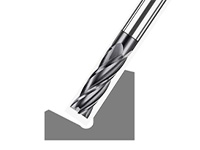
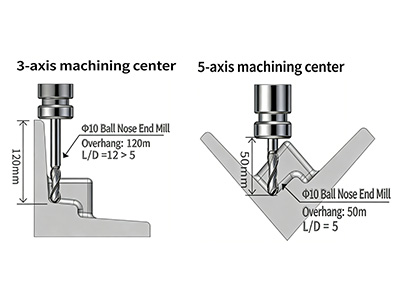
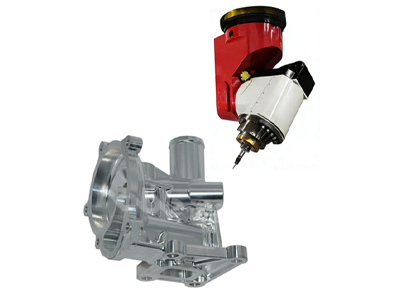
| Allows shorter tool overhang, cuts beyond rotation center, and delivers excellent surface finish. | Processable workpiece size is relatively small compared to the machine footprint. |
| Enables machining of complex shapes with limited tool extension. | Machining accuracy is not always stable in all scenarios. |
| Supports 5-axis simultaneous interpolation for complex parts like impellers. | Higher processing cost. |
| One surface often cannot be machined, requiring additional processes. |

3-axis vs 5-axis Machining
What is 5-axis CNC machining? What is 3+2 machining?
What is the difference between a 3-axis machining center and a 5-axis machining center?
Anyone involved in designing or manufacturing mechanical parts has surely heard the term "5-axis" machining.
Here at Huazheng, we introduce you to "5-axis machining", one of the most advanced cutting technologies in modern manufacturing.
| 3-axis | 5-axis |
|---|---|
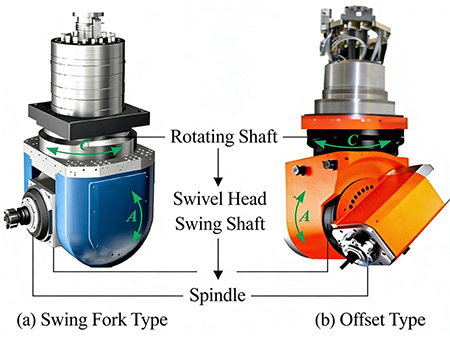
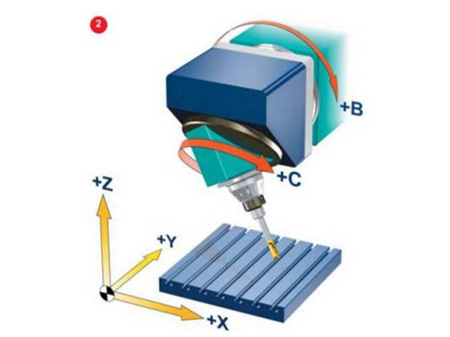
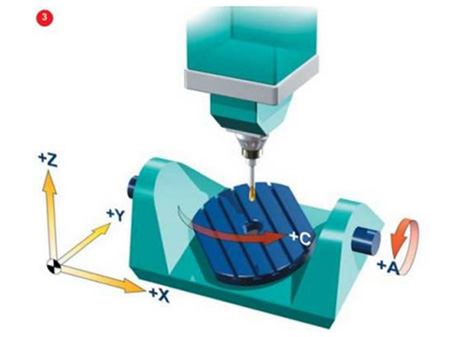
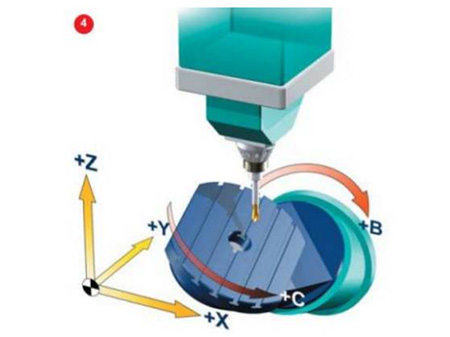
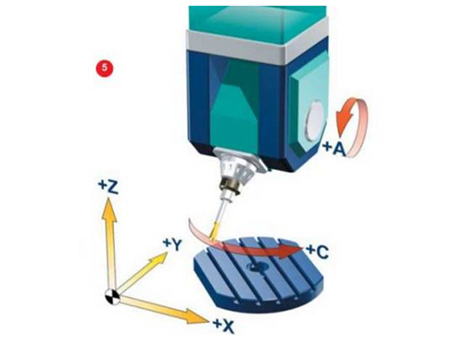
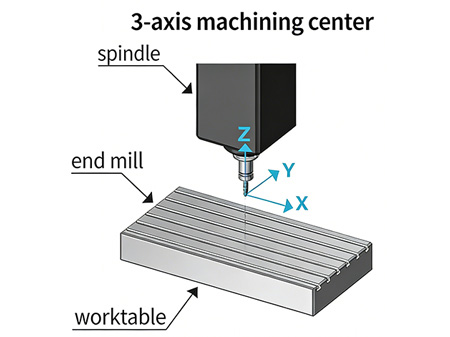
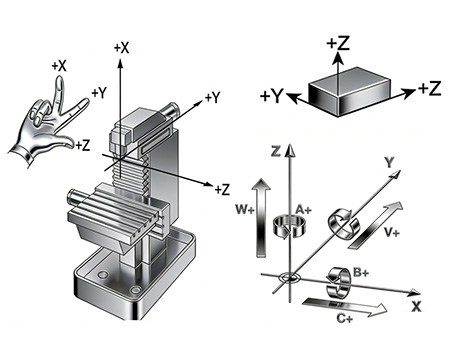
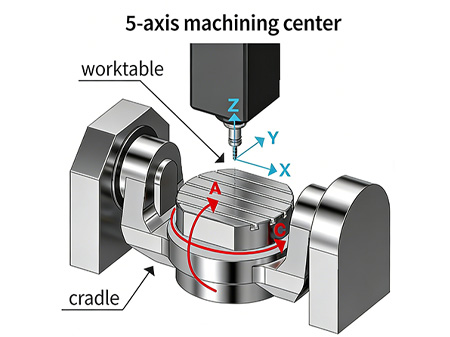
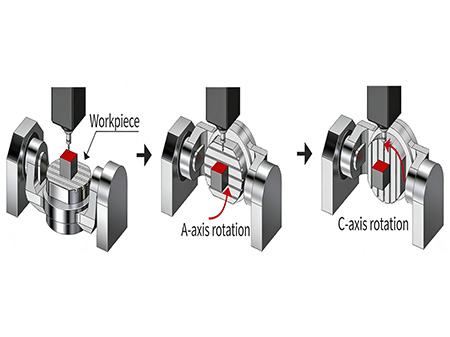
| A typical machining center moves along only three linear axes: X, Y, and Z, which is why it is also called a "3-axis machining center". | 5-axis machining refers to linear interpolation motion using any 5 of the coordinates X, Y, Z, A, B, and C. |
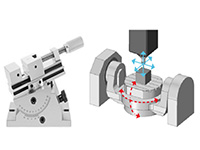
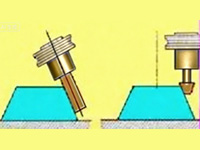
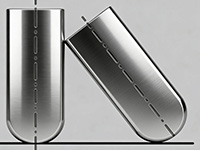
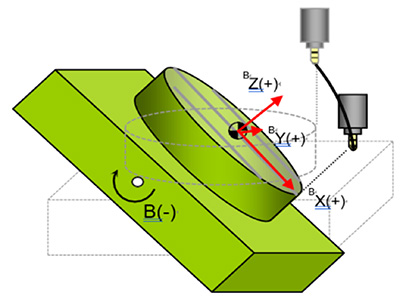
| What is 3+2 Machining? | During execution of a 3-axis milling program, the two rotary axes of the 5-axis machine are used to fix the cutting tool at a tilted position. This is where the name "3+2 machining" comes from. It is also called "positional 5-axis machining", because the 4th and 5th axes are only used to define the tool orientation at a fixed position, not continuously during machining. Essentially, 3+2 positional machining is the execution of 3-axis functionality at a specific angle (i.e., "position"). Put simply: once the machine is tilted to an angle, it machines in the same way as a conventional 3-axis machine. |