



5-axis CNC Machining is an advanced manufacturing process that allows a cutting tool or workpiece to move along five different axes simultaneously. Compared with conventional 3-axis CNC machining, a 5-axis CNC machine can approach the workpiece from multiple angles, making it ideal for producing complex geometries, curved surfaces, deep cavities, and precision components.
With the ability to control three linear axes and two rotational axes, 5-Axis Machining can reduce the number of setups required, improve dimensional accuracy, shorten machining time, and achieve high-quality surface finishes.
Today, 5-axis CNC Machining Services are widely used in aerospace, medical, automotive, robotics, energy, and other industries that require complex and high-precision components.
What Is 5-Axis CNC Machining?
The term 5-axis CNC machining refers to a CNC machining process in which the machine tool provides movement along five axes.
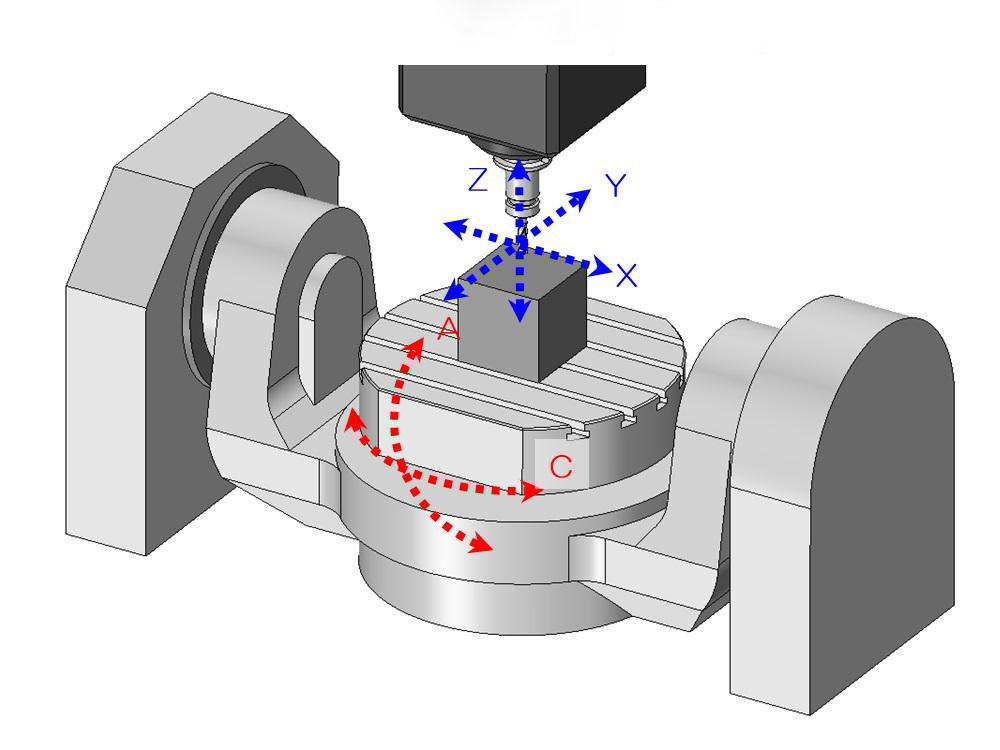
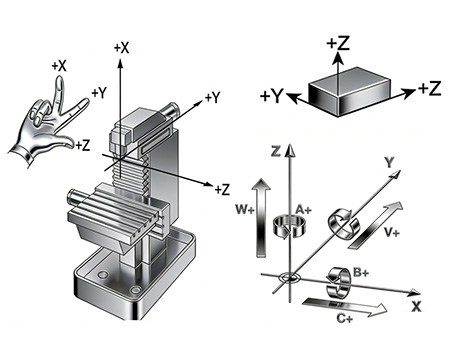
The three primary linear axes are:
X-axis: Moves the cutting tool or workpiece from left to right.
Y-axis: Provides front-to-back movement.
Z-axis: Controls up-and-down movement.
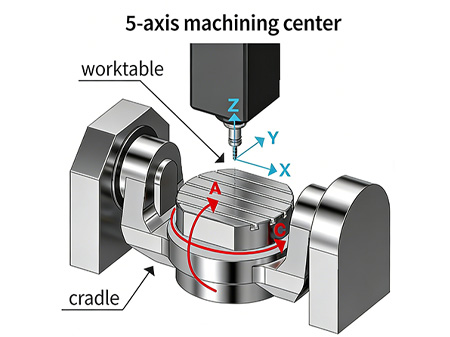
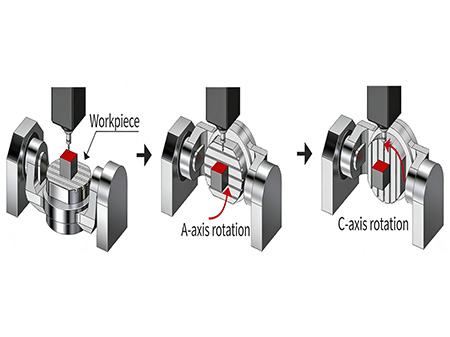
The other two axes are rotational axes. Depending on the machine configuration, these may be the A, B, or C axis, which rotate the cutting tool or workpiece around different directions.
The combination of linear and rotational movement allows a 5-axis CNC machine to maintain the appropriate cutting angle while machining multiple surfaces of a component.
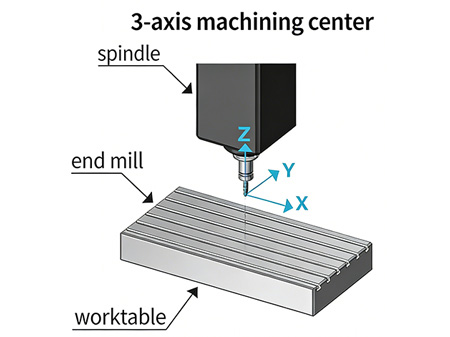
In simple terms, a 3-axis machine primarily moves the cutting tool in three directions, while a 5-axis machine can also tilt and rotate the tool or workpiece.
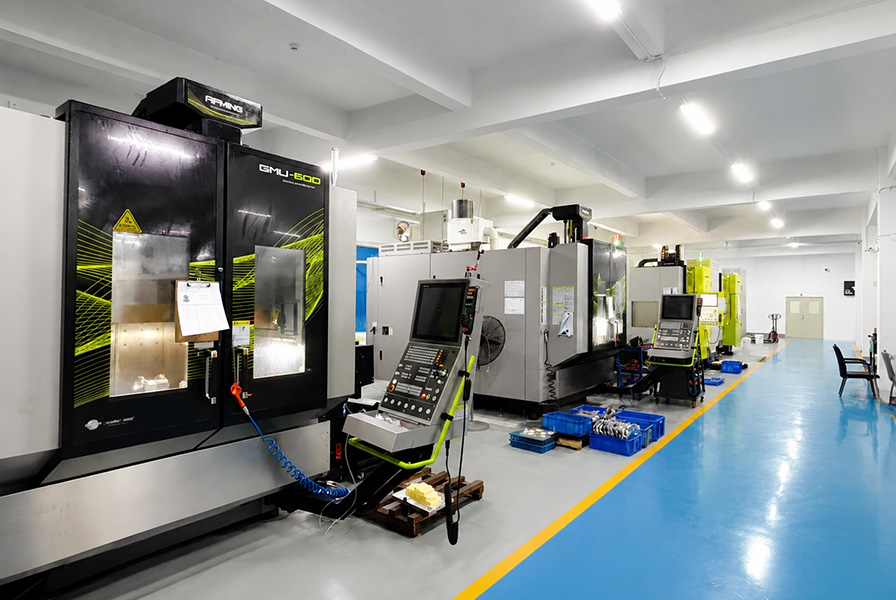
How Does a 5-Axis CNC Machine Work?
The 5-axis machining process begins with a 3D CAD model of the component. CAM software converts the digital model into machining toolpaths that control the movement of the CNC machine.
During machining, the machine simultaneously coordinates its linear and rotary axes. This allows the cutting tool to approach the workpiece from different directions without requiring the operator to manually reposition the part.
A typical process includes:
CAD Design → CAM Programming → Workpiece Setup → 5-Axis Machining → Inspection → Surface Finishing
One of the biggest advantages is that a complex component can often be machined in a single setup or significantly fewer setups than would be required with conventional CNC machining.
Step 1: CAD Model Creation
Engineers first create a detailed 3D CAD model of the component. The model defines dimensions, tolerances, holes, curved surfaces, and other geometric features.
Step 2: CAM Programming
CAM software generates optimized toolpaths based on the CAD model. The software determines cutting directions, tool orientation, feed rates, and machining strategies.
Step 3: Workpiece Setup
The raw material is securely mounted on the machine table or fixture. Proper workholding is critical for maintaining machining accuracy.
Step 4: Multi-Axis Machining
The CNC machine simultaneously controls the linear and rotary axes. The cutting tool can continuously change its orientation to reach complex areas of the workpiece.
Step 5: Inspection and Finishing
After machining, the component may undergo dimensional inspection, deburring, polishing, anodizing, plating, or other surface treatments depending on the application.
5-Axis CNC Machining vs. 3-Axis CNC Machining
The main difference between 3-axis CNC machining and 5-axis CNC machining is the additional rotational movement available in a 5-axis machine.
| Feature | 3-Axis CNC Machining | 5-Axis CNC Machining |
|---|---|---|
| Linear axes | X, Y, Z | X, Y, Z |
| Rotary axes | None | 2 additional axes |
| Part setup | Often multiple setups | Fewer setups |
| Complex surfaces | Limited | Excellent |
| Multi-sided machining | More difficult | More efficient |
| Tool access | Limited by orientation | Multiple approach angles |
| Complex components | Moderate | Excellent |
| Machining cost | Generally lower | Generally higher |
| Typical applications | Simple to moderately complex parts | Complex precision components |
For relatively simple components, 3-axis CNC machining can be a cost-effective solution. However, when a component contains multiple angled surfaces, complex contours, deep cavities, or difficult-to-reach features, 5-axis machining can provide significant advantages.
What Are the Benefits of 5-Axis CNC Machining?
1. Machining Complex Geometries
One of the primary advantages of 5-axis CNC machining is its ability to manufacture highly complex geometries.
The machine can continuously adjust the cutting-tool orientation, making it possible to machine:
Complex curved surfaces
Angled features
Deep cavities
Contoured components
Multi-sided parts
Impellers and turbine blades
This capability makes 5-axis machining particularly useful for components that cannot be efficiently produced using conventional machining methods.
2. Fewer Workpiece Setups
With 3-axis machining, complex components often need to be removed and repositioned several times.
Every additional setup introduces the possibility of:
Positioning errors
Alignment errors
Additional labor
Longer machining times
A 5-axis CNC machine can access multiple sides of a component from different angles, reducing the need for repeated setups.
3. Improved Machining Accuracy
Fewer setups can contribute to better dimensional consistency.
Instead of repeatedly removing and repositioning the workpiece, the machine can complete more features while maintaining a consistent coordinate relationship.
This is especially important when manufacturing precision CNC Machined Parts with tight dimensional tolerances.
4. Better Surface Finish
The ability to continuously adjust tool orientation allows the cutting tool to maintain a more favorable angle against the workpiece.
This can reduce excessive cutting forces and improve surface quality, particularly when machining curved or sculpted surfaces.
5. Higher Machining Efficiency
Although a 5-axis machine typically requires a higher initial investment, it can reduce secondary operations, repositioning, and setup time.
For complex components produced in small or medium batches, these efficiency improvements can make 5-axis CNC machining services highly valuable.
6. Suitable for Difficult Materials
5-axis CNC machining is also commonly used when machining materials such as:
Titanium alloys
Aluminum alloys
Stainless steel
Nickel-based alloys
Tool steels
Engineering plastics
For example, titanium is strong but relatively difficult to machine. Maintaining an optimized tool orientation can help manufacturers manage cutting conditions when producing complex titanium components.
What Parts Can Be Made with 5-Axis CNC Machining?
5-axis machining is especially suitable for components with complex geometries or multiple machining surfaces.
Common examples include:
 Aerospace Components
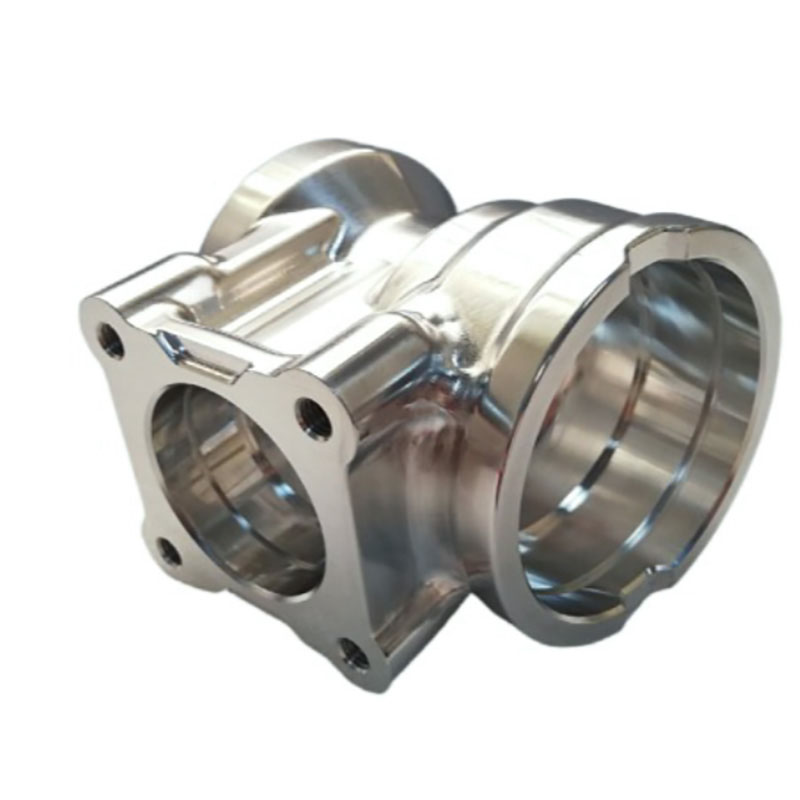
Aerospace components often require complex shapes, lightweight structures, and tight tolerances.
Typical examples include:
Turbine blades
Impellers
Engine components
Structural components
Aircraft fittings
 Medical Components
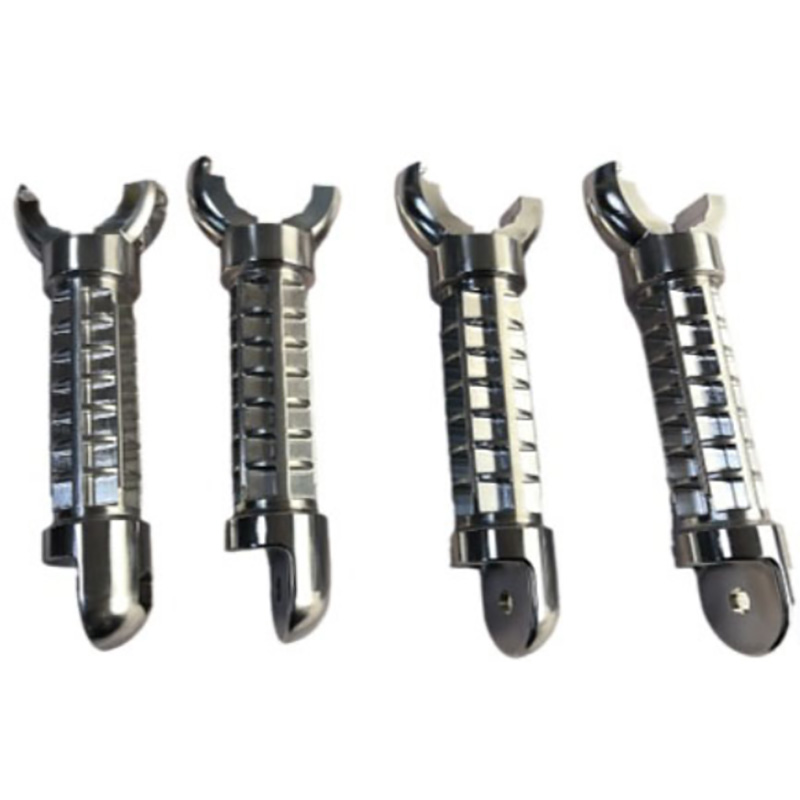
Medical devices often contain small, intricate, and highly precise features.
5-axis CNC machining can be used for:
Surgical instrument components
Orthopedic components
Medical device housings
Prosthetic components
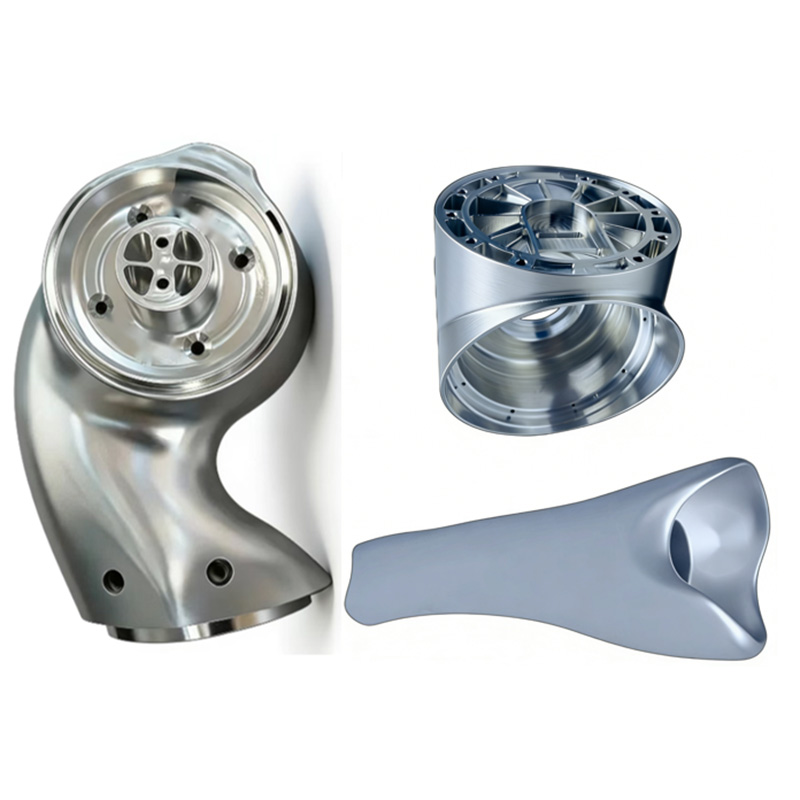 Robotics Components
Modern robots require lightweight and precise mechanical components.
Examples include:
Robot joints
Robotic arms
End-effectors
Structural brackets
Precision housings
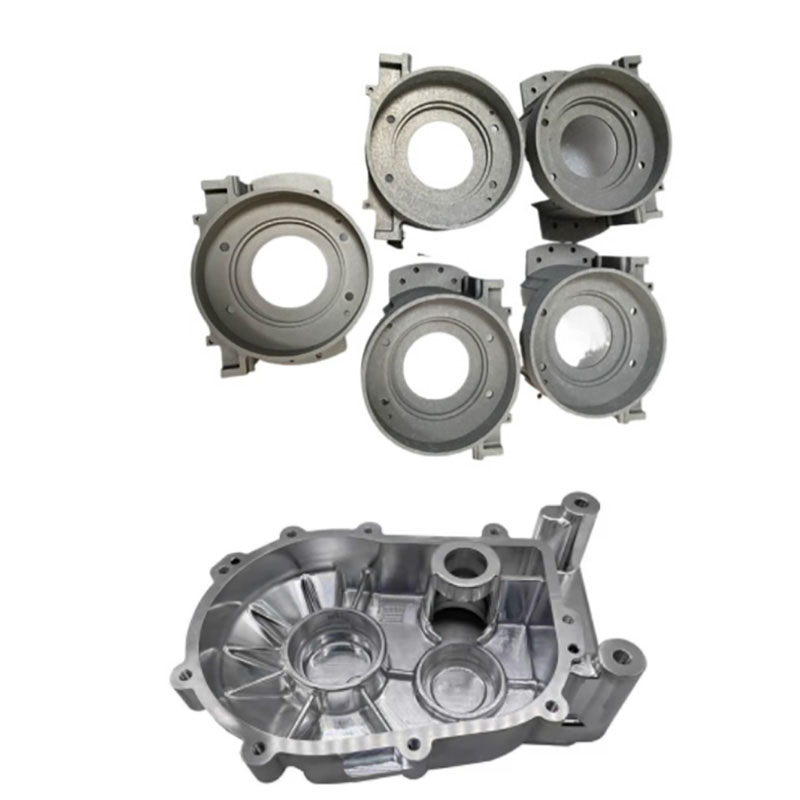 Automotive Components
5-axis machining can also be used for complex automotive components such as:
Engine components
Transmission components
Performance parts
Prototypes
Custom fixtures
When Should You Choose 5-Axis CNC Machining?
Not every CNC component requires five-axis machining.
For simple blocks, plates, brackets, and components with features that can easily be accessed from three directions, 3-axis CNC machining may provide a more economical solution.
However, 5-axis CNC machining is a better choice when the part has:
Complex 3D contours
Multiple angled surfaces
Deep cavities
Difficult-to-reach features
Multiple machining faces
Tight tolerances
Complex curved surfaces
A requirement for fewer setups
A practical rule is:
The more complex the geometry and the more difficult the tool access, the more valuable 5-axis CNC machining becomes.
Is 5-Axis CNC Machining More Expensive?
Generally, 5-axis CNC machining costs more than 3-axis machining because 5-axis machines, programming, tooling, and skilled operators require greater investment.
However, machining cost should not be evaluated only by the hourly machine rate.
For complex components, 5-axis machining may reduce:
Number of setups
Fixture requirements
Manual repositioning
Secondary machining
Production time
Alignment errors
Therefore, although the 5-axis CNC machining cost per machine hour may be higher, the total manufacturing cost can sometimes be competitive for complex parts.
For simple components, however, using a 5-axis machine may be unnecessary.
5-Axis CNC Machining Applications
The versatility of five-axis machining makes it suitable for a wide range of industries.
| Industry | Typical Applications |
|---|---|
| Aerospace | Turbine blades, engine parts, structural components |
| Medical | Surgical instruments, implants, medical device parts |
| Automotive | Engine components, prototypes, performance parts |
| Robotics | Robot joints, arms, end-effectors |
| Electronics | Precision housings and complex components |
| Energy | Turbine components and energy equipment parts |
| Mold Making | Complex molds and curved surfaces |
As manufacturers increasingly demand lightweight, compact, and highly integrated components, 5-axis CNC machining services are becoming increasingly important for precision manufacturing.
What Materials Can Be Machined with 5-Axis CNC?
A wide range of metals and engineering plastics can be processed using 5-axis CNC machining.
Common materials include:
Aluminum Alloys
Aluminum is lightweight, relatively easy to machine, and widely used for aerospace, automotive, robotics, and electronics components.
Titanium Alloys
Titanium offers an excellent strength-to-weight ratio and corrosion resistance. It is commonly used in aerospace and medical applications but requires careful machining strategies.
Stainless Steel
Stainless steel provides high strength and corrosion resistance, making it suitable for medical, industrial, and automotive components.
Copper Alloys
Copper and brass are commonly used for electrical and thermal-management components.
Engineering Plastics
Materials such as PEEK, POM, and nylon can also be machined into complex precision components.
5-Axis CNC Machining for Prototyping and Production
Another advantage of 5-axis CNC machining is its flexibility for both rapid prototyping and production manufacturing.
For prototypes, manufacturers can use 5-axis machining to quickly produce complex components directly from CAD models without creating expensive molds or dies.
For production, optimized toolpaths and fewer setups can help improve manufacturing efficiency and consistency.
This makes 5-axis machining suitable for:
Rapid prototypes
Low-volume production
Small-batch manufacturing
High-precision components
Complex custom parts
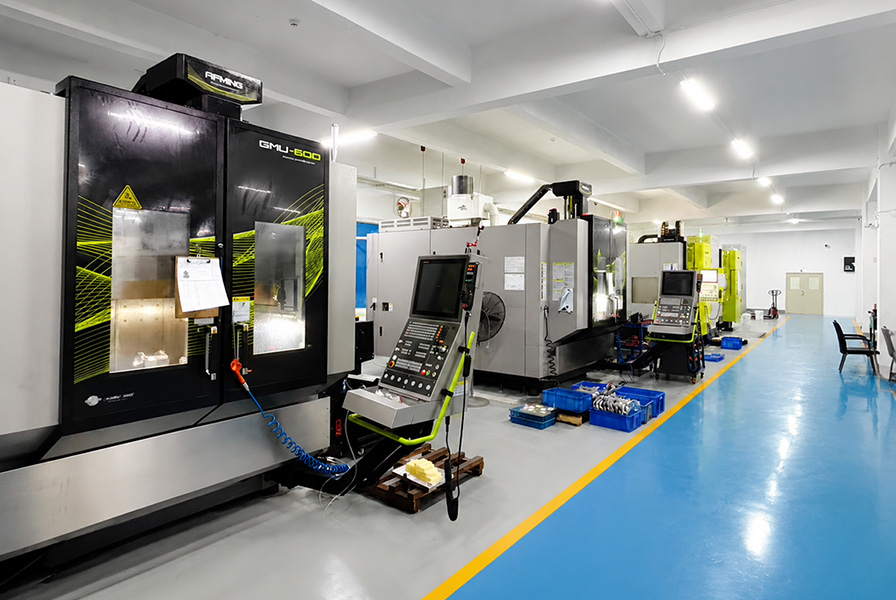 How to Choose a 5-Axis CNC Machining Service?
When selecting a 5-axis CNC machining service provider, price should not be the only consideration.
You should evaluate:
Machine Capability
Check the machine's working envelope, axis configuration, spindle speed, and machining capabilities.
Material Experience
Different materials require different cutting parameters, tooling, and machining strategies.
Tolerance Capability
If your component has tight tolerances, confirm that the manufacturer has the equipment and inspection capabilities required.
CAD/CAM Capability
Experienced manufacturers should be able to efficiently process complex 3D CAD models and generate optimized multi-axis toolpaths.
Quality Control
Look for manufacturers with appropriate inspection equipment, such as:
CMM
Height gauges
Micrometers
Optical measurement systems
Surface roughness testers
5-axis CNC machining is an advanced CNC manufacturing technology that uses three linear axes and two rotational axes to provide greater tool accessibility and machining flexibility.
Compared with conventional 3-axis CNC machining, a 5-axis CNC machine can efficiently produce complex geometries, reduce workpiece setups, improve dimensional consistency, and achieve high-quality surface finishes.
It is particularly valuable for industries such as aerospace, medical, automotive, robotics, and precision engineering, where complex shapes and tight tolerances are common.
For simple components, 3-axis machining may still be the more economical option. But when a part requires multiple machining angles, complex contours, or difficult-to-reach features, 5-axis CNC machining services can provide a more efficient and precise manufacturing solution.


