



Titanium plate is one of the most important flat-rolled titanium materials used in precision manufacturing. For CNC machining manufacturers, titanium plate is commonly used as a starting material for producing complex structural components, housings, brackets, medical parts, aerospace components, robotics parts, and other precision-machined titanium components.
Titanium is valued for its excellent corrosion resistance, high strength-to-weight ratio, weldability, and formability. However, different titanium grades and plate conditions can have significantly different properties and machining characteristics.
For titanium CNC machining, choosing the right starting material is an important part of the manufacturing process. Factors such as titanium grade, hot-rolled or cold-rolled condition, plate thickness, surface condition, forming requirements, welding requirements, and final application all need to be considered before machining begins.
This guide covers the major titanium plate grades, standards, thickness classifications, surface treatments, properties, processing requirements, inspection criteria, and common material-selection mistakes that should be considered when manufacturing CNC machined titanium parts.
1. What Is Titanium Plate?
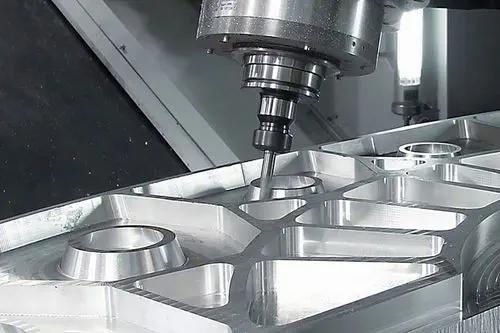
Titanium plate is a flat-rolled titanium material and is one of the most widely used and fundamental forms of titanium products in industrial manufacturing.
Compared with titanium bars, tubes, forgings, and other forms, the flat geometry of titanium plate makes it particularly suitable for CNC machining, Sheet Metal Fabrication, bending, stamping, rolling, and welding.
One of the key advantages of titanium plate is its relatively good formability.
Depending on the grade and thickness, titanium plate can be processed through:
Bending
Stamping
Roll forming
Sheet Metal forming
CNC milling
CNC drilling
Cutting
Welding
Precision machining
This makes titanium plate an important starting material for manufacturing both fabricated structures and precision CNC machined titanium components.
Two Main Titanium Plate Categories
From a material perspective, titanium plates can generally be divided into two major systems:
Commercially Pure Titanium Plate — TA Series
The TA series is primarily selected for:
Corrosion resistance
Weldability
Formability
Chemical and marine applications
Titanium Alloy Plate — TC Series
The TC series is primarily selected when:
Higher strength is required
Better structural performance is needed
Weight reduction is important
The component is subjected to significant mechanical loads
For CNC machining, this distinction is particularly important because the material grade directly affects cutting conditions, tool wear, machining strategy, and final component performance.
2. Titanium Plate Grades, Standards and Applications
Different titanium grades are designed for different operating environments and mechanical requirements.
The following grades are commonly encountered in industrial titanium plate applications.
| Grade | Standard | Positioning | Typical Applications |
|---|---|---|---|
| TA1 | GB/T 3621-2023 / ASTM B265 | High purity, very soft, excellent corrosion resistance | Precision corrosion-resistant components, medical applications, high-purity environments |
| TA2 | GB/T 3621-2023 / ASTM B265 | General-purpose corrosion-resistant titanium | Chemical equipment, environmental equipment, equipment linings, electroplating tanks |
| TA3 | GB/T 3621-2023 / ASTM B265 | Higher-strength commercially pure titanium | Structural panels requiring strength and corrosion resistance |
| TA10 | GB/T 3621-2023 / ASTM B265 | Suitable for high-chloride and seawater environments | Seawater, high-salt and highly corrosive applications |
| TC4 | GB/T 3621-2023 / ASTM B265 | High-strength titanium alloy | Structural components, load-bearing plates, aerospace components, molds |
Note: The exact grade designation and international equivalent should always be confirmed against the material certificate and the customer's specified standard before machining.
TA1 Titanium Plate
TA1 provides high purity, excellent corrosion resistance, and very good formability.
For CNC machining, it may be considered for precision components where corrosion resistance and formability are more important than high structural strength.
Typical applications include:
Precision corrosion-resistant components
Medical equipment
High-purity environments
Chemical equipment
TA2 Titanium Plate
TA2 is one of the most widely used commercially pure titanium grades for general industrial applications.
It provides a practical balance of:
Corrosion resistance
Strength
Weldability
Formability
Typical applications include:
Chemical processing equipment
Environmental protection equipment
Equipment linings
Electroplating tanks
Corrosion-resistant components
TA3 Titanium Plate
TA3 provides higher strength than the lower-grade commercially pure titanium materials while retaining the corrosion resistance associated with pure titanium.
It can be considered for structural panels and other components requiring a combination of:
Strength + Corrosion Resistance
TA10 Titanium Plate
TA10 is particularly relevant when titanium components are exposed to seawater, high chloride concentrations, high salt levels, or other aggressive corrosive environments.
Potential applications include:
Marine equipment
Seawater systems
Chemical equipment
High-chloride environments
For CNC machined components operating in such environments, material selection should be based on the actual service conditions rather than choosing a titanium grade solely according to price.
TC4 Titanium Alloy Plate
TC4 is a high-strength titanium alloy commonly selected for structural and high-performance applications.
Its key characteristics include:
High strength
Good rigidity
High strength-to-weight ratio
Resistance to deformation
Typical applications include:
Aerospace components
Structural parts
Load-bearing covers
Molds
Precision mechanical components
For titanium alloy CNC machining, TC4 is particularly important because its high strength and low thermal conductivity require carefully controlled machining parameters and tooling.
3. Hot Rolled vs. Cold Rolled Titanium Plate
The manufacturing condition of the titanium plate can significantly affect its surface quality, dimensional characteristics, and suitability for downstream processing.
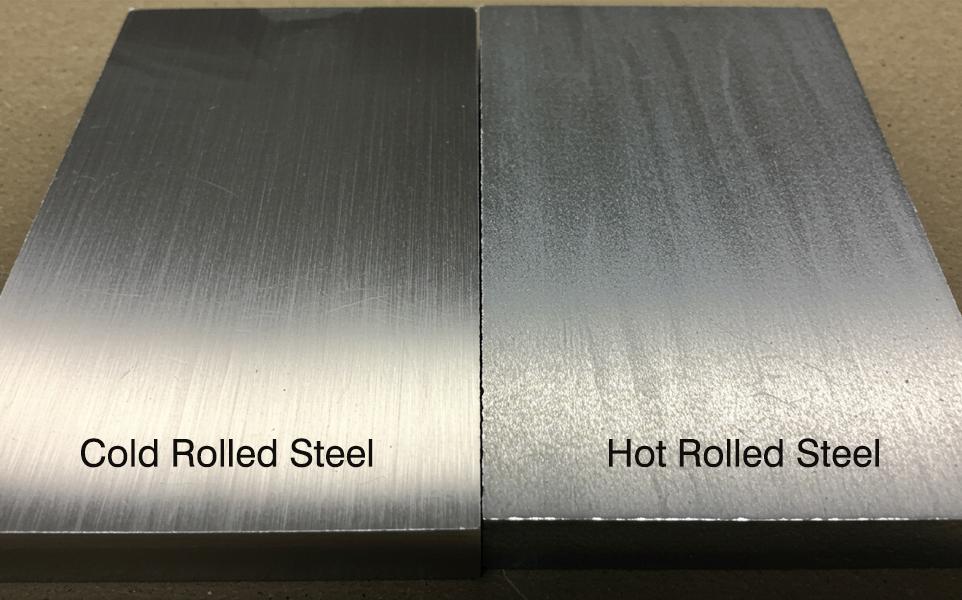
The two major categories are hot rolled titanium plate and cold rolled titanium sheet.
| Feature | Hot Rolled Titanium Plate | Cold Rolled Titanium Sheet |
|---|---|---|
| Manufacturing process | High-temperature rolling | Room-temperature precision rolling |
| Typical thickness | 3 mm and above | 0.5–3.0 mm |
| Surface | Relatively rough, may contain oxide scale | Smooth, bright and more uniform |
| Dimensional accuracy | Standard | Higher |
| Main characteristics | Strength, impact resistance | Formability, precision and surface quality |
| Typical applications | Equipment housings, load-bearing and heavy structures | Linings, precision components, visible surfaces |
Hot Rolled Titanium Plate
Hot rolling is primarily used for medium and thick titanium plates.
The surface may be relatively rough and may contain an oxide layer generated during high-temperature processing. Pickling is therefore commonly used to remove surface oxides.
Hot rolled titanium plate is often used for:
Chemical equipment
Environmental equipment
Equipment housings
Load-bearing structures
Heavy-duty components
For CNC machining, hot rolled plate can be a practical starting material when a significant amount of material will be removed during rough machining.
Cold Rolled Titanium Sheet
Cold rolling involves additional rolling and finishing at or near room temperature.
Cold rolled titanium sheet generally provides:
Better surface quality
Better flatness
Higher dimensional consistency
Better appearance
Good forming performance
It is commonly used for:
Precision components
Equipment linings
Appearance-sensitive components
Thin sheet-metal parts
Decorative or visible structures
When a CNC-machined part requires tight dimensional control or a high-quality starting surface, cold rolled material may provide advantages depending on the component design.
4. Titanium Plate Thickness Classification
Titanium plates can also be classified according to thickness.
| Category | Thickness | Main Process | Typical Applications |
|---|---|---|---|
| Thin Titanium Sheet | 0.5–3.0 mm | Mainly cold rolling | Precision forming, linings, appearance components |
| Medium Titanium Plate | 3.0–10 mm | Mainly hot rolling | Chemical equipment, environmental equipment |
| Heavy Titanium Plate | 10 mm and above | Mainly hot rolling | Load-bearing, pressure-related and heavy structures |
Thin Titanium Sheet: 0.5–3.0 mm
Thin titanium sheet is primarily produced through cold rolling.
It is suitable for:
Precision forming
Equipment linings
Thin-wall components
Appearance-sensitive applications
For CNC machining, thin titanium sheets require careful workholding because excessive cutting forces can cause deformation.
Medium Titanium Plate: 3–10 mm
Medium-thickness titanium plate is widely used in industrial equipment.
Common applications include:
Chemical equipment
Environmental protection equipment
Equipment housings
Corrosion-resistant structures
This thickness range can also be a common starting point for CNC-machined titanium components.
Heavy Titanium Plate: 10 mm+
Heavy titanium plate is primarily hot rolled and is generally selected when structural strength, stiffness, or load-bearing capability is required.
Applications include:
Heavy structures
Load-bearing components
Pressure-related structures
Large CNC Machined Parts
5. Titanium Plate Surface Treatments
Surface condition is important not only for appearance but also for machining, welding, corrosion resistance, and final component performance.
Pickling
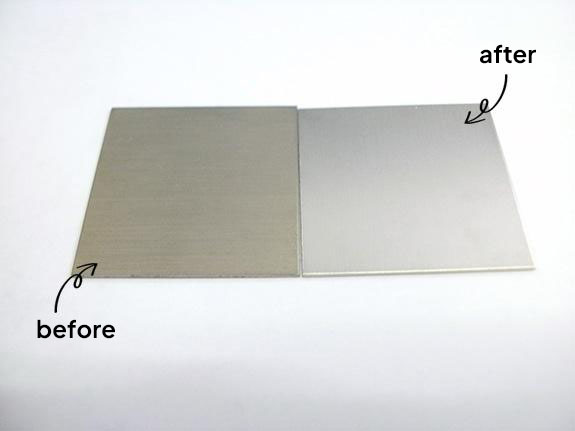
Pickling is a common surface treatment for industrial titanium products.
It produces a matte silver-gray appearance and is primarily used to:
Remove oxide scale
Clean the surface
Maintain corrosion performance
Prepare the material for welding
For industrial titanium plate, pickling is an important surface preparation process.
Sandblasting
Sandblasting produces a uniform matte or textured surface.
It can provide:
Anti-slip characteristics
Uniform surface appearance
Improved surface texture
Suitable outdoor surface characteristics
Typical applications include:
Outdoor equipment
Marine equipment
Exterior panels
Mirror Polishing
Mirror polishing produces a high-gloss reflective surface.
It may be selected when the final component requires:
Easy cleaning
High visual quality
Smooth surfaces
Medical or food-related applications
Anodizing
titanium anodizing can produce colored or modified surface characteristics.
It can be used for:
Decorative components
High-end consumer products
Visible parts
Components requiring improved surface appearance
Passivation
Passivation is used for specific applications where surface stability and corrosion performance are important.
It may be considered for:
Seawater applications
High-chloride environments
Highly corrosive systems
The appropriate surface treatment depends on the titanium grade and actual operating conditions.
6. Titanium Plate Properties and CNC Machining Applications
Different titanium materials are selected according to their balance of corrosion resistance, strength, formability, and machinability.
| Material | Core Advantages | Typical Applications |
|---|---|---|
| TA1 / TA2 / TA10 | Excellent corrosion resistance, weldability and formability | Chemical equipment, marine systems, environmental equipment, food and medical components |
| TC4 | High strength, good rigidity, high strength-to-weight ratio | Structural parts, aerospace, robotics, molds, precision components |
Pure Titanium: TA1 / TA2 / TA10
Commercially pure titanium is particularly attractive when corrosion resistance is the main requirement.
It is used in:
Chemical processing
Seawater equipment
Desulfurization systems
Food equipment
Medical applications
Equipment linings
Titanium Alloy: TC4
TC4 is more appropriate when the component requires higher strength and structural rigidity.
It is commonly used for:
Aerospace components
Structural panels
Load-bearing covers
Robotics components
Precision mechanical components
Molds
For CNC machining of titanium alloy parts, TC4 provides high mechanical performance but also requires more demanding machining strategies than softer materials such as aluminum alloys.
7. Titanium Plate Processing and CNC Machining Considerations
Titanium plate can be processed through various manufacturing methods, but each process requires appropriate controls.
Titanium Plate Bending
Titanium plate can be bent and formed, but springback must be considered.
Important factors include:
Material grade
Plate thickness
Bend radius
Tooling
Forming method
Material condition
For some forming operations, stress relief or annealing may be required.
When CNC machining components that have previously undergone forming, residual stress should also be considered because it may affect dimensional stability during material removal.
Titanium Plate Welding
Titanium welding requires effective inert-gas protection.
Argon shielding is essential to protect the weld and heated titanium from atmospheric contamination.
After welding, appropriate surface cleaning and inspection procedures should be applied.
For fabricated components that will subsequently undergo CNC machining, welding distortion and residual stress should also be considered during process planning.
Titanium Plate Cutting
Common cutting methods include:
Laser cutting
Waterjet cutting
CNC machining
For titanium plate preparation, laser cutting and waterjet cutting can be selected according to thickness, geometry, tolerance, and production requirements.
Flame cutting should generally be avoided for titanium because uncontrolled heat and atmospheric exposure can cause oxygen contamination and embrittlement.
8. Titanium CNC Machining Challenges
Although titanium plate offers excellent material properties, titanium CNC machining is considerably more demanding than machining many common metals.
Low Thermal Conductivity
Titanium has relatively low thermal conductivity, so cutting heat tends to remain concentrated near the cutting zone.
This can accelerate tool wear.
High Cutting Forces
Titanium alloys such as TC4 maintain high strength during machining, resulting in relatively high cutting forces.
Tool Wear
Incorrect cutting parameters can result in:
Excessive tool wear
Chipping
Reduced tool life
Poor surface finish
Work Hardening
Unstable cutting or tool rubbing can cause localized work hardening, making subsequent passes more difficult.
Vibration
Thin-wall titanium components can be particularly susceptible to vibration and deformation.
For this reason, successful precision titanium machining requires careful coordination between:
Material + Tooling + Cutting Parameters + Workholding + Coolant + Toolpath
9. 3-Axis and 5-Axis CNC Machining of Titanium Plate
 For simple titanium components, 3-axis CNC machining may be sufficient.
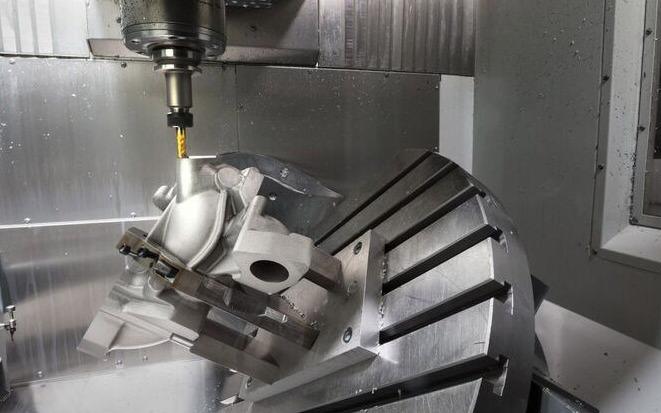
However, complex titanium components may benefit significantly from 5-axis CNC machining.
A 5-axis CNC machine can control three linear axes and two additional rotational axes, allowing the cutting tool to approach the workpiece from multiple directions.
This is useful for:
Complex curved surfaces
Deep cavities
Angled surfaces
Thin-wall structures
Aerospace components
Medical components
Robot components
Complex titanium alloy parts
The major advantages include:
Fewer workpiece setups
Better tool accessibility
Reduced repositioning errors
Improved surface consistency
More efficient machining of complex geometries
For high-value titanium components, reducing unnecessary setups and material waste can also help control manufacturing costs.
10. Titanium Plate Inspection and Acceptance
For CNC machining manufacturers, material inspection is important before the titanium plate enters production.
A basic acceptance check should include the following.
Surface
The titanium plate should be free from unacceptable:
Peeling
Cracks
Severe oxidation
Blackened areas
Deep scratches
Other surface defects
Dimensions
Check:
Thickness
Length
Width
Flatness
Thickness tolerances should comply with the applicable material standard and customer specification.
Flatness
The plate should not exhibit unacceptable:
Warping
Waviness
Local deformation
Flatness becomes particularly important when the plate is used as the starting material for precision CNC machining.
Internal Quality
Depending on the application, the material should be checked for:
Laminations
Gas pores
Internal looseness
Other internal defects
For critical aerospace, medical, or structural components, additional non-destructive testing may be required.
Material Documentation
The titanium plate should be supplied with appropriate:
Material certificate
Grade information
Batch/heat number
Traceability documentation
This allows the CNC manufacturer to verify that the raw material matches the engineering requirements before machining begins.
11. Common Titanium Material Selection Mistakes
Material selection has a direct impact on the performance of the final CNC machined component.
Corrosion-Resistant Equipment: Do Not Automatically Replace TA2 with TC4
A common mistake is assuming that a higher-strength titanium alloy is always better.
For corrosion-resistant equipment, TC4 should not simply be used as a replacement for TA2 without evaluating the actual service environment.
The priority for corrosion-resistant applications is:
Corrosion Resistance → Material Compatibility → Fabrication → Mechanical Requirements
rather than simply choosing the highest-strength material.
Load-Bearing Structures: Do Not Automatically Use Pure Titanium
For highly loaded structural components, commercially pure titanium may not provide sufficient rigidity or resistance to deformation.
An appropriate titanium alloy such as TC4 may be more suitable when structural strength is the primary requirement.
Extremely Low-Cost Material Can Create Quality Risks
Unusually low-cost titanium plate may involve differences in:
Material quality
Chemical composition
Traceability
Internal quality
Manufacturing history
Poor-quality material may increase the risk of:
Cracking
Machining instability
Reduced corrosion performance
Inconsistent mechanical properties
For precision CNC machining, raw-material traceability is therefore important.
Appearance-Sensitive Components: Consider Cold Rolled Material
For visible or appearance-sensitive components, cold rolled titanium sheet may be more appropriate than a rough hot rolled surface.
However, the final choice should still be based on the required machining and finishing process.
Seawater and High-Chloride Applications
For seawater or high-chloride environments, TA10 should be considered where appropriate rather than simply relying on TA2.
The exact grade should be confirmed against the chemical environment, temperature, concentration, and applicable engineering requirements.
12. How to Select Titanium Plate for CNC Machining
For a CNC machining project, titanium plate selection can be approached through five key questions:
1. What is the final application?
Determine whether the component will be used in:
Aerospace
Medical
Robotics
Chemical processing
Marine equipment
Automotive
General industrial equipment
2. What mechanical properties are required?
Determine whether the priority is:
Corrosion Resistance
or
Strength and Rigidity
3. What is the required thickness?
The thickness should account for:
Final component dimensions
Machining allowance
Workholding
Material removal
Structural requirements
4. What machining process will be used?
Consider:
3-axis CNC machining
5-axis CNC machining
CNC drilling
CNC milling
Turning
Grinding
5. What inspection and certification are required?
For critical components, define:
Dimensional tolerances
Surface requirements
Material certification
CMM inspection
Traceability
Special testing
This approach helps ensure that the starting titanium plate is compatible with the final CNC machining process and application requirements.
13. From Titanium Plate to Precision CNC Machined Parts
The transformation from titanium plate to a finished component typically involves several stages:
Titanium Plate → Material Inspection → CNC Rough Machining → Semi-Finishing → Precision Finishing → Deburring → Surface Treatment → Dimensional Inspection
The actual process depends on component geometry and application.
For example, a TC4 titanium plate may be machined into a complex aerospace bracket using 5-axis CNC milling. A TA2 plate may instead be used to produce a corrosion-resistant industrial component.
This is why material selection and CNC process planning should be considered together.
The best titanium machining strategy starts before the first tool enters the material.
Titanium plate is not simply a raw material sold independently; for CNC manufacturers, it is often the starting point for producing high-performance titanium CNC machined components.
TA1, TA2, TA3, and TA10 commercially pure titanium grades are primarily selected for their corrosion resistance, formability, and weldability, while TC4 titanium alloy is widely used when higher strength and structural performance are required.
The choice between hot rolled titanium plate and cold rolled titanium sheet, as well as the selection of thickness and surface condition, should be based on the final component design and manufacturing process.
During CNC machining, titanium's low thermal conductivity, high strength, tool-wear characteristics, work hardening tendency, and potential for vibration require careful control of tooling, cutting parameters, coolant, workholding, and toolpaths.
For complex geometries, 5-axis CNC machining can further improve tool accessibility and reduce the number of setups.
Ultimately, successful titanium machining is not just about choosing a titanium plate. It is about selecting the right titanium grade and material condition, then matching it with the right CNC machining process to produce a precise, reliable, application-specific component.


