



Die Casting is one of the most widely used manufacturing methods for producing metal parts with high precision, repeatability, and excellent surface quality. If you’re new to this process, don’t worry — many engineers, designers, and procurement professionals start with little or no experience.
At HuaZheng, we help clients of all levels bring their ideas to life through expert die casting services. Here’s what you need to know to get started:
1. What Is Die Casting?
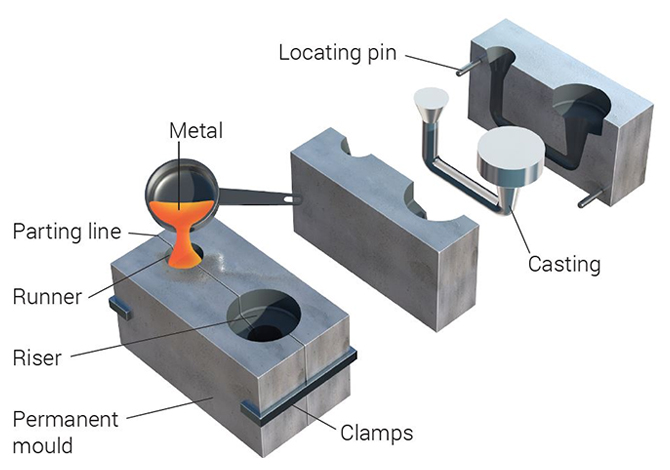
Die casting is a manufacturing process where molten metal is injected into a steel mold (called a "die") under high pressure. After cooling and solidifying, the part is ejected from the mold.
It’s ideal for producing large volumes of identical metal parts with tight tolerances, smooth surfaces, and complex geometries.
2. What Materials Are Used?
The most common materials for die casting are:
Aluminum alloys (lightweight, corrosion-resistant)
Zinc alloys (high strength, excellent detail and surface finish)
Magnesium alloys (lightest structural metal, good strength-to-weight ratio)
Your choice depends on the part’s application, strength, weight, and cost requirements.
3. Why Use Die Casting?
Benefits include:
High production efficiency (thousands of parts with one mold)
Tight tolerances and high precision
Smooth surface finishes (often reducing the need for post-processing)
Ability to form complex, detailed shapes
Cost-effective for medium to high volumes
4. Basic Design Considerations
If you're designing a part for die casting, keep these principles in mind:
Uniform wall thickness: Helps avoid defects like warping or shrinkage
Draft angles: Slight tapers on vertical walls help release the part from the mold
Rounded edges and corners: Avoid sharp corners to improve material flow
Avoid undercuts: These require more complex molds and increase cost
Location of parting lines and ejector pins: Important for mold design and surface finish
Tip: Consult your die casting supplier during the design phase to reduce risks and optimize manufacturability.
5. What About Tooling Costs?
The initial mold (die) cost is a significant investment — often ranging from a few thousand to tens of thousands of dollars depending on part size and complexity.
However, because the mold can be reused for thousands of parts, unit cost drops significantly with volume. Die casting becomes cost-effective when you're producing in medium to high quantities.
6. Surface Finishing Options
Die cast parts can be used as-is or finished with:
Powder coating
Anodizing (for aluminum)
Painting
Polishing
Plating (e.g., chrome or nickel)
These finishes enhance appearance, corrosion resistance, and wear protection.
7. Common Applications
Die casting is used in many industries, including:
Automotive: Engine parts, housings, brackets
Electronics: Heat sinks, enclosures
Appliances: Handles, frames, internal components
Lighting: Fixtures, housings
Consumer products: Tools, locks, devices
8. Work with an Expert Supplier
If you're new to die casting, choose a manufacturing partner like HuaZheng who can guide you through:
Material selection
Mold design optimization
Tolerance & cost trade-offs
Surface treatment options
Quality control processes
We’re here to support you from design to final delivery — even if you’re starting from scratch.
Die casting can seem complex at first, but with the right knowledge and support, it’s an incredibly powerful way to manufacture metal parts. Focus on smart design, understand the process basics, and work closely with experienced suppliers.


